







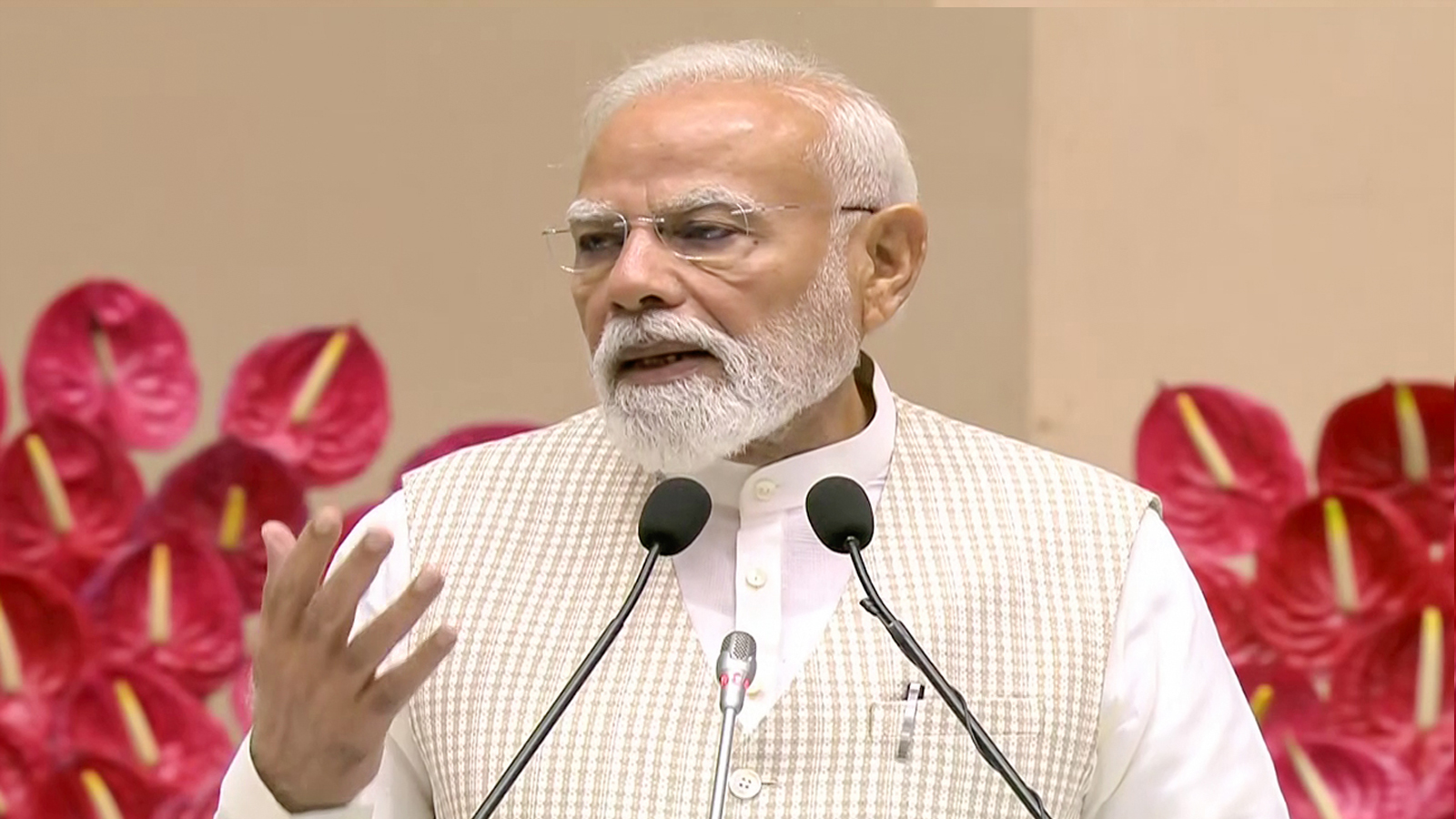
Prime Minister Narendra Modi on Monday shared an article by Union Commerce and Industry Minister Piyush Goyal outlining the potential benefits of the India-Oman Comprehensive Economic Partnership Agreement (CEPA), which came into force on June 1.
In a post on X, the Prime Minister’s Office said the agreement offers Indian exporters an opportunity to diversify markets, boost job creation, safeguard farmers’ interests and promote shared prosperity between India and Oman. The post also highlighted that the government’s efforts to conclude trade agreements with partner countries are aimed at improving the lives of citizens and expanding economic opportunities.
In his article, Goyal described the India-Oman CEPA as a major milestone in India’s efforts to strengthen global trade partnerships and create new avenues of growth for students, artisans, women, farmers, fishermen and micro, small and medium enterprises (MSMEs).
The minister said the agreement would significantly deepen economic and strategic ties between the two countries and provide Indian exporters with improved market access in Oman. Under the agreement, 98 per cent of tariff lines covering more than 99 per cent of India’s exports to Oman will receive immediate duty-free access.
According to Goyal, sectors dominated by MSMEs, including textiles, leather, auto components, industrial equipment, iron and steel, are expected to benefit from greater export opportunities, leading to higher production, investment and employment generation.
The article also highlighted the potential gains for labour-intensive industries such as textiles and apparel, gems and jewellery, food processing, marine products and engineering goods. Increased exports from these sectors are expected to create jobs across several manufacturing and artisan clusters in different parts of the country.
On agriculture, the minister noted that India has protected sensitive sectors by excluding major products such as wheat, rice, dairy products, fruits, vegetables and edible oils from tariff concessions. At the same time, Indian exporters are expected to gain a competitive advantage in products such as honey, butter, eggs and certain processed food items.
The agreement also provides recognition of India’s National Programme for Organic Production certification, which is expected to create new opportunities for organic food exports to Oman.
Highlighting opportunities for the fisheries sector, Goyal said the agreement could help expand India’s share in Oman’s marine products market, generating employment in fishing, processing, packaging and export-related activities.
The article further noted that Indian pharmaceutical companies would benefit from faster market access, with medicines already approved by major international regulators receiving marketing authorisation in Oman within a stipulated timeframe.
Beyond trade in goods, the agreement includes commitments in services and professional mobility. Indian professionals in sectors such as information technology, healthcare, engineering, education, consulting and research are expected to benefit from improved market access and easier mobility provisions.
In a separate post on X, Goyal said the agreement marks “a new chapter” in India-Oman relations and aligns with Prime Minister Modi’s vision of expanding India’s global trade partnerships. He said the CEPA would open new markets, attract investments, boost exports and accelerate job creation.


