







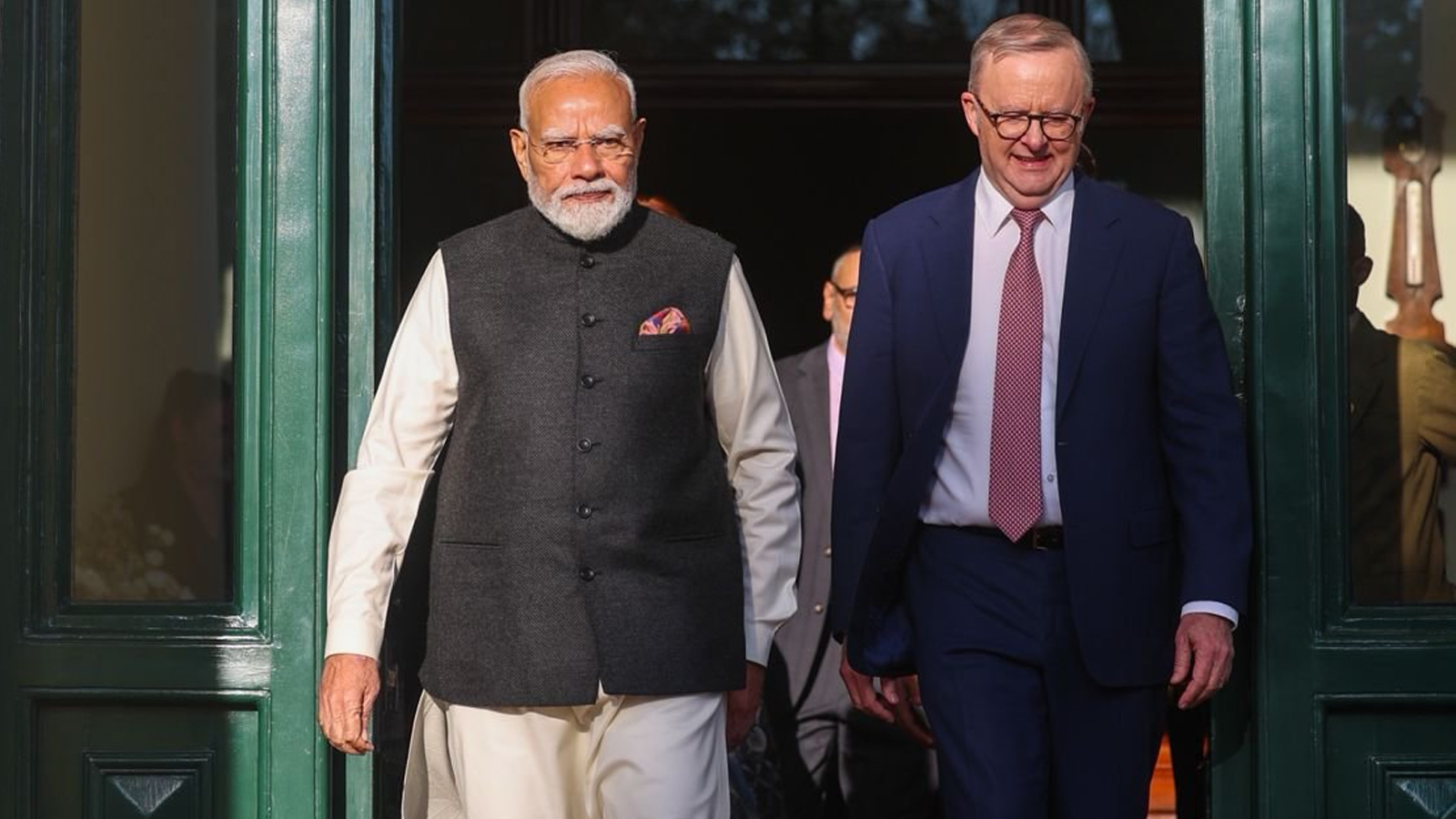
India and Australia have finalised the administrative arrangements required to enable the export of Australian uranium to India for exclusively peaceful purposes under International Atomic Energy Agency (IAEA) safeguards, marking a significant milestone in bilateral energy cooperation.
The announcement was made in the India-Australia Joint Statement on Energy Security issued during Prime Minister Narendra Modi’s visit to Australia, where the two countries reaffirmed their commitment to strengthening energy security, resilient supply chains and deeper cooperation across the energy sector.
The two sides said the finalisation of the administrative arrangements paves the way for implementing uranium exports under the Australia-India Nuclear Cooperation Agreement signed in 2015. The uranium supplied by Australia will be used only for peaceful purposes and will remain subject to IAEA safeguards.
Reaffirming their Comprehensive Strategic Partnership, India and Australia also expressed deep concern over the situation in the Middle East and its impact on global energy markets, including disruptions to supply chains and rising prices of energy resources and other essential commodities.
Both countries stressed the importance of maintaining open markets and rules-based trade, describing them as essential for ensuring economic security and long-term prosperity.
The joint statement highlighted the role of trusted private sector partnerships and strategic investments in ensuring sustainable and reliable energy flows. India and Australia committed to advancing bilateral energy trade and investment through the India-Australia Economic Cooperation and Trade Agreement (ECTA), ongoing negotiations for the Comprehensive Economic Cooperation Agreement (CECA), and other bilateral mechanisms.
The two countries also reaffirmed the importance of capacity building and knowledge sharing in the energy sector.
Recognising Australia’s position as a major supplier of liquefied natural gas to India and India’s role as an important supplier of liquid fuels and downstream petroleum products to Australia, both sides pledged to support uninterrupted energy trade and encourage greater investment across the energy value chain.
India and Australia also agreed to work together to strengthen energy supply chain resilience by promoting regional cooperation, accelerating the clean energy transition and supporting greater adoption of renewable energy. They noted that increasing electrification of their respective energy systems would play an important role in enhancing future energy security.
The joint statement further acknowledged the energy security challenges faced by Pacific Island countries and underlined the importance of ensuring reliable energy supplies to support their economic resilience and development.
Reaffirming their commitment to stable and reliable energy supplies, the two countries agreed to cooperate in ensuring the continued availability of coal, diesel, natural gas and other liquid fuels while expanding collaboration on low-carbon fuels. In this context, Australia welcomed India’s Global Biofuels Alliance initiative.
Calling for greater regional cooperation, India and Australia urged regional partners to work together to keep global energy supply chains open, ensuring energy security and economic prosperity across the Indo-Pacific.


