







India has firmly established itself as a global leader in tiger conservation, now sheltering nearly 70 per cent of the world’s wild tiger population through a combination of science-based policies, robust institutional support, technology-driven monitoring and active community participation. As the world prepares to observe International Tiger Day on July 29, the country’s conservation journey stands out as one of the most successful wildlife recovery stories globally.
The Ministry of Environment, Forest and Climate Change (MoEFCC) says India’s tiger conservation model reflects decades of sustained policy support, scientific management and strong governance, while also balancing biodiversity protection with sustainable development. Today, the tiger is not only India’s National Animal but also a symbol of the country’s ecological wealth, cultural heritage and commitment to environmental conservation.
A Remarkable Recovery
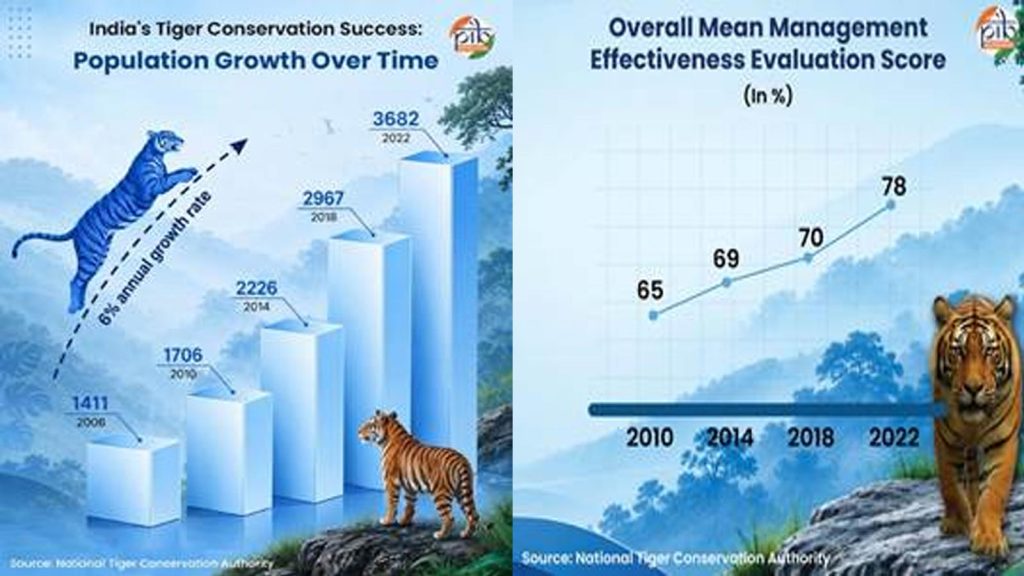
India’s tiger population has more than doubled since 2006, marking one of the world’s most significant wildlife conservation achievements. According to the All India Tiger Estimation (2022), the country is home to 3,682 tigers, making it the largest wild tiger population anywhere in the world.
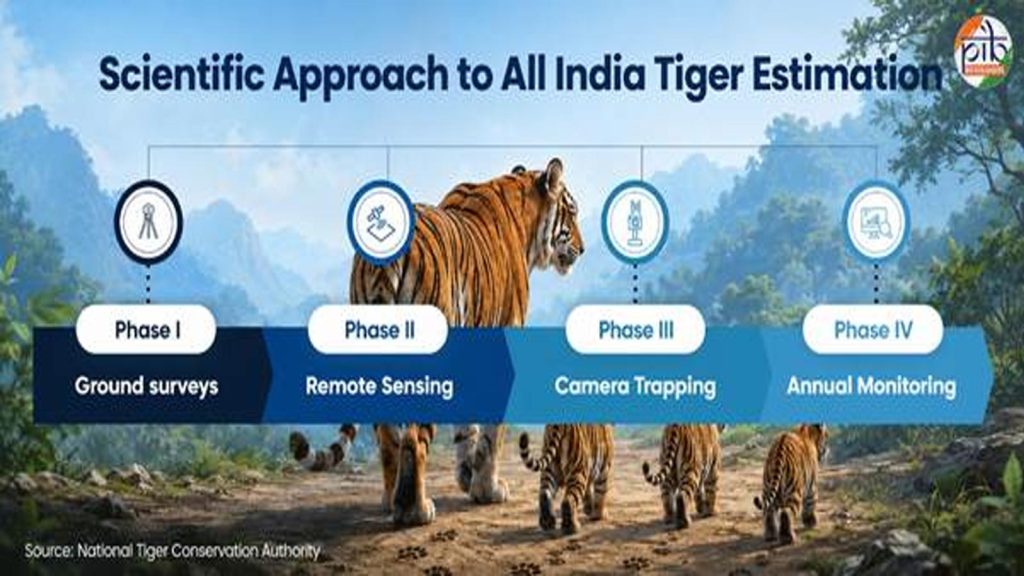
The 2022 assessment, described as one of the world’s largest and most comprehensive wildlife surveys, covered 20 States and involved more than 6.41 lakh kilometres of foot surveys. The exercise reflects India’s emphasis on scientific monitoring and evidence-based conservation planning.
The Ministry notes that International Tiger Day traces its origins to the Saint Petersburg Tiger Summit in 2010, where 13 tiger-range countries adopted the ambitious Tx2 goal of doubling the global wild tiger population by 2022. Since then, global tiger numbers have shown a significant recovery, rising from an estimated 3,200 wild tigers in 2010 to around 5,711 according to recent global estimates.
Tiger Conservation Strengthens Entire Ecosystems
The Ministry highlights that conserving tigers goes beyond protecting a single species. As apex predators and umbrella species, tigers play a critical role in maintaining healthy forest ecosystems. Protecting tiger habitats also safeguards forests, rivers and numerous other species while supporting ecosystem services such as water conservation, soil protection, pollination and climate regulation.
Healthy forests also contribute to reducing disaster risks while supporting rural livelihoods and urban economies, making tiger conservation an integral part of India’s broader sustainable development vision.
Strong Institutional Framework
India’s conservation success has been driven by a comprehensive governance framework led by Project Tiger, the National Tiger Conservation Authority (NTCA) and state-level Tiger Conservation Plans.
Project Tiger, implemented by the Ministry as a Centrally Sponsored Scheme, provides financial and technical assistance to tiger-range States for habitat protection, scientific management and field-based monitoring.
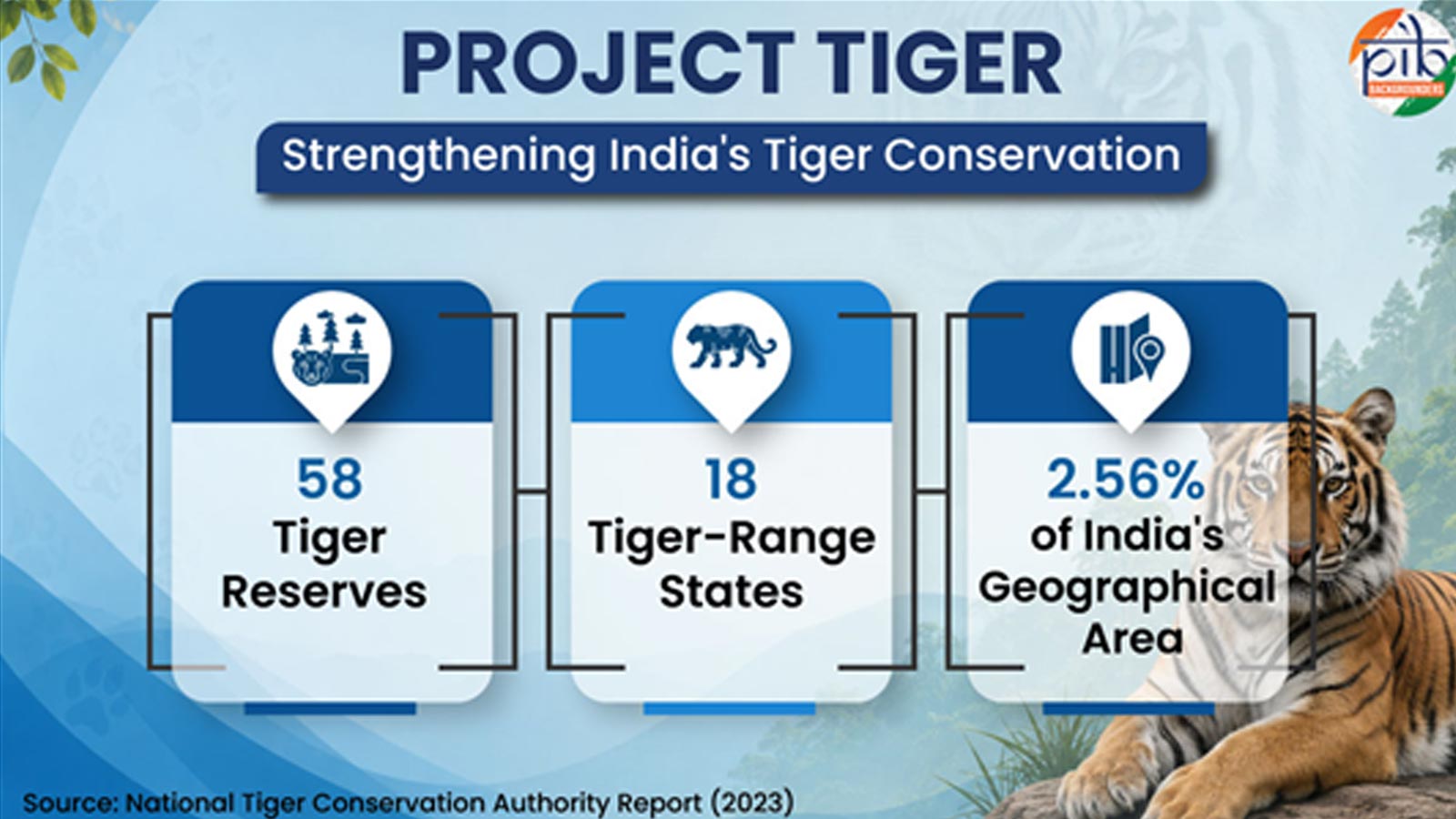
According to the NTCA’s 2023 report, India currently has 58 tiger reserves across 18 tiger-range States, covering nearly 84,500 square kilometres, or about 2.56 per cent of the country’s geographical area.
The NTCA oversees Project Tiger by providing scientific, technical and financial guidance, approving Tiger Conservation Plans, issuing standard operating procedures and periodically evaluating reserve management.
The Ministry also credits the Tiger Task Force with introducing important policy reforms that strengthened India’s tiger conservation framework. Its recommendations led to amendments to the Wildlife (Protection) Act in 2006, resulting in the establishment of the NTCA and the Wildlife Crime Control Bureau as statutory bodies.
India’s landscape-based conservation model divides tiger reserves into highly protected Core Areas and Buffer Areas that balance conservation objectives with sustainable livelihoods. Wildlife corridors connecting reserves also facilitate safe movement of tigers and help maintain genetically healthy populations.
Technology at the Heart of Conservation
Scientific monitoring has become a defining feature of India’s tiger conservation programme.
The All India Tiger Estimation (AITE), conducted every four years by the NTCA in collaboration with the Wildlife Institute of India, is described as the world’s largest biodiversity survey. It assesses tiger populations, prey species, co-predators and habitat quality across all tiger-bearing States.
The 2022 assessment also included India’s first nationwide survey of ungulates, highlighting the importance of healthy prey populations for sustaining viable tiger numbers.
India has further integrated digital technologies into conservation through the Monitoring System for Tigers – Intensive Protection and Ecological Status (M-STrIPES), which uses GPS, GPRS and remote sensing technologies for field monitoring. GPS-tagged photographs improve accuracy, while field observations are integrated into a central database for scientific analysis.
Artificial intelligence has also enhanced wildlife monitoring. The Camera Trap Data Repository and Analysis Tool (CaTRAT) automatically classifies camera trap images by species, while ExtractCompare identifies individual tigers using their unique stripe patterns, improving the reliability of tiger population estimates.
The Ministry notes that the NTCA’s camera trap survey holds a Guinness World Record as the world’s largest camera trap wildlife survey.
Measuring Conservation Outcomes
India also evaluates the effectiveness of reserve management through the Management Effectiveness Evaluation (MEE) framework.
The system assesses planning, protection, management processes and conservation outcomes to identify gaps and improve accountability. By 2022, 51 tiger reserves had been evaluated under the framework. Twelve reserves received “Excellent” ratings, while the average management score reached 78 per cent, providing valuable inputs for future conservation planning.
Expanding Global Partnerships
India is also strengthening international cooperation on wildlife conservation through partnerships with several countries.
The Ministry highlights transboundary biodiversity conservation with Nepal and Bhutan, collaboration with Myanmar to combat timber trafficking and conserve wildlife, and cooperation with Russia on camera trap data management and tiger and leopard conservation. India has also established partnerships with Botswana, South Africa, Guatemala, Cambodia, Kenya, Namibia and China to promote wildlife conservation and biodiversity management.
India is also playing a leading role through the International Big Cat Alliance (IBCA), approved by the Union Cabinet in 2024. Headquartered in India, the alliance brings together 95 big cat range and partner countries, scientific organisations and conservation partners to strengthen international cooperation for conserving seven big cat species.
The Global Tiger Forum (GTF), headquartered in New Delhi, continues to serve as the world’s only intergovernmental organisation dedicated exclusively to tiger conservation. Bringing together 13 tiger-range countries, the forum promotes regional cooperation, knowledge sharing and technological innovation for protecting tigers and their habitats.
India also participates in the Integrated Tiger Habitat Conservation Programme (ITHCP), the International Union for Conservation of Nature’s flagship tiger conservation initiative, which supports science-based conservation projects across priority tiger landscapes in Asia.
The Ministry further notes that 23 Indian tiger reserves have received accreditation under the globally recognised Conservation Assured Tiger Standards (CA|TS) certification system, reflecting adherence to international best practices in tiger conservation.
Looking Ahead
The Ministry says tiger conservation remains a dynamic national priority and envisions securing connected, climate-resilient tiger landscapes that support both wildlife and local communities. Continued investments in technology-enabled protection, data-driven monitoring and capacity building for frontline staff, along with stronger international cooperation, are expected to further strengthen conservation outcomes.
As International Tiger Day is observed on July 29, the Ministry says India remains committed to combining scientific research, effective governance, technological innovation and public participation to sustain its leadership in global tiger conservation while safeguarding biodiversity for future generations.


