







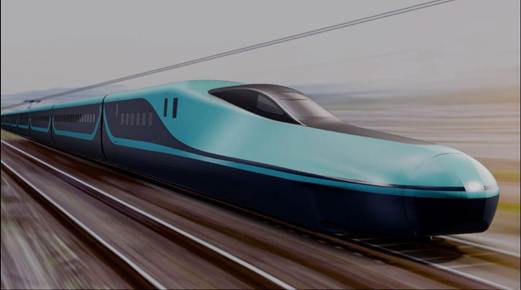
India to replicate Mumbai-Ahmedabad bullet train model for future high-speed rail corridors; first service expected in August 2027
India’s first bullet train corridor between Mumbai and Ahmedabad is nearing completion, marking a major step in the country’s transport infrastructure. Beyond connecting two of India’s biggest economic centres, the project is also serving as the blueprint for future high-speed rail corridors planned across the country.
What is the Mumbai-Ahmedabad High-Speed Rail project?
The Mumbai-Ahmedabad High-Speed Rail (MAHSR) project is India’s first dedicated bullet train corridor. Built using Japanese Shinkansen technology, the 508-km corridor is designed for trains capable of reaching speeds of up to 350 kmph, with an operational speed of 320 kmph. The journey between Mumbai and Ahmedabad is expected to take around 1 hour and 58 minutes, compared with the current travel time of several hours by conventional rail.
The corridor will have 12 stations, with the first operational section planned between Surat and Vapi. The first commercial services are expected to begin in August 2027.
Why is this project important?
The significance of the Mumbai-Ahmedabad project goes beyond a single railway line. It is helping India develop a standardised model for future bullet train corridors. Instead of designing every project from scratch, future corridors will use common engineering standards, construction methods and operational systems, allowing projects to be completed more efficiently while reducing costs. Only the foundations will be customised according to local soil conditions, while major components such as viaducts, tracks, station structures, signalling, overhead electrification and maintenance systems will largely follow a common design.
How will standardisation help?
Using a common template across future bullet train projects is expected to offer several advantages:
• Faster project execution through proven construction methods.
• Lower construction and maintenance costs.
• Easier procurement of equipment and spare parts.
• Standardised maintenance practices.
• Simplified training for engineers and operating staff.
The approach is also expected to improve quality and consistency across future high-speed rail projects.
How is India preparing for indigenous manufacturing?
The government is also focusing on developing domestic capabilities for high-speed rail under the Make in India and Aatmanirbhar Bharat initiatives.
The Integral Coach Factory (ICF), in partnership with Bharat Earth Movers Limited (BEML), is developing indigenous high-speed train sets capable of operating at 280 kmph.
India is simultaneously building its own ecosystem for manufacturing specialised components, slab-track systems, construction equipment and testing facilities required for future bullet train projects.
A specialised facility named Aditya in Bengaluru has also been developed for manufacturing B-28 coaches, while research institutions including the IITs are contributing to high-speed rail technology and training.
What are the major technical features?
The Mumbai-Ahmedabad corridor incorporates several advanced railway systems:
• Shinkansen-based 2×25 kV overhead electrification.
• More than 20,000 overhead electrification masts.
• Twelve traction substations, two depot traction substations and 16 distribution substations.
• Japan’s J-Slab ballastless track technology, being introduced in India for the first time.
• Dedicated track construction bases for handling rails, slabs and machinery.
• Three rolling stock depots located at Sabarmati, Surat and Thane.
Which future bullet train routes are planned?
India has identified seven additional high-speed rail corridors covering nearly 4,000 km, with estimated investments of around Rs 16 lakh crore.
The proposed corridors include:
• Delhi-Varanasi (travel time: 3 hours 50 minutes)
• Varanasi-Patna-Siliguri (2 hours 55 minutes)
• Chennai-Bengaluru (1 hour 13 minutes)
• Bengaluru-Hyderabad (2 hours)
• Chennai-Hyderabad (2 hours 55 minutes)
• Mumbai-Pune (48 minutes)
• Pune-Hyderabad (1 hour 55 minutes)
The Mumbai-Ahmedabad bullet train project is expected to become the foundation for India’s future high-speed rail network. As experience, technology and manufacturing capabilities grow through the country’s first corridor, future projects are expected to benefit from standardised designs, improved execution and greater domestic participation, paving the way for a nationwide high-speed rail ecosystem.


