







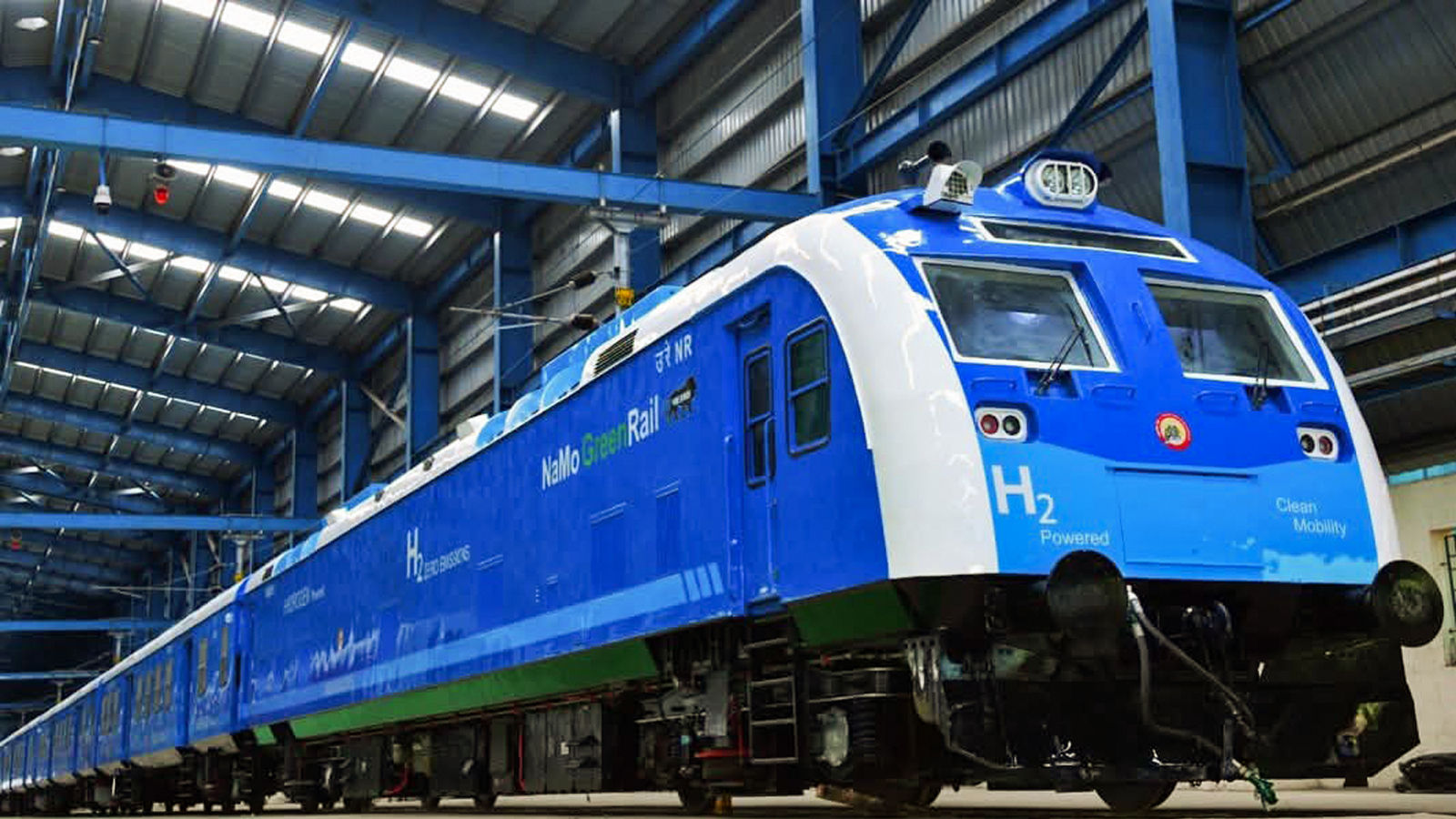
When India’s first hydrogen-powered passenger train rolls out on the Jind-Sonipat section in Haryana, it will mark far more than the launch of another railway service. It will represent the next chapter in the evolution of Indian Railways – from the age of steam and diesel to one powered by one of the world’s cleanest fuels.
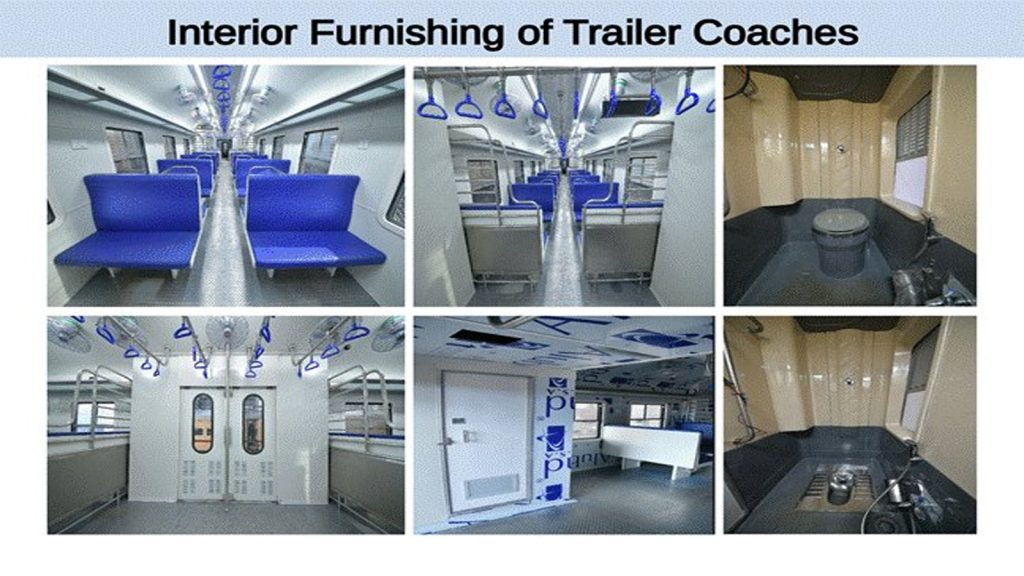
Designed to carry around 2,600 passengers across 10 coaches, the Hydrogen Fuel Cell Trainset is not only India’s first such train but also one of the largest hydrogen-powered passenger trains anywhere in the world. While most hydrogen trains currently operating globally consist of just two to four coaches and serve short regional routes, Indian Railways is demonstrating that the technology can be scaled up for high-capacity passenger operations.
The launch comes at a time when Indian Railways has already completed one of the world’s largest railway electrification drives, with more than 99 per cent of the Broad Gauge network now electrified. The hydrogen train represents the next step in the country’s transition towards cleaner and more sustainable transport.
A train that carries its own power
Unlike conventional electric trains that rely on overhead wires, the new Hydrogen Fuel Cell Trainset generates electricity onboard.
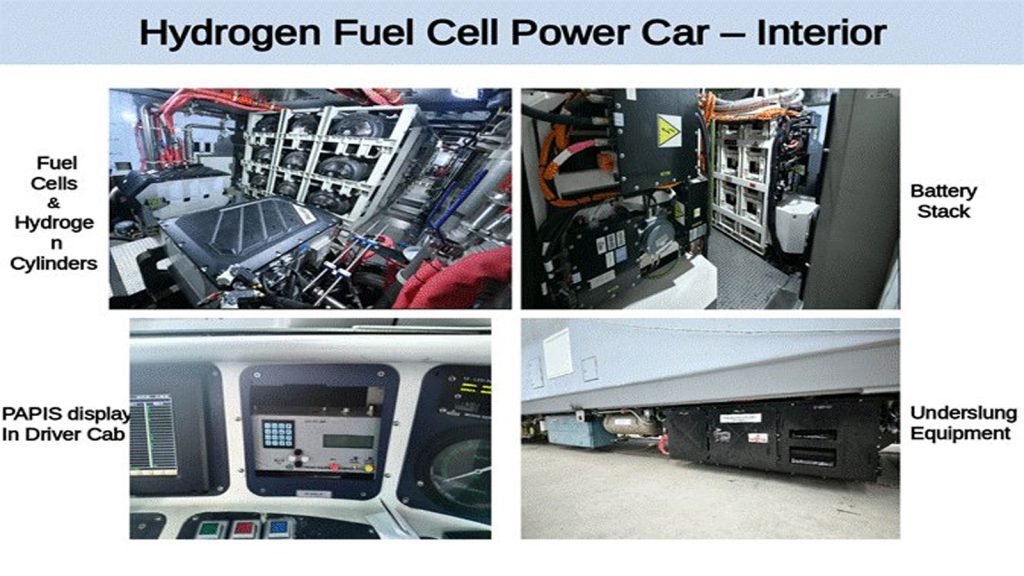
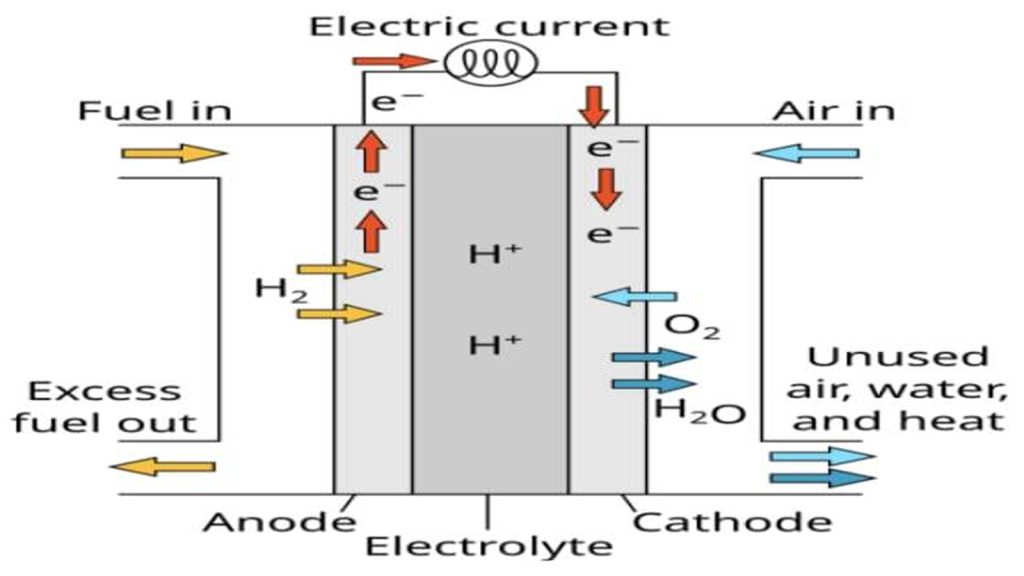
At the heart of the train is a Proton Exchange Membrane (PEM) fuel cell, which acts as a miniature power plant. Hydrogen stored in high-pressure cylinders combines with oxygen from the atmosphere inside the fuel cell to generate electricity that powers the train’s traction motors.
The process produces only water vapour and heat as by-products.
In simple scientific terms, the reaction is straightforward: Hydrogen + Oxygen → Electricity + Water Vapour
Unlike diesel locomotives, there is no combustion, no smoke and virtually no direct carbon emissions, making it one of the cleanest forms of rail propulsion.
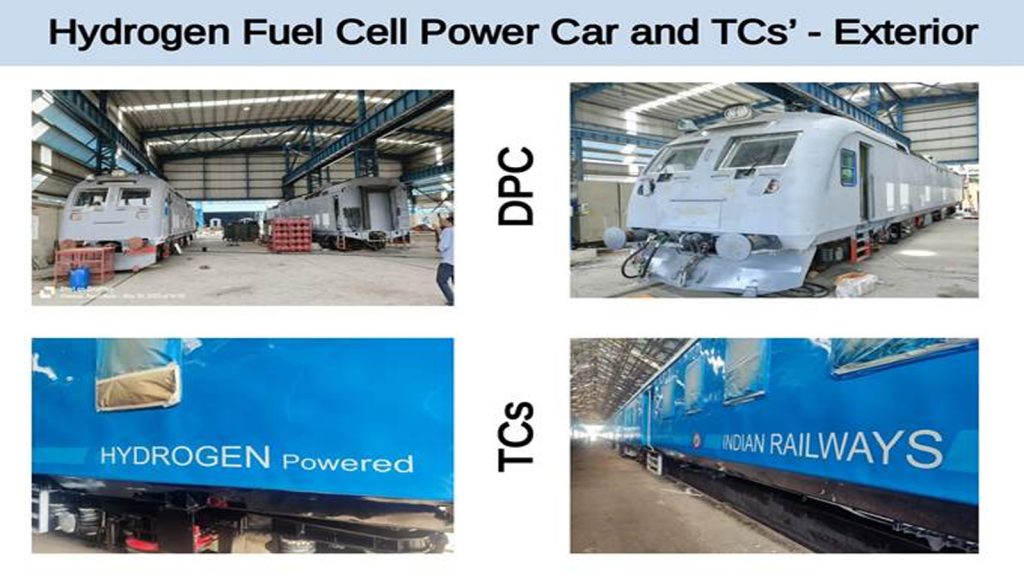
The train consists of two Hydrogen Driving Power Cars (DPCs) positioned at either end and eight passenger trailer coaches. Each power car produces 1,200 kilowatts (1,600 horsepower), providing sufficient power for the entire train to attain a design speed of 110 kmph, while it will initially operate at 75 kmph on the 89-kilometre Jind–Sonipat route.
A hydrogen ecosystem built from the ground up
The hydrogen-powered train is only one part of a much larger ecosystem.
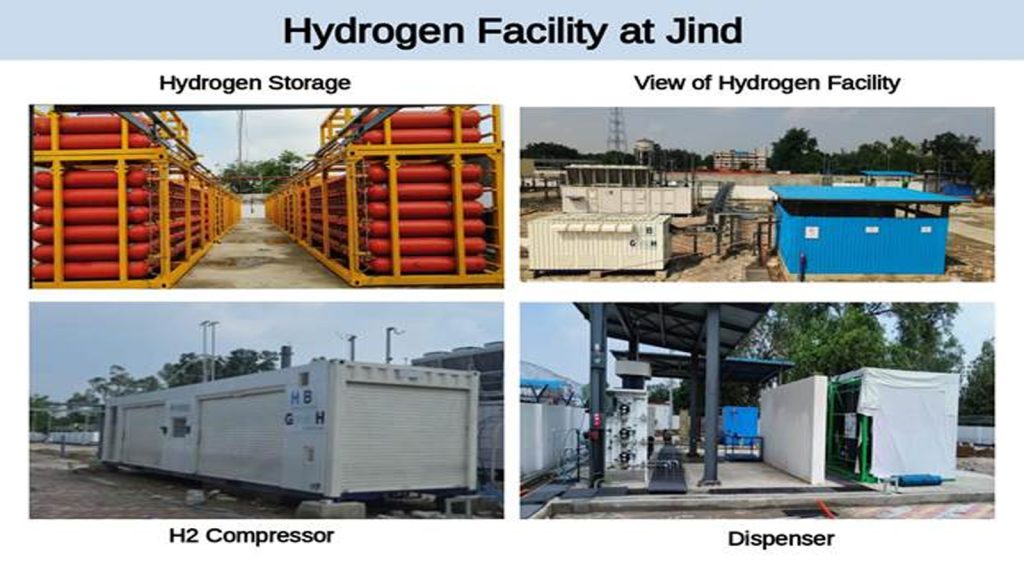
At Jind, Indian Railways has established what it describes as the country’s largest railway hydrogen refuelling facility, creating an integrated infrastructure for hydrogen production, storage and dispensing.
The process begins with the production of hydrogen through electrolysis, where electricity is used to split water into hydrogen and oxygen. The hydrogen is then stored in dedicated tanks before being compressed to 500 bar, allowing larger quantities to be stored efficiently.
During refuelling, hydrogen is dispensed into the train at 350 bar through two independent dispensers, enabling both power cars to be refuelled simultaneously and reducing turnaround time.
The facility has a storage capacity of nearly 3,000 kilograms of hydrogen, sufficient to support regular train operations, and has received approval from the Petroleum and Explosives Safety Organisation (PESO).
Addressing the biggest concern – safety
Hydrogen’s reputation as a highly flammable gas naturally raises questions about passenger safety.
Indian Railways says the entire project has been designed around multiple layers of protection, following the internationally recognised principle of “defence in depth”, where several independent safety systems operate simultaneously.
Hydrogen leak detectors, heat sensors, flame detectors and smoke detectors continuously monitor both the train and the refuelling infrastructure.
The train is also equipped with continuous ventilation systems that prevent any leaked hydrogen from accumulating by safely dispersing it into the atmosphere.
If any abnormal condition is detected, the system can automatically isolate and shut off the hydrogen supply without waiting for manual intervention.
Special attention has also been given to the locomotive pilot’s cabin, which features dedicated monitoring systems displaying the health of the hydrogen system in real time, along with emergency operating modes that allow the train to be moved safely if required.
The hydrogen facility at Jind incorporates similar safeguards, including automatic shutdown systems, water spray arrangements for fire control, leak detection equipment and fire alarm systems.
International standards and rigorous testing
Before being cleared for passenger operations, the hydrogen ecosystem underwent independent safety evaluation by TÜV SÜD, Germany, one of the world’s leading technical inspection and certification agencies.
The project has been developed in accordance with internationally accepted standards, including NFPA-2 and the ISO 19880 Series, while also complying with statutory safety requirements prescribed by PESO.
The train successfully completed extensive testing, including electrical load testing, radio-frequency compatibility trials, oscillation tests to assess ride stability, and emergency braking distance evaluations before being approved for operation.
Built in India
The hydrogen train has been designed, engineered and integrated using indigenous capabilities.
The Research Designs and Standards Organisation (RDSO) formulated the technical specifications and led the design approval process, while Medha Servo Drives integrated the trainset. The Integral Coach Factory (ICF) contributed to the train’s exterior styling and design.
Together with the hydrogen production and refuelling infrastructure established at Jind, the project represents the creation of India’s first complete hydrogen railway ecosystem.
India’s place in the global hydrogen race
Hydrogen-powered passenger trains remain at an early stage of deployment worldwide.
Germany became the first country to introduce commercial hydrogen passenger trains, while countries including France, Italy, China and Japan are operating pilot projects or limited services.
However, these trains are generally much smaller, comprising two to four coaches.
India’s 10-coach Hydrogen Fuel Cell Trainset demonstrates a different level of ambition by adapting hydrogen technology for high-capacity passenger services while simultaneously establishing supporting production and refuelling infrastructure.
Towards greener rail transport
Indian Railways sees the Jind-Sonipat project as the beginning rather than the culmination of its hydrogen journey.
The experience gained from the project is expected to support future deployment of hydrogen-powered trains on other routes, including heritage railways such as the Kalka–Shimla line.
The initiative also complements the country’s National Green Hydrogen Mission and India’s long-term commitment to achieving net-zero emissions.
As Indian Railways moves beyond electrification towards hydrogen-powered mobility, the country’s first Hydrogen Fuel Cell Trainset represents more than a technological milestone. It signals an emerging future in which clean energy, indigenous engineering and sustainable transportation come together to redefine the next generation of rail travel in India.


