







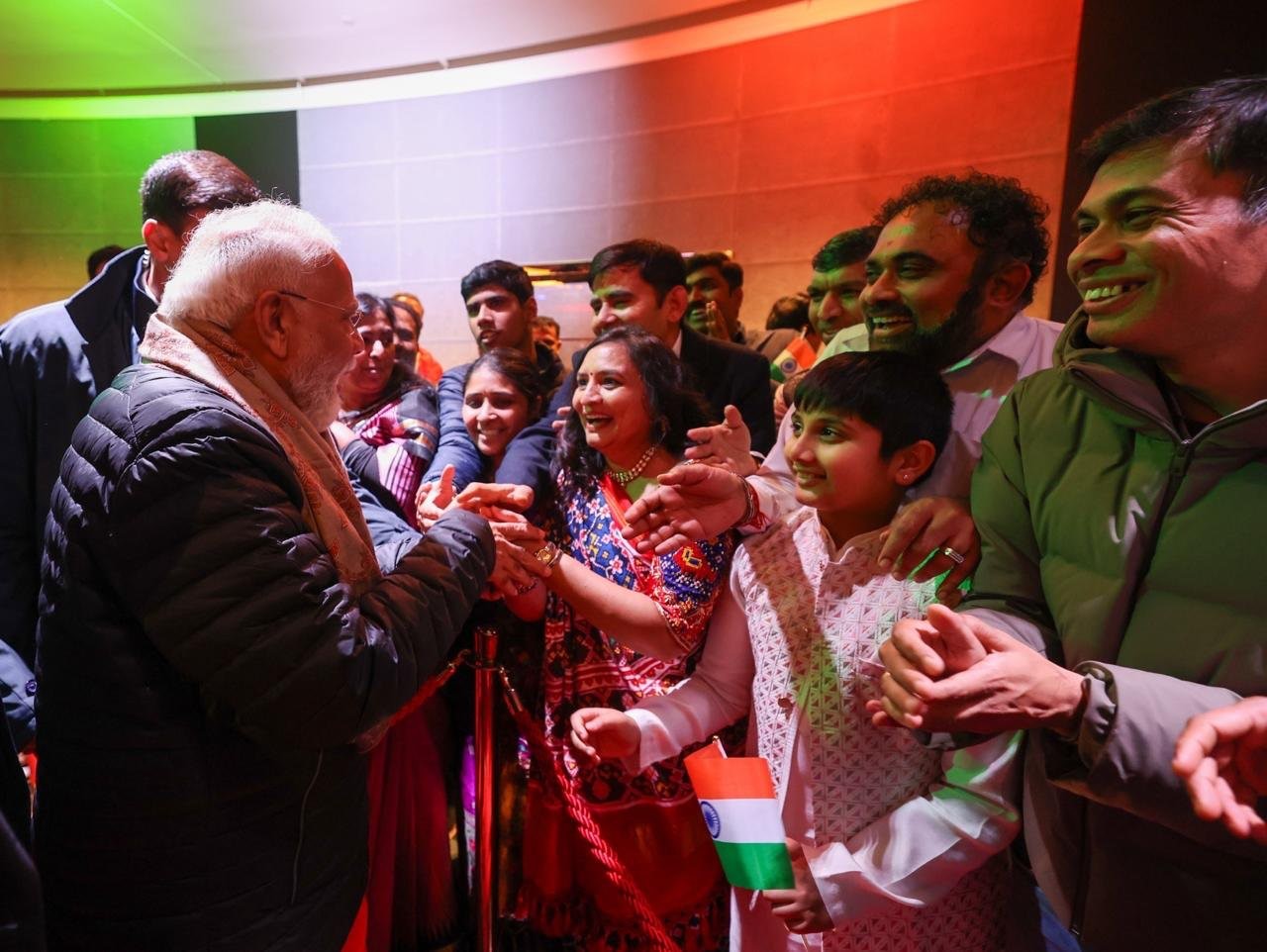
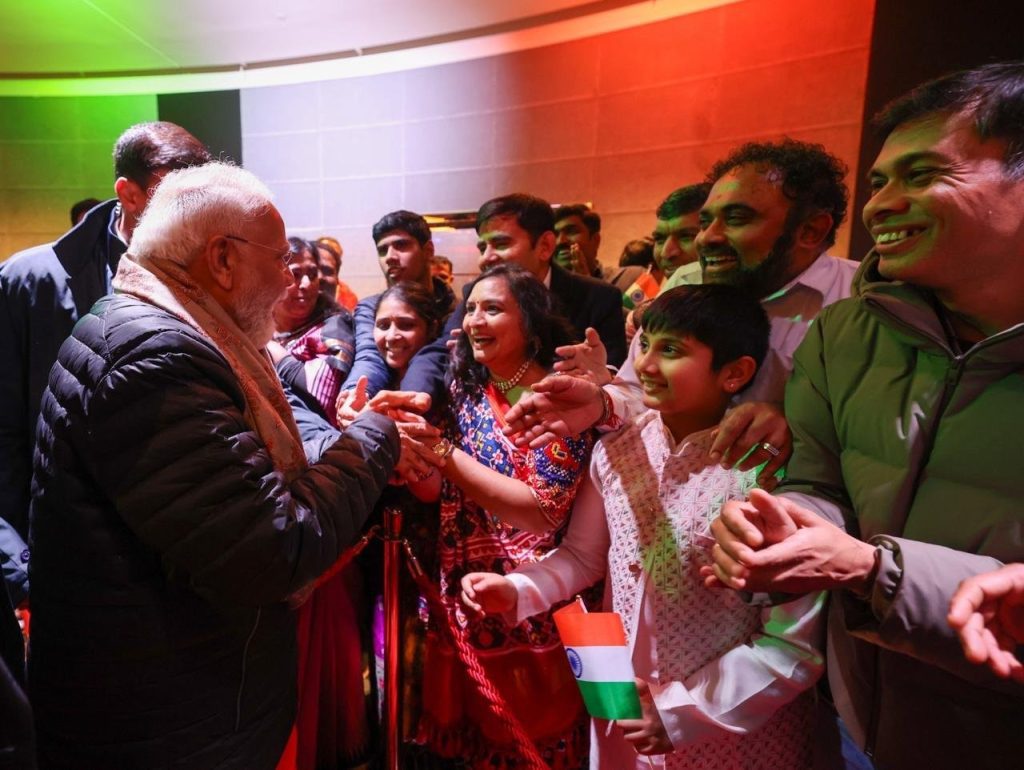
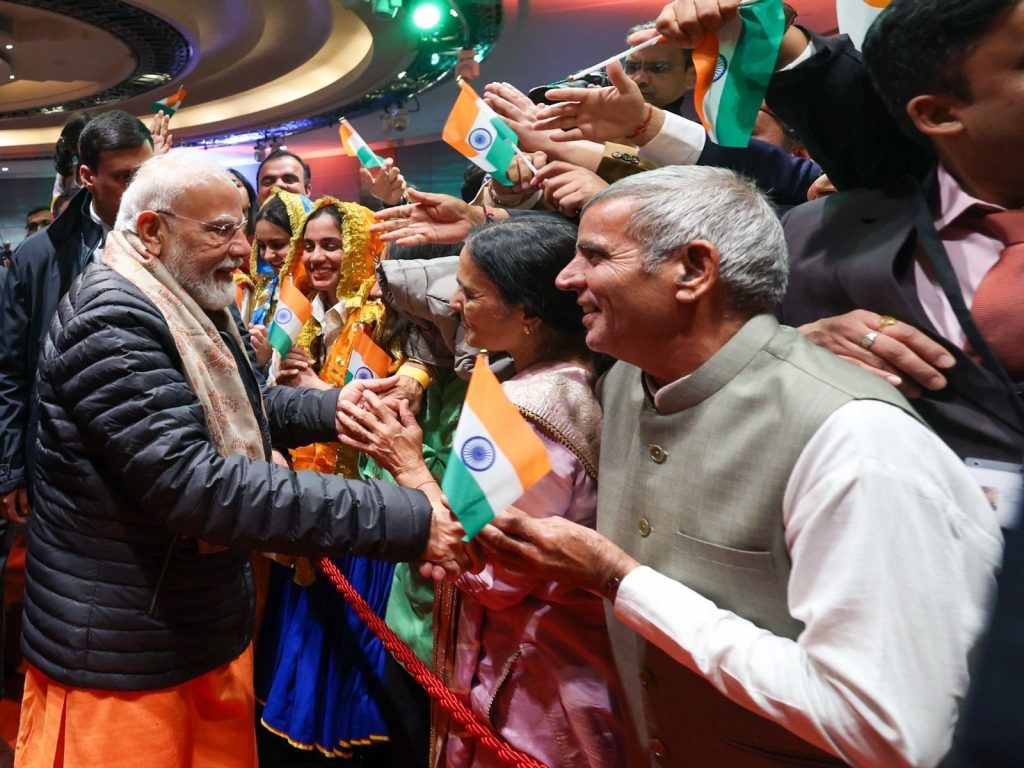
Prime Minister Narendra Modi on Wednesday thanked the Indian community in Melbourne for the warm welcome accorded to him on the first day of his Australia visit, describing the reception as “truly unforgettable”.
Braving the winter chill, members of the Indian diaspora gathered in large numbers outside the Prime Minister’s hotel, greeting him with chants of “Bharat Mata Ki Jai” and “Modi, Modi”. The welcome also featured cultural performances by local artists.
“The weather in Melbourne may be cold but the warmth of the welcome from the Indian community was truly unforgettable. Their affection and unwavering bond with India continue to be a source of immense joy and pride,” PM Modi said in a post on X.
The Prime Minister also praised the Australian-India Orchestra for its rendition of ‘Maa Tujhe Salaam’, saying the performance reflected the role of music in strengthening people-to-people ties between the two countries.
“It beautifully demonstrated how music strengthens the bonds between our people,” he said, adding that the performance also highlighted the global popularity of ‘Vande Mataram’ as India marks the song’s 150th anniversary.
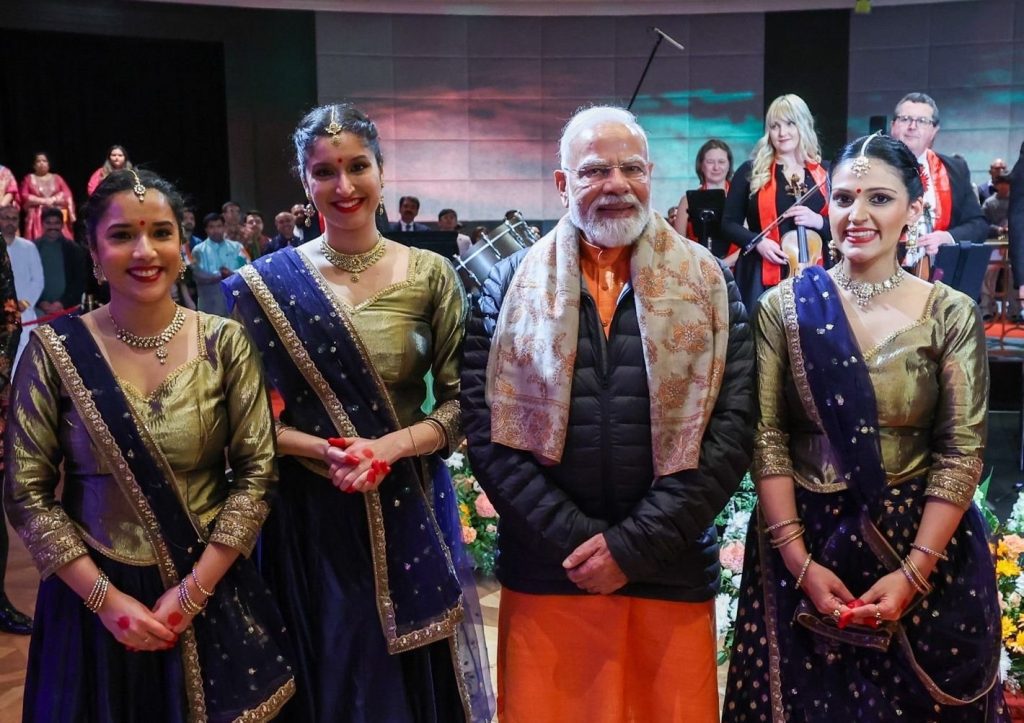
Further, the PM appreciated a musical performance featuring Australia’s traditional Didgeridoo and India’s Tabla, calling it a reflection of the deep cultural connect between the two nations. He later lauded a Kathak performance by local artists and said he was pleased to see Indian classical dance gaining popularity in Australia.
Earlier in the day, after arriving in Melbourne from Indonesia, the second leg of his three-nation tour, PM Modi said his visit would add “vigour” to the India-Australia Comprehensive Strategic Partnership.
“I look forward to the talks with Prime Minister Anthony Albanese. I will also have the opportunity to interact with the Indian diaspora, which is an important pillar of our partnership,” he said.
PM Modi is scheduled to hold bilateral talks with Albanese on Thursday, with discussions expected to focus on strengthening cooperation in trade, defence, critical technologies, education and people-to-people ties.
IANS


