







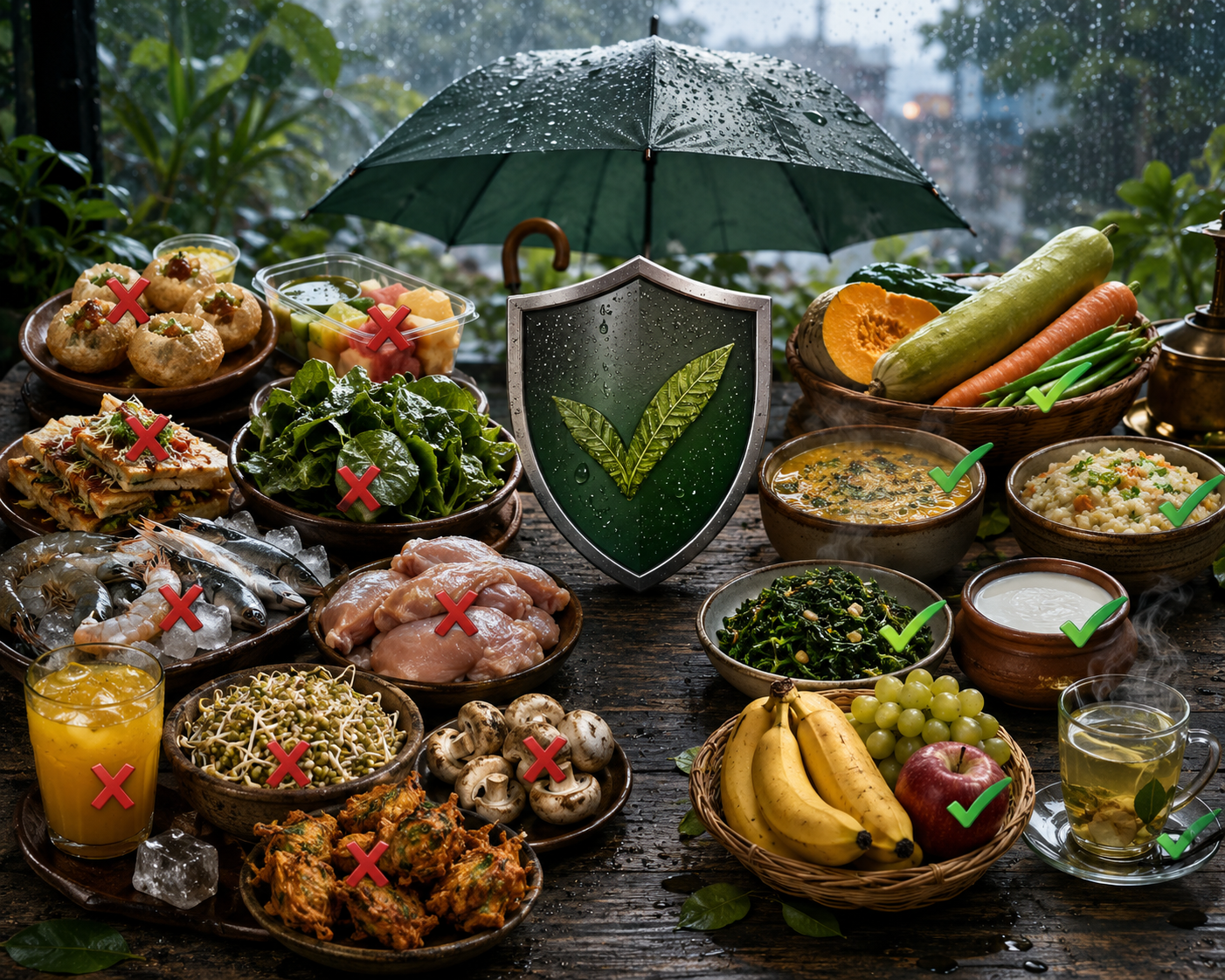
While the monsoon offers welcome relief from the summer heat, it also creates conditions that allow bacteria, viruses, fungi and parasites to multiply more rapidly. Increased humidity, water contamination and improper food storage can raise the risk of food poisoning, stomach infections and waterborne diseases. Health experts say that although no food can completely prevent illness, making safer dietary choices and maintaining proper food hygiene can significantly reduce the chances of falling sick during the rainy season.
Leafy green vegetables such as spinach, lettuce, cabbage and fenugreek are among the foods that require extra caution during the monsoon. Heavy rains make them more likely to retain mud, insects and microorganisms, and thorough cleaning can become difficult. Experts recommend choosing vegetables that can be peeled or cooked thoroughly, including gourds, pumpkin, carrots and beans.
Street food is another common source of concern during the rainy season. Popular snacks such as pani puri, chaat, pakoras and sandwiches sold by roadside vendors may be prepared with contaminated water or handled in unhygienic conditions. The warm and humid weather also accelerates bacterial growth, making freshly prepared homemade versions a safer alternative.
Consumers are also advised to avoid pre-cut fruits and ready-to-eat salads that may have been left exposed for long periods, as they can easily become contaminated. Buying whole fruits, washing them thoroughly and cutting them just before consumption is considered a safer practice.
Raw or undercooked meat, poultry and seafood should be consumed with caution, as they may harbour harmful bacteria and parasites if not cooked properly. Seafood, in particular, requires careful storage during the monsoon because of changing environmental conditions. Health experts recommend eating freshly cooked food that has reached safe cooking temperatures.
Humidity also speeds up bacterial growth in cooked food left at room temperature for extended periods. Freshly prepared meals are preferable, while leftovers should be refrigerated promptly and reheated thoroughly before being eaten.
Experts also advise against consuming wild mushrooms collected from unknown sources, as some poisonous varieties closely resemble edible ones. Cultivated mushrooms purchased from reliable retailers and cooked properly are a safer option.
Fresh fruit juices sold by roadside vendors may also pose health risks if they are prepared using untreated water or contaminated ice. Preparing juices at home with clean, filtered water or choosing safe packaged beverages can help reduce the risk of gastrointestinal infections.
Although sprouts are rich in nutrients, the warm and moist conditions required for sprouting can also encourage the growth of bacteria such as Salmonella and E. coli. Lightly steaming or sautéing sprouts before consumption is recommended to improve food safety.
Health experts also suggest limiting excessive consumption of deep-fried foods during the monsoon. While such snacks are popular during rainy weather, eating them frequently may contribute to indigestion, bloating and acidity. A balanced diet consisting mainly of freshly cooked home-prepared meals is generally considered a healthier choice.
Along with careful food selection, experts emphasise the importance of good hygiene practices. Washing fruits and vegetables thoroughly under running water, drinking boiled or purified water, consuming freshly prepared meals, refrigerating perishable foods promptly, checking expiry dates and washing hands before preparing or eating food can go a long way in preventing foodborne illnesses.


