







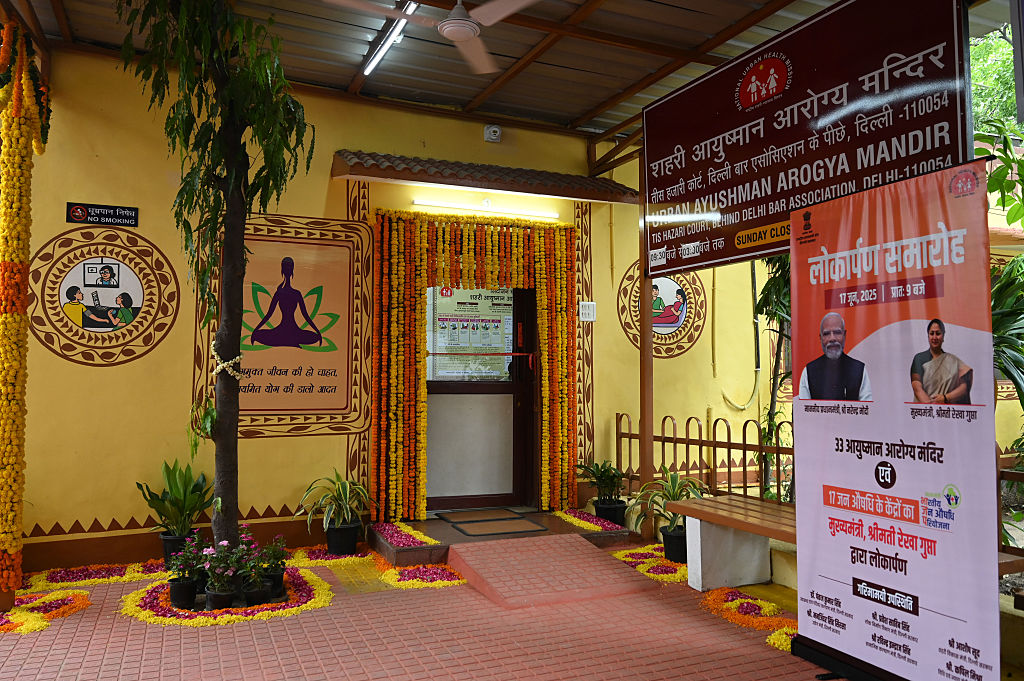
The Centre has undertaken a series of initiatives to strengthen primary healthcare services across the country by expanding healthcare infrastructure, enhancing disease prevention measures and improving access to affordable treatment under the National Health Mission (NHM).
The Ministry of Health and Family Welfare provides technical and financial support to states and Union Territories through Programme Implementation Plans (PIPs), with approvals granted based on prescribed norms and available resources.
To improve healthcare delivery at the grassroots level, the government has operationalised several initiatives under NHM, including Ayushman Arogya Mandirs (AAMs), the Free Drugs Service Initiative, Free Diagnostic Service Initiative, National Ambulance Services, Mobile Medical Units, ASHA programme, 24×7 health services, Prime Minister’s National Dialysis Programme, Anaemia Mukt Bharat, TB Mukt Bharat Abhiyaan and the Universal Immunisation Programme.
As part of efforts to tackle non-communicable diseases (NCDs), the National Programme for Prevention and Control of Non-Communicable Diseases (NP-NCD) has established 770 District NCD Clinics, 524 Day Care Cancer Centres, 233 Cardiac Care Units and 6,410 Community Health Centre NCD Clinics. The programme focuses on strengthening infrastructure, early diagnosis, treatment, referrals and public awareness for diseases, including cervical cancer. A population-based screening programme for common NCDs has also been rolled out under comprehensive primary healthcare.
The government said 1.86 lakh Ayushman Arogya Mandirs have been operationalised by strengthening Sub Health Centres and Primary Health Centres to provide comprehensive preventive, promotive, rehabilitative and curative healthcare services. These centres offer an expanded range of services covering maternal and child healthcare, communicable and non-communicable diseases, and other health concerns.
Under the Ayushman Bharat Pradhan Mantri Jan Arogya Yojana (AB PM-JAY), eligible beneficiaries receive health insurance coverage of ₹5 lakh per family annually for secondary and tertiary hospitalisation. The scheme currently covers around 55 crore beneficiaries from 12.37 crore economically vulnerable families. It has recently been expanded to include 6 crore senior citizens aged 70 years and above from 4.5 crore families, irrespective of their socio-economic status, through the Ayushman Vay Vandana Card.
The Ayushman Bharat Digital Mission (ABDM) is creating an interoperable digital health ecosystem to enable electronic health records and improve access to healthcare services. In addition, teleconsultation services available at operational Ayushman Arogya Mandirs are helping people consult specialists closer to their homes, addressing shortages of healthcare providers and improving continuity of care.
The government is also strengthening public health infrastructure through the PM-Ayushman Bharat Health Infrastructure Mission (PM-ABHIM), launched with an outlay of ₹64,180 crore to enhance the capacity of health systems and institutions across the country.
To improve maternal and child health outcomes, several flagship programmes are being implemented under NHM. These include Janani Suraksha Yojana (JSY) and Janani Shishu Suraksha Karyakram (JSSK), which promote institutional deliveries and provide free maternal and newborn healthcare services. The Pradhan Mantri Surakshit Matritva Abhiyan (PMSMA) offers free antenatal check-ups on the ninth day of every month, while Surakshit Matritva Aashwasan (SUMAN) ensures free and respectful maternity care with zero tolerance for denial of services.
Other interventions include strengthened postnatal care through ASHA workers, Anaemia Mukt Bharat, Mothers’ Absolute Affection (MAA), Lactation Management Centres, Vitamin A supplementation, Home-Based Newborn Care (HBNC), Home-Based Care for Young Child (HBYC) and Mission Poshan 2.0, aimed at improving maternal and child nutrition and health outcomes.
The information was shared by Minister of State for Health and Family Welfare Prataprao Jadhav in a written reply in the Rajya Sabha on Tuesday.


