







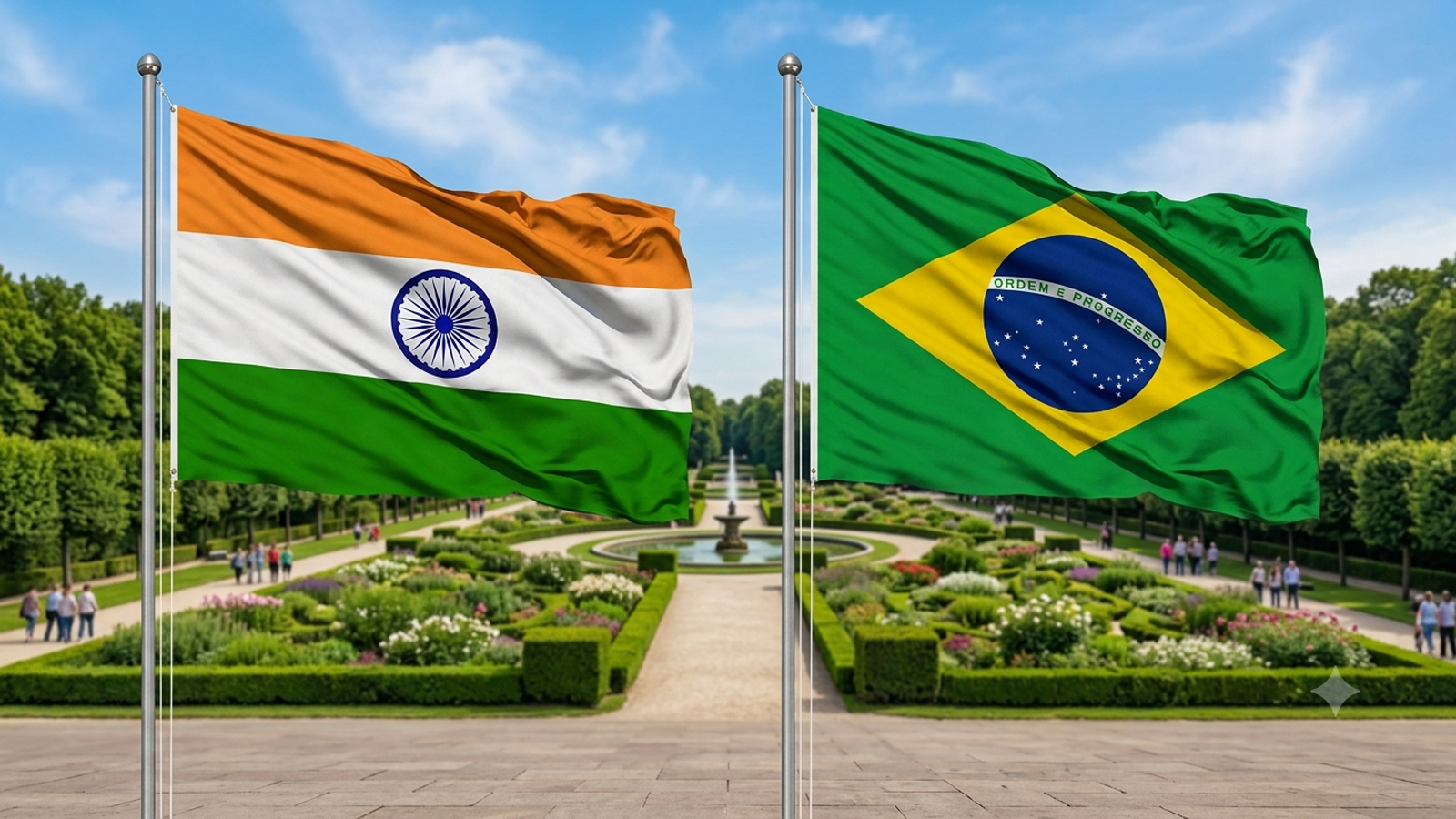
India and Brazil have reaffirmed their commitment to deepen bilateral trade and economic cooperation, setting a target of USD 30 billion in bilateral trade by 2030, as the two countries held the 8th India-Brazil Trade Monitoring Mechanism (TMM) meeting in Brasília.
The meeting was co-chaired by Commerce Secretary Rajesh Agrawal and Brazil’s Secretary of Foreign Trade Tatiana Lacerda Prazeres. The discussions focused on expanding and diversifying economic ties between the two countries, particularly in pharmaceuticals, chemicals, engineering goods and machinery.
Bilateral trade between India and Brazil reached USD 15.07 billion in 2025-26. Both sides said the complementarities between their economies could be leveraged to build a more diversified, balanced and sustainable trade partnership and achieve the USD 30 billion target by 2030.
During his visit, Agrawal also met Brazil’s Minister of Development, Industry, Commerce and Services Marcio Elias Rosa to discuss ways to further strengthen bilateral trade and investment, including cooperation in priority sectors.
India-MERCOSUR trade framework
India and Brazil also reviewed progress on the India-MERCOSUR (Mercado Común del Sur/Southern Common Market) Terms of Reference, with both sides committing to their early finalisation.
The India-MERCOSUR Preferential Trade Agreement was recognised as having significant scope for expansion and modernisation. Bilateral trade between India and the MERCOSUR bloc reached USD 20.84 billion in 2025, according to the Commerce Ministry.
Push for greater pharmaceutical market access
The two sides made progress in facilitating market access for Indian pharmaceutical products in Brazil.
India highlighted the need for more predictable regulatory pathways and greater market access for its pharmaceutical products. The CDSCO-ANVISA MoU signed in February 2026 was described as an important institutional foundation for strengthening cooperation in healthcare and pharmaceuticals.
India said greater access for Indian medicines could contribute to the availability of affordable and quality medicines and support more accessible healthcare.
Agriculture and trade facilitation
Discussions on agriculture covered priority phytosanitary requests concerning key products of interest to both countries. India and Brazil agreed to advance technical processes towards reciprocal market access concessions in a time-bound manner.
The two sides also noted progress on mutual recognition of Electronic Certificates of Origin and cooperation in MSMEs, entrepreneurship and crafts. These initiatives are expected to facilitate trade and reduce barriers for businesses in both countries.
Coordination at BRICS, G20 and WTO
India and Brazil reaffirmed their close coordination on multilateral issues, including through BRICS, the G20 and the WTO, with an emphasis on an open, inclusive and development-oriented multilateral system.
India appreciated Brazil’s engagement in advancing the Strategy for BRICS Economic Partnership 2030 and the GVC Action Plan 2026-2030.
Brazil, in turn, congratulated India on its work during its BRICS Presidency, particularly initiatives such as the BRICS Startup Knowledge Hub and BRICS Business Incubator.
Indian businesses explore new opportunities
An India-Brazil High Level Business Reception was also organised in Brasília, bringing together business representatives and industry stakeholders from both countries.
Agrawal led an Indian business delegation comprising more than 25 Indian companies, including representatives from the Kirloskar Group, UPL and Aditya Birla Group.
The event provided an opportunity to explore collaboration in areas including critical minerals, renewable energy, agri-business, infrastructure, pharmaceuticals, digital services, logistics and advanced manufacturing.
Both sides also welcomed the establishment of an ApexBrasil office in New Delhi, which is expected to strengthen business-to-business linkages and facilitate greater Brazilian investment in India.
The latest engagement comes amid growing economic ties between India and Brazil and is aimed at giving further momentum to the two countries’ Strategic Partnership and building a stronger, more diversified and future-oriented economic relationship.


