







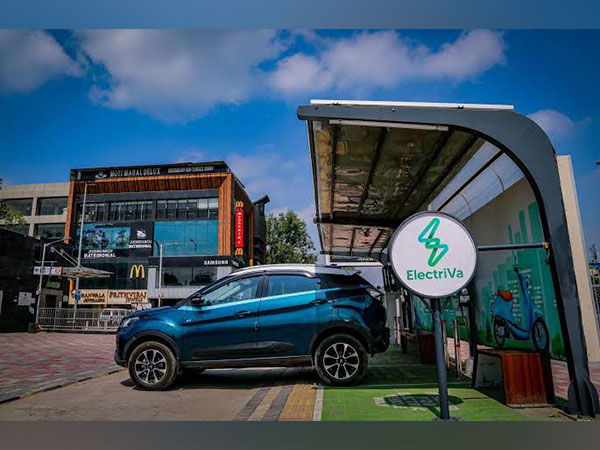
The Government has taken a series of measures to accelerate electric vehicle adoption and strengthen charging infrastructure in the country, with more than 46 lakh electric vehicles supported under various schemes of the Ministry of Heavy Industries (MHI).
Under the Faster Adoption and Manufacturing of Hybrid and Electric Vehicles in India (FAME India) Scheme Phase-II, implemented from April 2019 to March 2024 with a budgetary support of ₹11,500 crore, around 16.72 lakh electric vehicles were supported. The scheme also facilitated the deployment of 5,299 electric buses and the installation of 9,583 public EV charging stations.
The government allocated ₹912.50 crore under FAME-II for setting up EV public charging stations across the country.
The PM Electric Drive Revolution in Innovative Vehicle Enhancement (PM E-DRIVE) Scheme, notified in September 2024 with an outlay of ₹10,900 crore, is supporting approximately 28.30 lakh electric vehicles, including electric two-wheelers, three-wheelers, trucks, buses and ambulances.
Under the scheme, ₹4,391 crore has been allocated for the deployment of 14,028 electric buses, of which 14,000 have been allocated. Another ₹2,000 crore has been earmarked for deploying EV public charging stations across the country.
The government has also introduced Production Linked Incentive (PLI) schemes to strengthen domestic manufacturing of electric vehicles and key components.
The PLI Scheme for Automobile and Auto Component Industry, notified in September 2021 with an outlay of ₹25,938 crore, aims to enhance manufacturing capabilities for Advanced Automotive Technology products, including electric vehicles.
Similarly, the PLI Scheme for Advanced Chemistry Cell (ACC) Battery Storage, notified in June 2021 with an outlay of ₹18,100 crore, aims to establish a domestic manufacturing ecosystem for 50 GWh of ACC batteries. Of this capacity, 40 GWh has been awarded to four beneficiary firms.
The PM e-Bus Sewa-Payment Security Mechanism (PSM) Scheme, notified in October 2024 with an outlay of ₹3,435.33 crore, aims to support the deployment of more than 38,000 electric buses by providing payment security to operators in case of default by public transport authorities.
As of July 10, 2026, the scheme covered 27,555 electric buses, including 10,000 under the PM-eBus Sewa Scheme of the Ministry of Housing and Urban Affairs, 14,000 under PM E-DRIVE and 3,555 under various state government and state transport undertaking initiatives.
According to the Ministry, 2.80 lakh EVs were supported under FAME-I, while 16.72 lakh were supported under FAME-II. PM E-DRIVE had supported 26.59 lakh EVs, while around 21.30 lakh vehicles had been sold under the PLI-Auto and Auto Components scheme up to March 31, 2026.
The government has also taken policy measures to make electric mobility more affordable and accessible. GST on electric vehicles and EV chargers or charging stations has been reduced to five per cent. Battery-operated vehicles have also been provided green licence plates and exempted from permit requirements.
The Ministry of Road Transport and Highways has advised states to waive road tax on electric vehicles to help reduce their upfront cost.
The charging network has also expanded significantly. As of August 7, 2026, a total of 67,657 EV chargers had been installed across States and Union Territories, including 1,139 chargers at battery swapping stations.


