







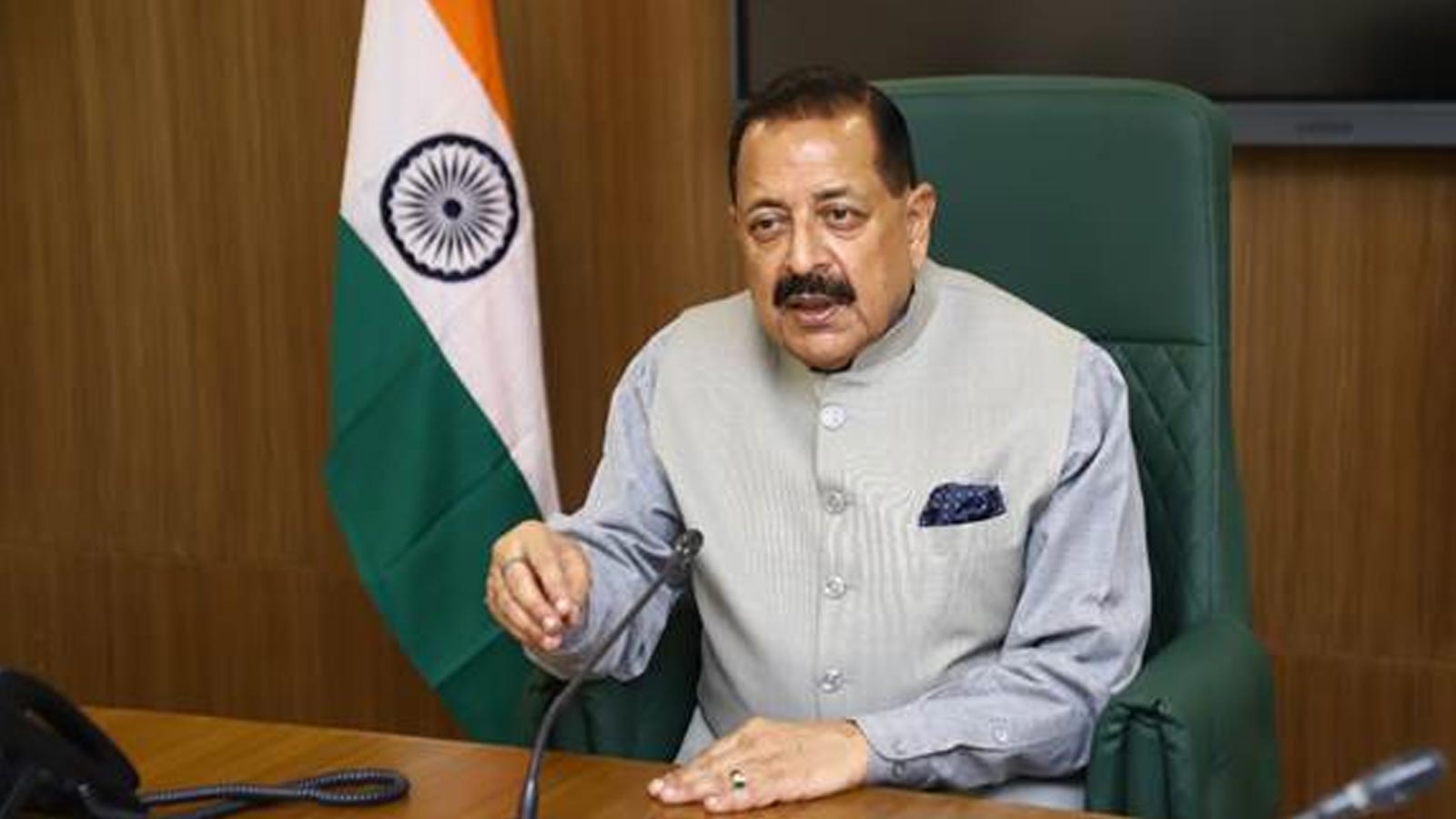
Union Minister of State (Independent Charge) for Science and Technology and Earth Sciences, and MoS PMO, Personnel, Public Grievances, Pensions, Atomic Energy and Space, Dr. Jitendra Singh on Monday called for greater private sector participation and investment in India’s biotechnology ecosystem, stressing the need to strengthen links between indigenous innovations, industry and investors to accelerate the commercialisation of technologies.
Singh made the remarks during a meeting with senior officials of the Biotechnology Industry Research Assistance Council (BIRAC) in New Delhi, where measures to expand investment, industry participation and market opportunities in biotechnology and life sciences were discussed.
The meeting focused on implementation of the BIRAC Research, Development and Innovation Fund (BIRAC-RDIF), stronger industry engagement, integration of Life Sciences Global Capability Centres (GCCs) with the domestic biotechnology ecosystem, leveraging corporate social responsibility (CSR) investments and creating stronger investor networks for biotechnology start-ups.
The BIRAC-RDIF, with an allocation of ₹5,200 crore, is a key component of the government’s ₹1 lakh crore Research, Development and Innovation (RDI) Fund aimed at supporting deep-tech innovation and high-impact indigenous manufacturing under the vision of Viksit Bharat 2047.
Launched by Prime Minister Narendra Modi in November 2025, the RDI Fund is managed by the Anusandhan National Research Foundation and the Department of Science and Technology, with BIRAC designated as a second-level fund manager for the biotechnology sector.
The BIRAC-RDIF is designed to support high-risk, technology-intensive biotechnology projects from Technology Readiness Levels 4 to 9. Eligible technology entities, including start-ups and industry, can receive assistance ranging from ₹5 crore to ₹200 crore, covering up to 50 per cent of the total project cost.
The assistance can be provided through collateral-free long-term loans, equity and hybrid financial instruments, with a co-investment framework intended to attract greater private capital into biotechnology.
BIRAC has established a dedicated division for implementing the fund. Its first national call for proposals was launched in February 2026, following which 198 applications were received. The screening and evaluation of the first 50 applications has been completed, with eight eligible technology entities selected so far on the recommendations of an investment committee comprising external experts.
The selected entities are currently undergoing detailed due diligence before entering into loan or equity agreements.
Singh also stressed the need to leverage India’s growing Life Sciences GCC ecosystem to deepen industry participation in biotechnology. India currently hosts more than 1,700 GCCs employing around 1.9 million professionals, with life sciences and healthcare GCCs emerging as important centres for research and development in areas such as biopharmaceuticals, medical devices and digital health.
BIRAC plans to facilitate stronger integration between these GCCs and India’s domestic biotechnology ecosystem by mapping their requirements in infrastructure, pilot-scale manufacturing and research and development, and connecting them with BioE3 bio-foundries, bio-incubators and start-ups.
The Ministry of Science & Technology said that the role of corporate social responsibility in supporting biotechnology-led social innovation was also discussed. BIRAC plans to use its scientific due-diligence capabilities, nationwide network and grant-management framework to channel CSR investments towards areas such as affordable healthcare, diagnostics, maternal and child health, nutrition, climate-resilient agriculture and skill development.
The organisation has already established a CSR-implementing agency framework and undertaken pilot corporate CSR initiatives, providing a basis for expanding such partnerships.
BIRAC also plans to enhance its visibility and outreach through branding initiatives at Jammu and Vadodara airports to showcase achievements of the Department of Biotechnology and BIRAC and create greater awareness among corporates, investors and international partners about collaboration opportunities.
Jammu is emerging as a hub for biotechnology, healthcare and agricultural innovation, while Vadodara has an established pharmaceutical, biotechnology and manufacturing base.
To address the shortage of growth-stage capital for biotechnology companies, BIRAC has also proposed a Startup Investor Connect platform to bring investment-ready biotechnology start-ups and investors together.
The Ministry said that the platform is expected to create greater awareness of investment opportunities, facilitate strategic partnerships, strengthen investor networks and accelerate the commercialisation of indigenous technologies.
The initiatives discussed at the meeting are aimed at building a stronger bridge between India’s scientific capabilities, biotechnology companies, industry and investors, enabling promising innovations to move faster from laboratory validation to commercial deployment.
The Ministry said the broader objective is to develop a globally competitive biotechnology ecosystem and strengthen India’s capabilities in emerging technologies in line with the vision of Viksit Bharat 2047.


