







Scientists have developed a three-dimensional computer simulation model that could help improve the forecasting of Coronal Mass Ejections (CMEs) and predict their speed, arrival and potential impact on Earth.
The multi-institutional research team has developed the model to trace how magnetic energy accumulates in the Sun’s outer atmosphere and is eventually released during powerful solar eruptions. The study was led by researchers from the Indian Institute of Astrophysics (IIA), an autonomous institute under the Department of Science and Technology (DST), in collaboration with researchers from the United States, Hungary and Finland.
CMEs are massive eruptions of magnetised plasma from the Sun that can travel through space at millions of kilometres per hour. When directed towards Earth, they can disrupt satellite operations, communications and power grids.
At the centre of these eruptions are magnetic flux ropes (MFRs)-twisted structures made up of magnetic field lines embedded in solar plasma. Although they are considered key triggers of CMEs, the process through which magnetic energy builds up and is released during an eruption has remained difficult to understand.
Model traces CME formation
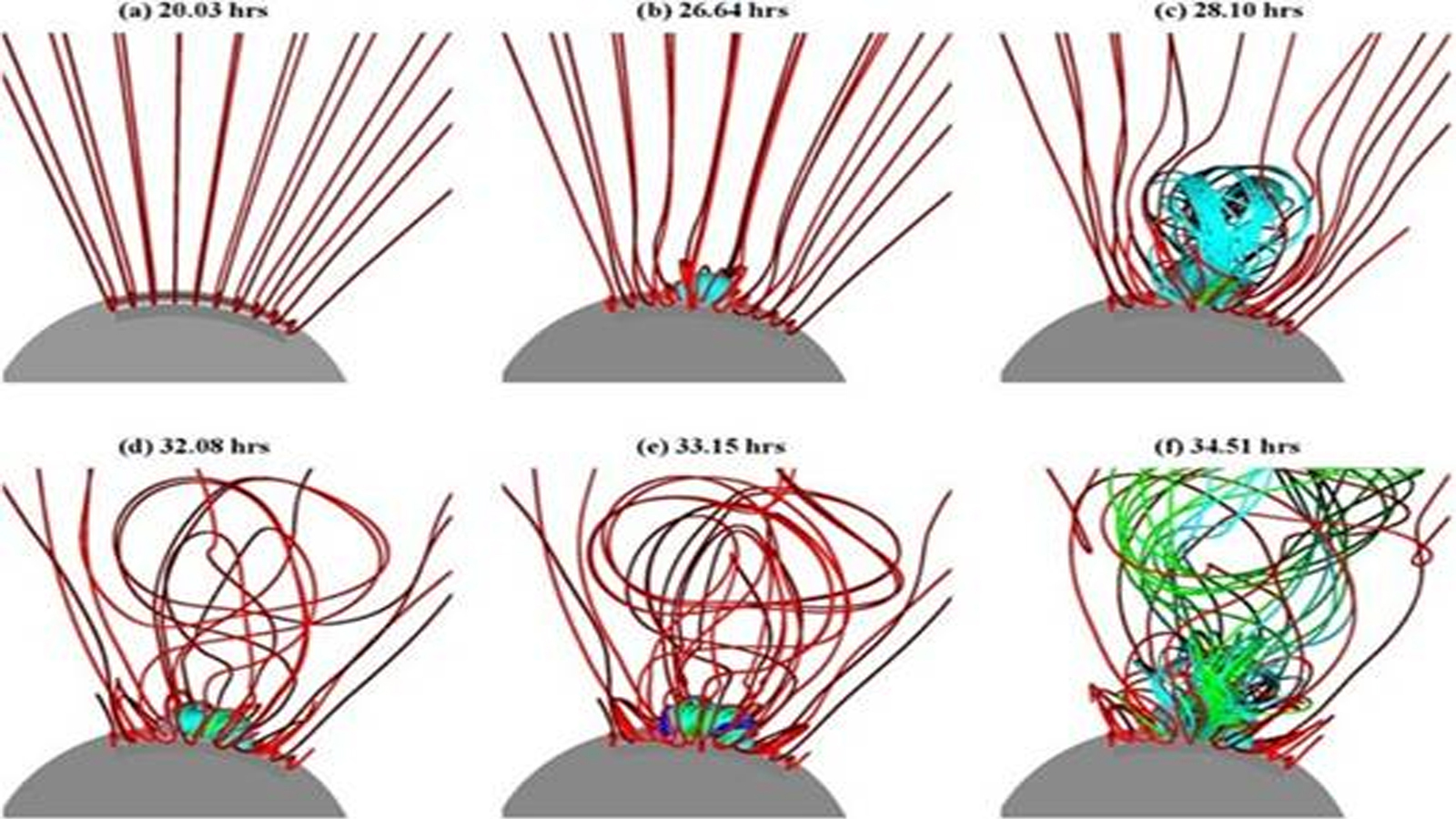
The new three-dimensional magnetohydrodynamic (MHD) simulation model traces the evolution of a magnetic flux rope from its gradual emergence to its eventual eruption.
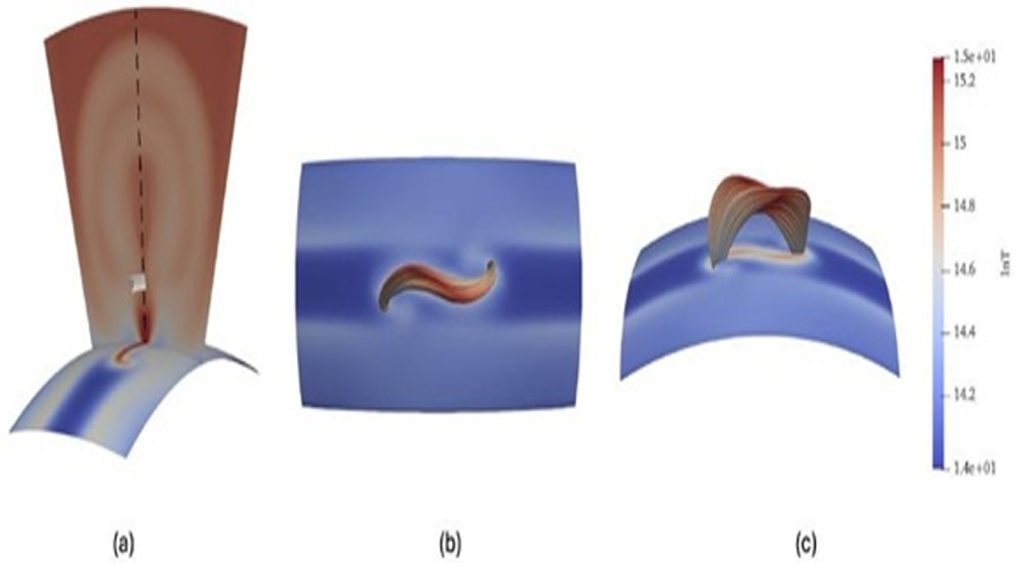
The simulation begins with a realistic model of the solar corona containing a magnetic field configuration resembling a coronal streamer observed on the Sun. A twisted magnetic flux rope is then gradually introduced from below, simulating the emergence of magnetic flux from beneath the solar surface.
As the flux rope rises, it stretches and compresses the magnetic field surrounding it. Researchers found that magnetic reconnection initially develops slowly through the formation of a thin sheet of intense electric current, where opposing magnetic fields are brought together. The process subsequently intensifies and culminates in the rapid expulsion of the flux rope into space.
The computational work was carried out using the NOVA high-performance computing facility at the IIA data centre.
Simulation validated with solar observations
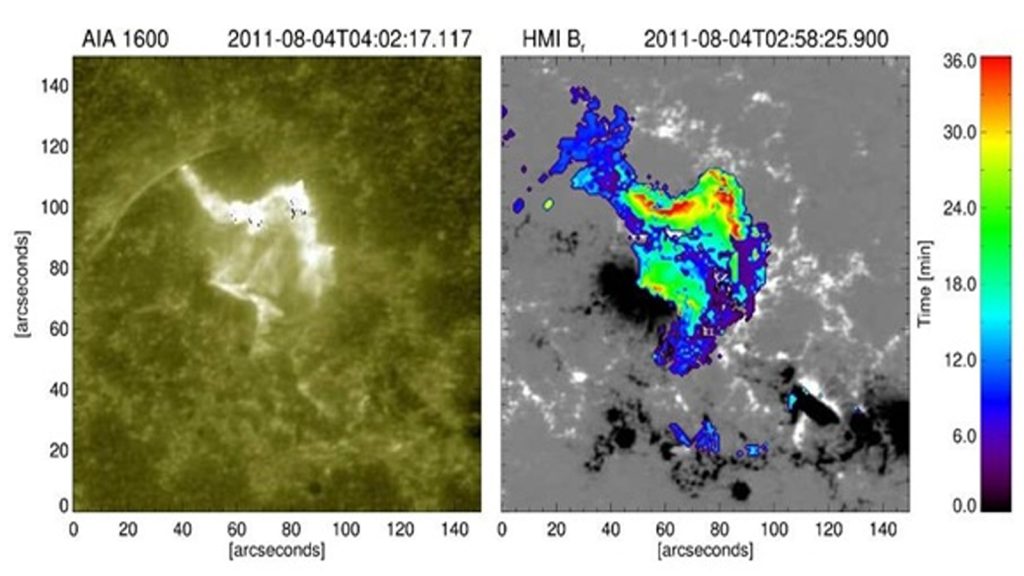
The study, published in the Astrophysical Journal, combined computer simulations with observations of the Sun. Researchers simulated two successive flux rope eruptions and compared their results with observational data analysed in collaboration with a researcher from the University of Helsinki, Finland.
The observational analysis used data from NASA’s Helioseismic and Magnetic Imager (HMI) and Atmospheric Imaging Assembly (AIA) instruments.
The comparison produced a significant finding: the rate of magnetic reconnection showed a clear and consistent relationship with the acceleration of the CME. In other words, as the rate of magnetic reconnection increased, the CME accelerated correspondingly.
The researchers said the finding indicates that reconnection flux could be an important factor in determining not only whether a CME erupts but also how rapidly and energetically the eruption develops.
The research team included Dr Samriddhi Sankar Maity, a postdoctoral researcher at NASA and Georgia State University, Dr Piyali Chatterjee of IIA, Ijas S Mytheen, a PhD student at Eötvös University, Hungary, and Dr Ranadeep Sarkar of the University of Helsinki.
The researchers said the study provides new insight into how magnetic structures that gradually accumulate energy on the Sun can transform into some of the most powerful explosions in the solar system. The findings could contribute to the development of improved space-weather forecasting systems and advance understanding of how solar eruptions evolve before reaching Earth.


