







Marred by repeated protests and disruptions, the Monsoon Session of Parliament concluded on Thursday, with both the Lok Sabha and Rajya Sabha adjourned sine die after 19 sittings spread over 25 calendar days.
The session, which began on July 20, was marked by frequent disruptions and limited legislative debate. Despite the disorder, Parliament passed several key Bills, although many were cleared without substantive discussion.
During the session, 11 Bills were introduced in the Lok Sabha and two in the Rajya Sabha. A total of 12 Bills were passed by both Houses. They included the Public Examinations (Prevention of Unfair Means) Amendment Bill, 2026; the Prevention of Insults to National Honour (Amendment) Bill, 2026; the Registration of Births and Deaths (Amendment) Bill, 2026; the Micro, Small and Medium Enterprises Development (Amendment) Bill, 2026; the Bankers’ Books Evidence Bill, 2026; the Kerala (Alteration of Name) Bill, 2026; the National Co-operative Development Corporation (Amendment) Bill, 2026; the Tribunals Reforms Bill, 2026; and the Mines and Minerals (Development and Regulation) Amendment Bill, 2026, which was passed by the Rajya Sabha on Thursday.
Anti-paper leak Bill a key highlight
A major highlight of the session was the introduction and passage by both Houses of the Public Examinations (Prevention of Unfair Means) Amendment Bill, 2026.
Introduced against the backdrop of student protests over the NEET examination, the Bill amends the parent legislation enacted in 2024 and seeks to strengthen the integrity and credibility of public examinations.
Among other provisions, it seeks speedy investigation and time-bound trials of offences; empowers state governments and Union Territory administrations to designate Special Fast Track Courts and appoint Special Public Prosecutors; mandates completion of investigations within two months and trials within three months; enables the Centre to constitute Special Task Forces where necessary; enhances penalties for offences; and provides for a time-bound appellate mechanism before a Division Bench of the High Court.
The Foreign Contribution (Regulation) Amendment Bill, 2026, which faced strong opposition and extensive public debate, was referred to a 31-member Joint Parliamentary Committee for detailed scrutiny and consultation. The committee will comprise 21 members from the Lok Sabha and 10 from the Rajya Sabha and is expected to submit its report by the last day of the first week of the Winter Session in 2026.
Rajya Sabha Chairman flags disruptions
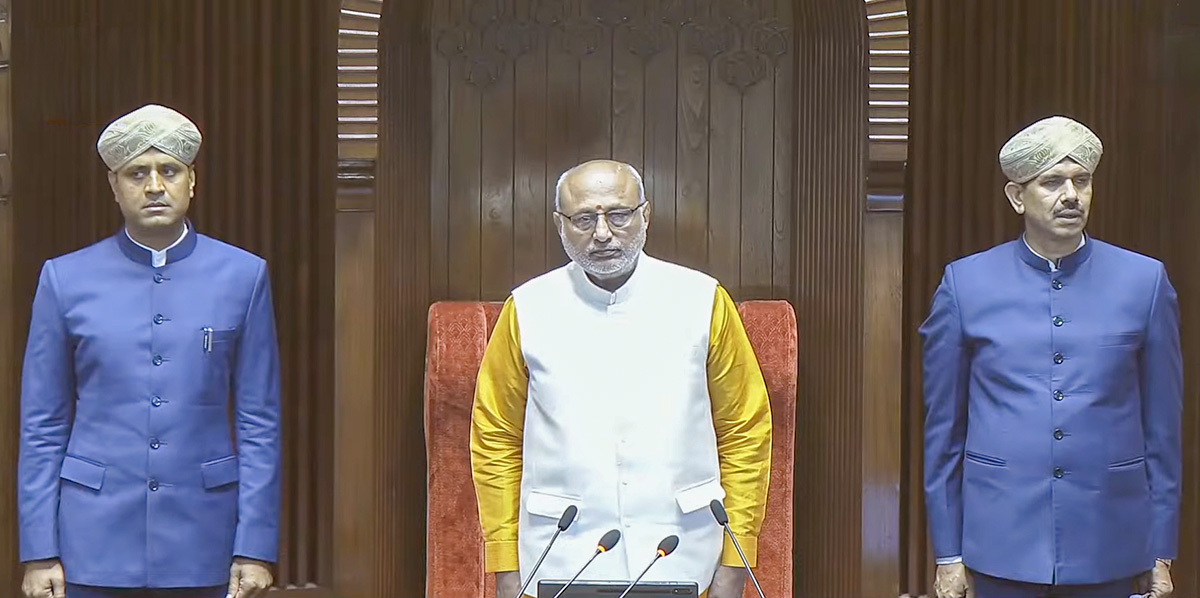
Rajya Sabha Chairman C. P. Radhakrishnan expressed regret over the repeated disruptions, saying persistent disorder had adversely affected the functioning of the House and derailed scheduled legislative business.
“It is a matter of regret that the Session was marked by persistent disorder and frequent disruptions, which repeatedly derailed the business of the House. The loss of precious working hours also deprived the House of meaningful discussion and debate on matters of national importance,” he said in his valedictory remarks.
Despite the disruptions, the Rajya Sabha considered and passed or returned 12 Bills. However, it functioned for only 37 hours and 49 minutes, recording a productivity rate of 39.17 per cent.
The Chairman said members had the opportunity to raise 285 Starred Questions, 380 Zero Hour Submissions and 380 Special Mentions. However, only 16 questions, 52 Zero Hour Submissions and 93 Special Mentions could be taken up.
“The floor was open, but we did not make the fullest use of the opportunities available to us to raise the voice of the people we represent,” he said.
Parliamentary Affairs Minister Kiren Rijiju, meanwhile, blamed the Congress for what he termed “unfairly disrupting” proceedings and said it was unprecedented for an Opposition to “run away” from debate when the government was willing to discuss the issues.
Addressing a press conference after both Houses adjourned sine die, Rijiju said the government was not satisfied that elaborate discussions on key Bills could not take place.
Productivity in Lok Sabha was merely 19 per cent, and in Rajya Sabha 39 per cent, he said.
NEET protests remain at centre of standoff
The principal point of confrontation between the government and the Opposition during the session was a demand for a statement by Union Home Minister Amit Shah on the July 20 protest by students over NEET at Jantar Mantar in New Delhi, along with allegations concerning the alleged embezzlement of donations at the Ram Mandir in Ayodhya.
The government repeatedly maintained that it was ready to discuss the issues, but the Opposition refused to end its protests, resulting in repeated disruptions and several pieces of legislation being passed without detailed debate.
In an effort to break the deadlock, the government on Monday offered a debate on the paper leak issue, with a reply from Shah, but the Congress rejected the proposal.
Shah subsequently wrote to Lok Sabha Speaker Om Birla on Wednesday, urging a debate on the NEET protests and saying he was ready to answer every question from the Opposition during a discussion on the students’ protests. The Opposition, however, turned down the proposal again.


