







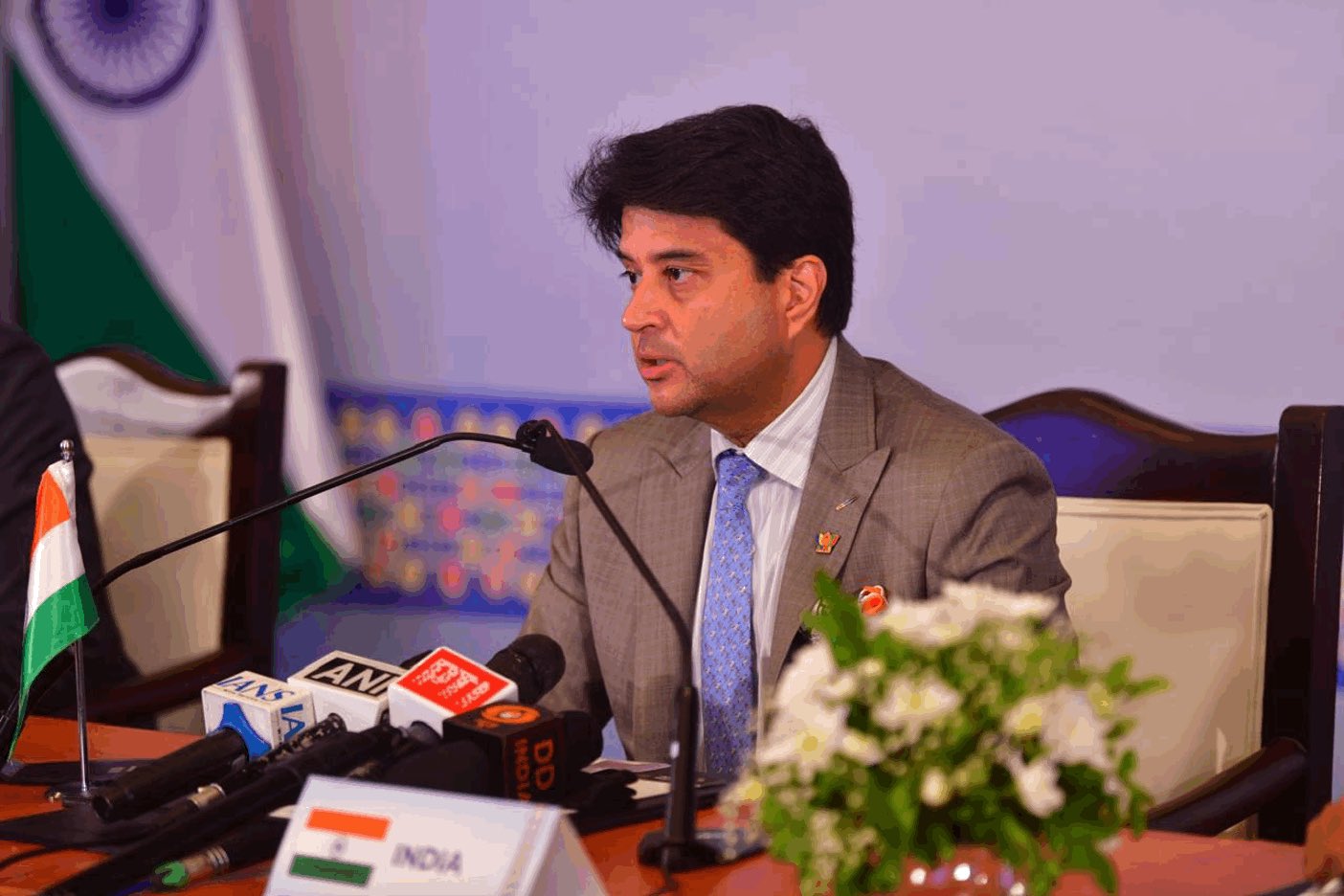
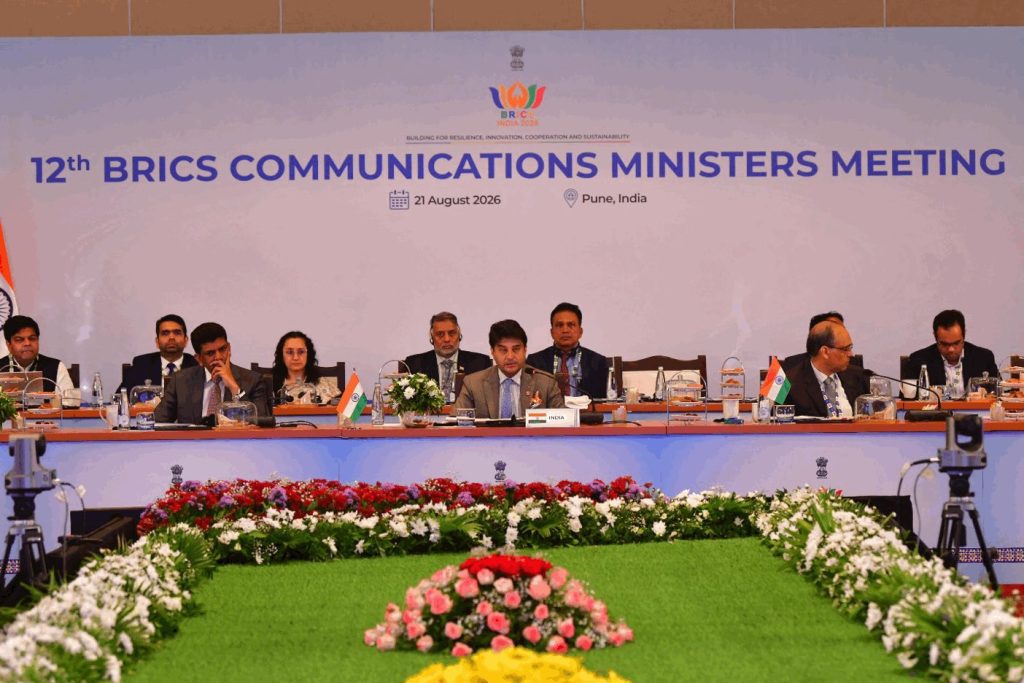
Union Communications Minister Jyotiraditya M Scindia on Friday chaired the 12th BRICS Communications Ministers’ Meeting in Pune, Maharashtra, where member countries discussed ways to build sustainable and resilient ICT ecosystems, strengthen cybersecurity and promote digital inclusion and innovation.
The meeting was held under India’s 2026 BRICS Chairship and brought together Communications Ministers and heads of delegations from BRICS member countries.
Opening the meeting, Scindia outlined India’s theme for the ICT Track, “Innovate, Cooperate and Transform (ICT) for a Resilient Future”, built around four pillars: sustainable and resilient digital and ICT ecosystems; cybersecurity and trustworthy ICT; digital skilling and capacity building; and innovation, startups and entrepreneurship.
“India assumes the Chairship in 2026, we do so with humility and a shared commitment to our theme, building resilience, innovation, cooperation and sustainability reflected in the ICT Track theme ‘Innovate, Cooperate and Transform for a Resilient Future’,” Scindia said.
He said the world was undergoing a major technological transformation, with Artificial Intelligence, next-generation networks, satellite communications, cloud computing and advanced digital infrastructure reshaping economies and societies.
“We must ensure that innovation remains secure, inclusive, sustainable and people-centric,” he said.
The ministerial meeting followed the seventh meeting of the BRICS Working Group for Cooperation in ICTs, held from August 17 to 19, as well as meetings of the BRICS Institute of Future Networks, the Focus Group on Digital Public Infrastructure and the Digital BRICS Task Force.
The Digital BRICS Forum and Expo was also held in Pune on August 20 and 21, bringing together stakeholders to showcase emerging digital and telecommunications technologies.
Heads of ministerial delegations from BRICS countries addressed the meeting. India expressed appreciation to member countries for their participation and engagement during its Chairship year and conveyed its support to the incoming Chair.
Addressing a press briefing after the meeting, Scindia outlined the key outcomes and priorities for future ICT cooperation among BRICS countries.
“India’s transformation led by Prime Minister Shri Narendra Modi ji over the last decade has been monumental,” he said.
He identified eight key areas of cooperation: universal and meaningful connectivity; resilient public infrastructure; trusted, secure and people-centric ecosystems; Digital Public Infrastructure; Artificial Intelligence and future network technologies; innovation, startups and entrepreneurship; digital scaling; and enhanced cooperation among BRICS countries.
“BRICS has a growing role to play in the global forum, considering half of humanity lies in this region, and two-fifths of the world’s economy lies in this region,” Scindia said.
The ministers subsequently visited the Digital BRICS Forum and Expo, where they viewed interactive showcases and telecom solutions presented by domestic and international technology companies.
The five-day programme concluded with an official excursion for visiting delegates, showcasing Pune’s cultural heritage.


