







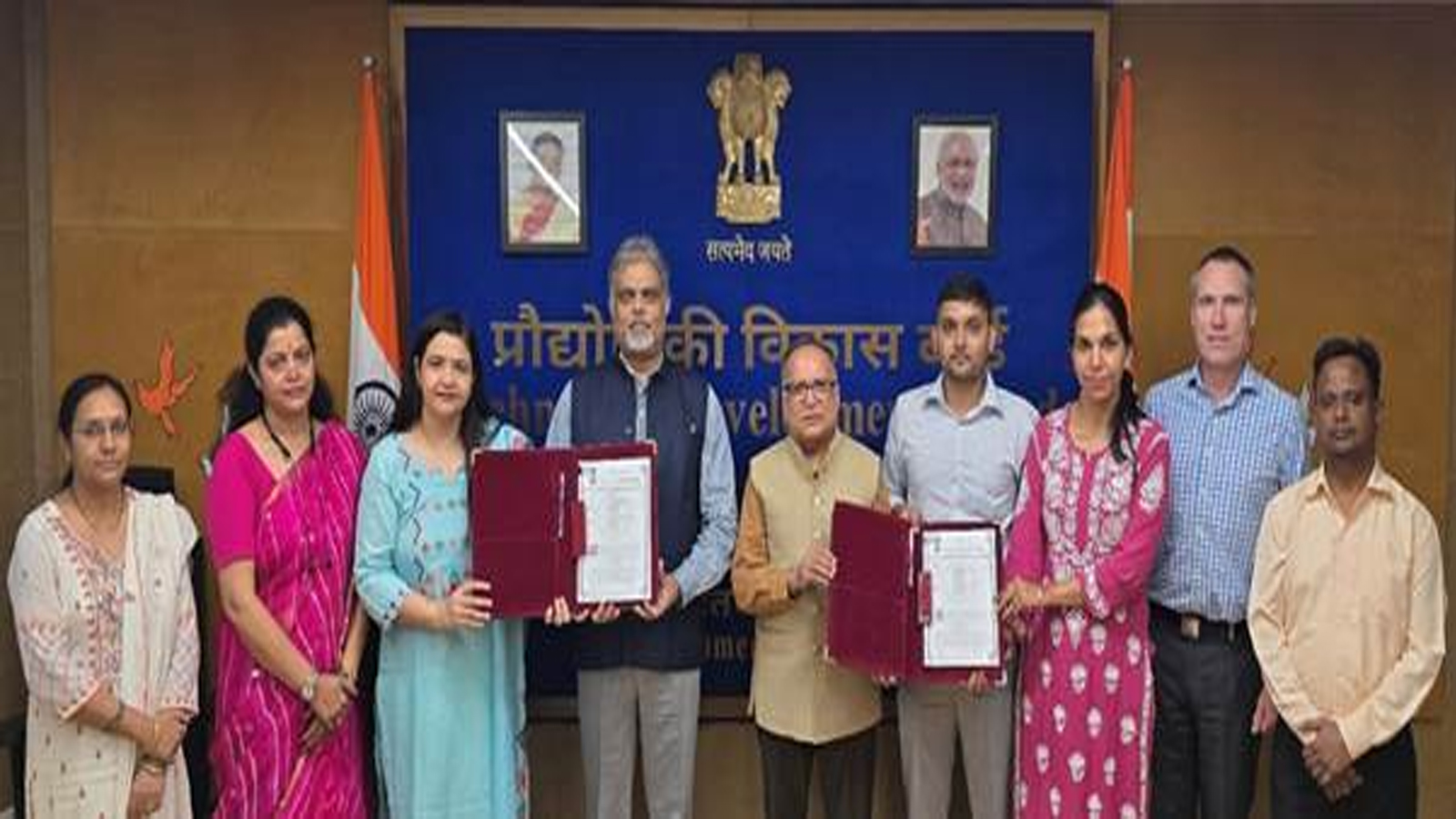
The Technology Development Board (TDB) under the Department of Science and Technology (DST) has extended financial assistance to Vadodara-based medical device startup OrthoGraft Pvt. Ltd. to establish manufacturing capabilities for advanced tissue-derived biological dressings aimed at treating difficult-to-heal wounds.
The project, titled “Production Set-up for Advanced Tissue Derived Biological Dressings,” seeks to translate advances in tissue engineering into clinically relevant wound-care products for chronic wounds, diabetic foot ulcers and burns.
OrthoGraft, a Department for Promotion of Industry and Internal Trade (DPIIT)-recognised startup, is developing tissue substitutes for clinical reconstruction and functional repair. Its proprietary technology is focused on processing viable human tissue into shelf-stable substitutes while retaining important biological and structural characteristics of native tissue that support the wound-healing process.
The technology involves an advanced tissue-processing method designed to remove cells effectively while preserving tissue quality and bioactive components. The biological dressings being developed are intended to offer improved tensile strength, high retention of bioactive factors and a Moisture Vapour Transmission Rate (MVTR) comparable to commercially available moist wound dressings.
The project combines tissue engineering, biomaterials science and specialised processing techniques to develop high-value biological dressings for chronic and hard-to-heal wounds.
With TDB’s support, OrthoGraft will strengthen its production infrastructure at the Savli Technology Business Incubator in Vadodara, where it has leased a bio-incubation facility. The facility provides access to biotechnology research and development infrastructure needed for medical device development and translation.
The company has obtained the requisite licences from the Central Drugs Standard Control Organisation (CDSCO) for manufacturing medical devices for testing purposes and is exploring collaborations with tertiary-care hospitals and medical institutions for further development and clinical translation of the technology.
OrthoGraft has developed expertise in tissue processing and tissue substitutes and currently holds two granted US patents. It is also working with institutions including IIT Ropar and multispecialty hospitals to advance and translate its technology platform.
TDB Secretary Rajesh Kumar Pathak said advanced biomaterials and tissue-engineered products represent an important frontier for India’s medical technology ecosystem.
He said TDB’s support was aimed at helping the startup translate its tissue-processing expertise into commercially manufacturable wound-care products, adding that such technologies could strengthen India’s indigenous capabilities in advanced healthcare materials and create opportunities for Indian innovations in global markets.
The company said the financial assistance would help it establish dedicated production capabilities and accelerate the development of clinically relevant products based on its proprietary tissue-processing platform.
OrthoGraft aims to develop an indigenous portfolio of advanced tissue substitutes and expand the availability of biological wound-care solutions in India.


