







India on Wednesday rejected the operationalisation of what it termed the “so-called Pakistan-China Boundary Joint Commission”, stating that the initiative has no legal basis.
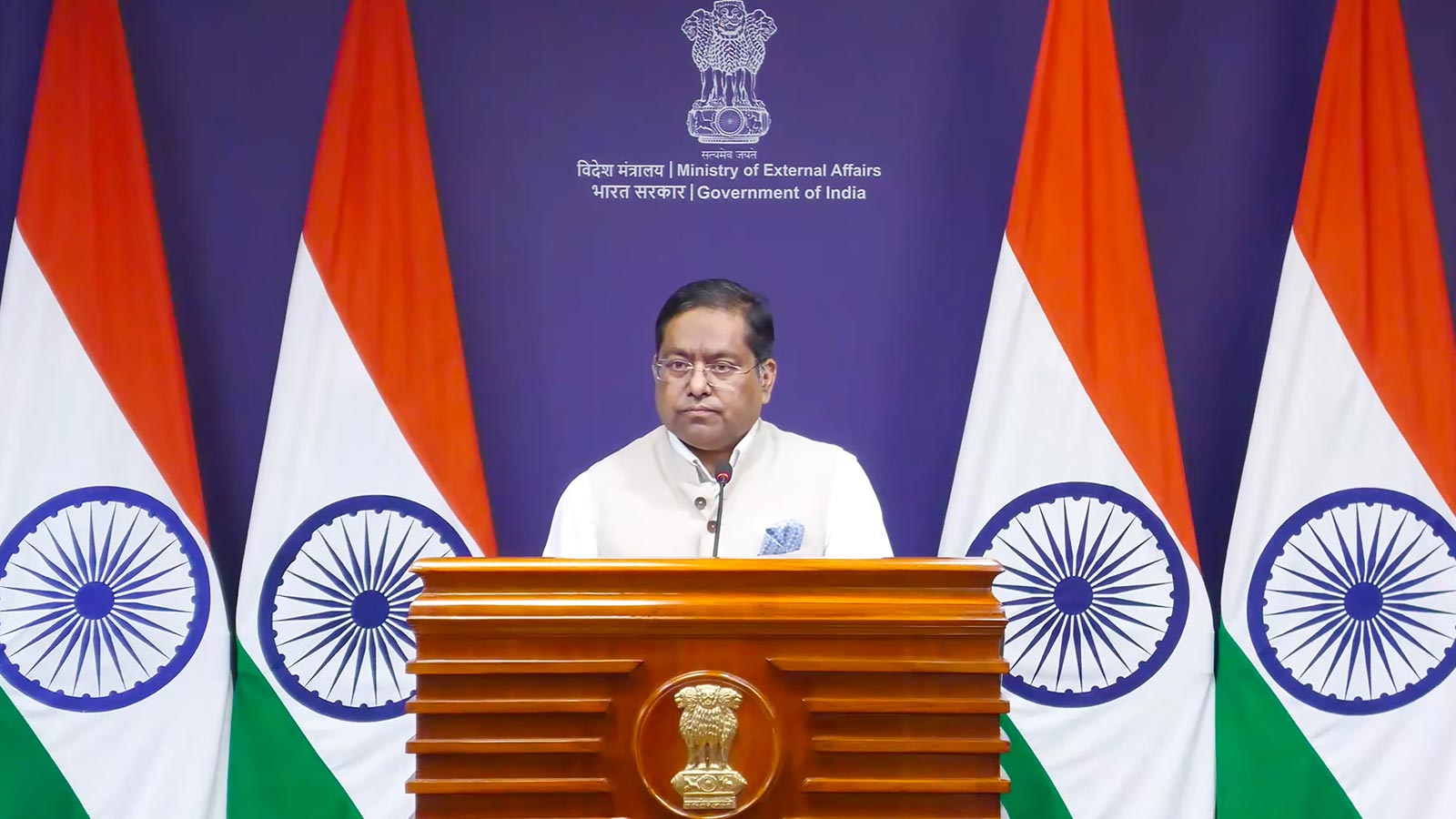
Addressing media queries, Ministry of External Affairs spokesperson Randhir Jaiswal said India’s position on the issue remains clear and consistent, asserting that there is no boundary between Pakistan and China.
Jaiswal said India has never recognised the so-called China-Pakistan Boundary Agreement of 1963, describing it as illegal and invalid.
The MEA spokesperson reiterated India’s position that the Union Territories of Jammu and Kashmir and Ladakh have always been integral parts of India. He said Pakistan has no authority to enter into arrangements concerning Indian territory under what New Delhi describes as its illegal and forcible occupation.
India also opposed any attempt to alter the status of these territories or legitimise what it considers illegal occupation.
Jaiswal said any so-called boundary cooperation between China and Pakistan concerning Indian territories would be unacceptable and would have no bearing on India’s sovereignty over those territories.
He called on Pakistan to vacate areas under what India describes as its illegal and forcible occupation.
The development comes days after Prime Minister Narendra Modi and Chinese President Xi Jinping held bilateral talks on the sidelines of the 18th BRICS Summit in New Delhi.
During the meeting, the two leaders expressed commitment to a fair, reasonable and mutually acceptable resolution of the India-China boundary question and agreed to take a strategic and long-term perspective of bilateral relations.
Prime Minister Modi emphasised that differences should not become disputes and said India-China relations should be guided by mutual respect, mutual sensitivity and mutual interest.
He also stressed that peace and tranquillity in the border areas remain essential for the continued development of bilateral relations and underlined the need for both sides to observe existing agreements and understandings on border-related issues.
-ANI


