







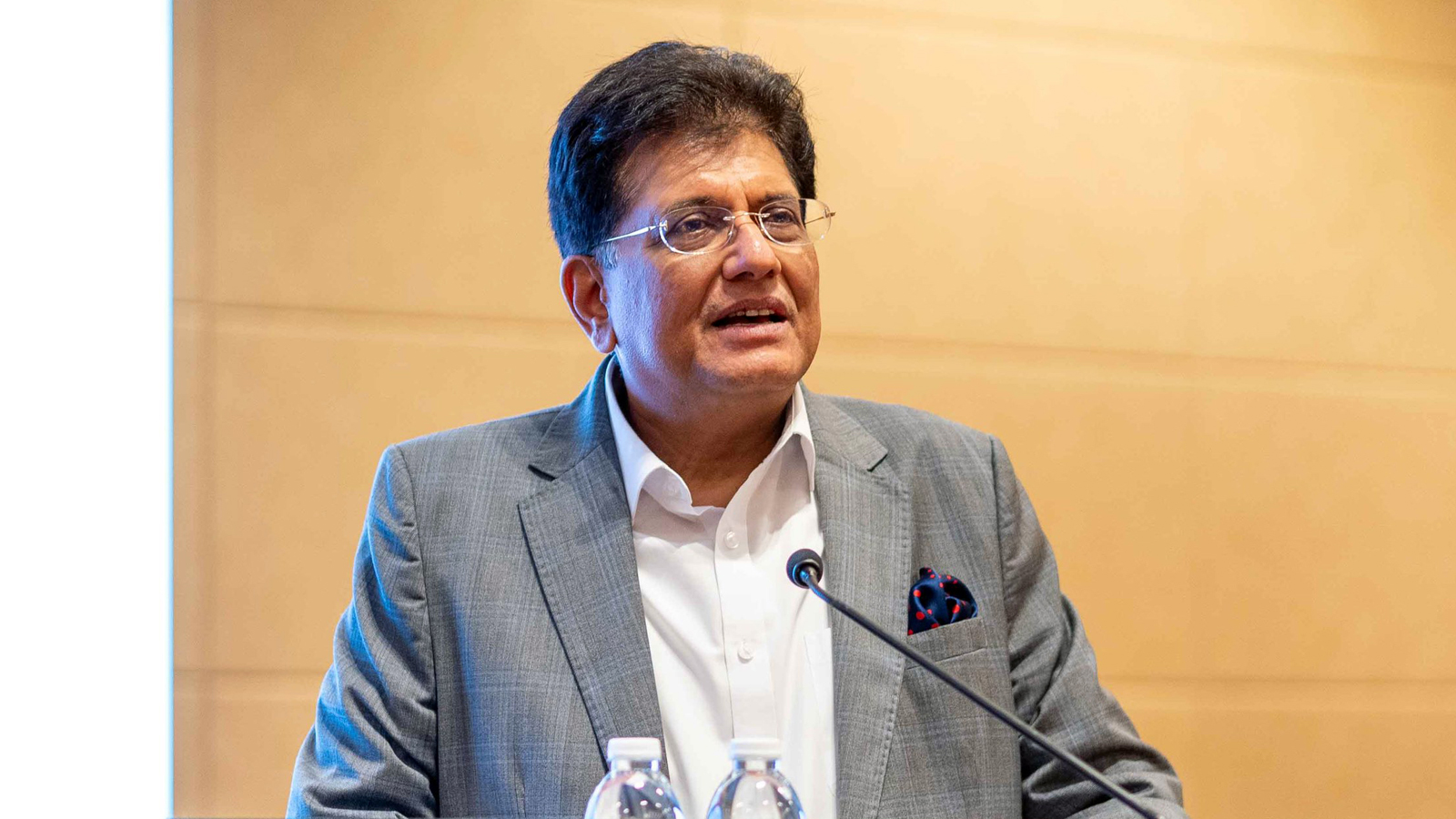
Union Commerce and Industry Minister Piyush Goyal on Thursday called on India’s automotive industry to deepen localisation, invest in technology and research, and expand exports to take advantage of emerging opportunities in global markets.
Addressing the 66th annual convention of the Society of Indian Automobile Manufacturers (SIAM), Goyal said the automotive sector would remain an important driver of India’s growth in the coming years, supported by rising incomes and consumer aspirations.
He urged automobile companies to look beyond the domestic market and “think globally”, saying India’s growing manufacturing capabilities and expanding trade partnerships could help companies serve markets across the world.
The Minister said global manufacturing was expected to increasingly shift towards countries offering competitive costs, talent and industrial capacity. Indian companies, he said, should anticipate these changes and position themselves to benefit from emerging opportunities.
Focus on global-standard products
Goyal stressed that vehicles and components manufactured in India should meet global standards and cautioned against producing products of different quality for domestic and international markets.
He said India’s trade agreements were opening new avenues for exports, technology absorption and investment.
The Minister highlighted nine trade agreements finalised over the past four-and-a-half years, covering economies with a combined GDP of around USD 60 trillion.
He said the India-European Union trade agreement would provide significant opportunities for the automotive industry and urged companies to prepare to leverage the agreement.
Goyal also pointed to the India-UK trade agreement, which he said provides zero-duty access for most auto components.
Push to increase exports
India recorded USD 863 billion in goods and services exports last year, Goyal said, adding that the government has set a target of USD 1 trillion for the current year.
He said exports had been growing at around USD 9 billion a month during the first five months and called on industry to increase the pace to achieve the target.
The Minister also urged automobile and auto-component manufacturers to explore overseas markets more aggressively, saying India’s automotive exports had the potential to double every two years.
He cited India’s export of around one million cars last year and the growing presence of Indian electric vehicles in global markets as signs of the industry’s expanding capabilities.
AI, technology to reshape automotive sector
Goyal said artificial intelligence would help the automotive industry improve efficiency, competitiveness and customer service.
While technology could change existing job roles, he said employment opportunities would increase as new roles emerge.
He stressed that resilience in the automotive sector should extend beyond supply chains to include business planning, innovation, research and development, technology adoption, skill development and talent.
The Minister also called for a broader approach to sustainable mobility, saying sustainability should address both environmental and economic considerations.
Government support for localisation
Goyal said the government was monitoring company-wise import and export data to assess actual levels of localisation.
Companies that were unable to localise certain products, he suggested, could compensate by expanding exports.
He said the government was prepared to provide support for critical minerals, technology, plug-and-play infrastructure and industrial parks to strengthen the domestic automotive ecosystem.
He also highlighted the Critical Mineral Mission and the government’s efforts to secure access to rare earth elements and permanent magnets, which are important for electric mobility.
The Minister said India had demonstrated its ability to respond to challenges related to permanent magnets by bringing together automobile companies, startups, IREL, scientific institutions and relevant ministries.
Partnerships to strengthen global competitiveness
Goyal said the automotive industry could benefit from partnerships with international companies to bring technology to India, manufacture products domestically and export them back to global markets.
He referred to strong interest from Japanese and European companies in partnering with Indian firms and said such collaborations could also help develop India’s skilled talent pool.
He said India was seeking to secure the “four M’s of mobility” through trusted global partnerships — molecules, modules, megawatts and markets.
On energy, Goyal stressed the need to reduce India’s dependence on imported crude oil and develop indigenous energy and battery technologies.
He also invited the automotive industry to identify locations for large projects and said the government was willing to facilitate land, plug-and-play infrastructure and country-specific industrial parks based on industry requirements.
Concluding his address, Goyal urged the automotive industry to set ambitious export targets, deepen localisation and compete with the best in the world.
He said the combined efforts of industry and government would be crucial to achieving the goal of a developed India by 2047.


