







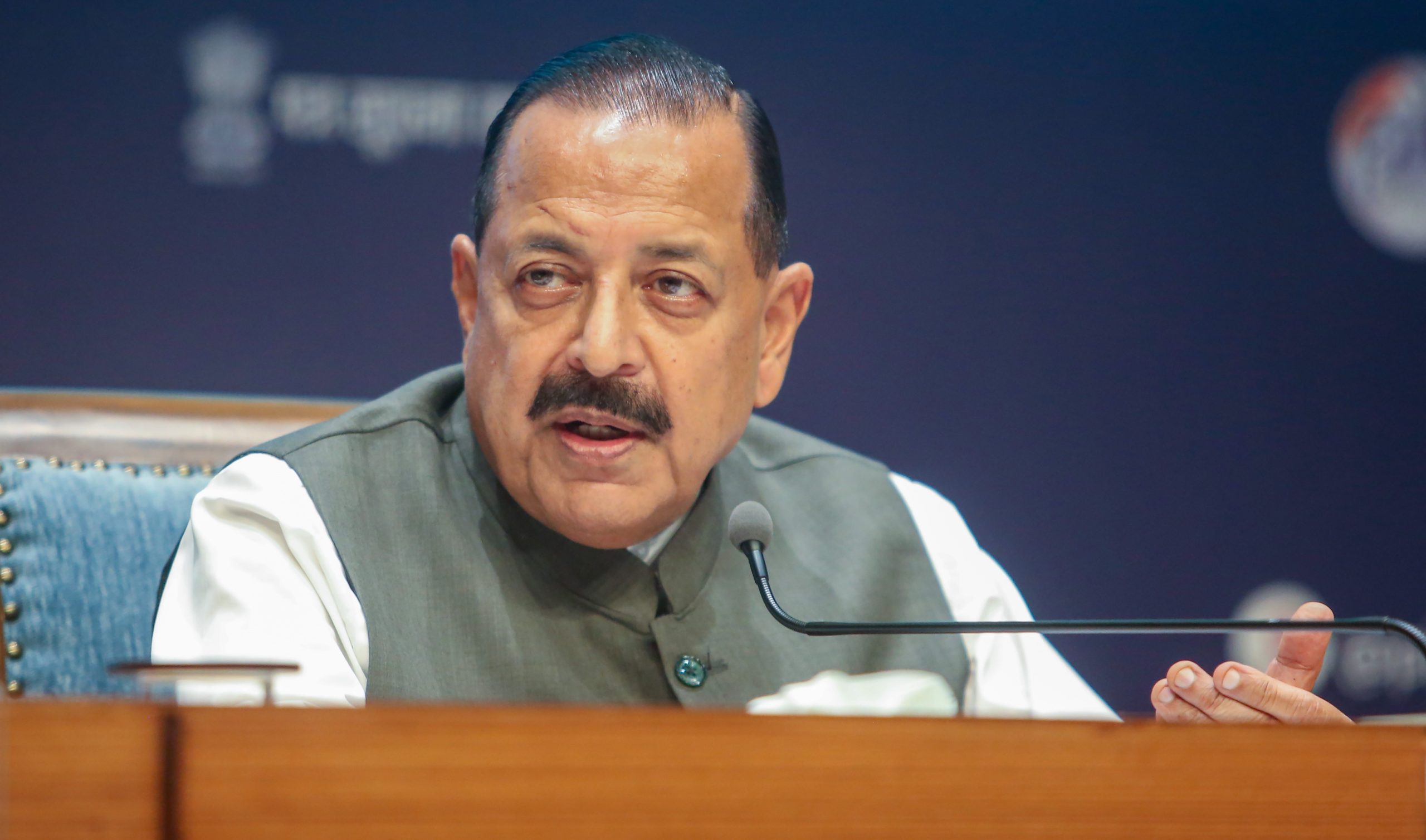
Union Minister of State (Independent Charge) for Science and Technology and Earth Sciences and MoS in the Prime Minister’s Office, Personnel, Public Grievances and Pensions, Atomic Energy and Space, Dr Jitendra Singh, on Thursday called for a greater focus on preventive healthcare, physical and mental well-being, and healthy living.
Addressing the Health & Wellness Summit 2026, Singh said, “Wellness is not mere absence of disease”, and emphasised the need to move beyond an approach centred solely on diagnosis and treatment.
He said India has, over the past decade, moved towards a broader understanding of health, with increasing emphasis on Ayurveda, Yoga and wellness centres alongside modern healthcare. A healthy younger generation, he added, would be central to achieving the vision of Viksit Bharat 2047.
Singh said health was no longer limited to being free from disease or receiving treatment for a specific ailment, but also encompassed physical and mental well-being, the environment in which people live and work, work-life balance and overall ease of living.
He said the substantial increase in life expectancy since Independence had also resulted in a shift in India’s disease profile. While average life expectancy at the time of Independence was around 45 years, people are now living considerably longer, with cardiovascular diseases, Type 2 diabetes and other lifestyle-related non-communicable diseases emerging as major health challenges.
Advances in healthcare and wider access to medical facilities have significantly strengthened India’s ability to diagnose and treat serious illnesses, Singh said. The next phase of healthcare, however, must focus more on prevention, early detection and maintaining well-being rather than relying primarily on treatment after the onset of disease.
The minister said the government under Prime Minister Narendra Modi had adopted a broader healthcare approach, combining improved access to treatment with preventive and grassroots interventions. He cited the expansion of medical education and initiatives such as Ayushman Bharat as part of efforts to improve access to healthcare and reduce the financial burden of serious illnesses on families.
Singh also highlighted the role of science and technology in addressing emerging health challenges, particularly through the development of affordable, accessible and locally relevant solutions.
India’s scientific ecosystem had demonstrated its capacity to respond to major public health challenges, including during the COVID-19 pandemic, when Indian laboratories rapidly isolated and sequenced the SARS-CoV-2 genome, contributing to the development of indigenous vaccines, he said.
He stressed the need to translate scientific research into technologies and products capable of benefiting large sections of the population. Translational research bringing together medicine, science, technology and industry could help develop affordable diagnostics, biosensors, drug-delivery technologies and other healthcare solutions, he said.
Singh also highlighted the importance of early screening for inherited disorders, particularly among newborns and pregnant women. Programmes such as UMMID (Unique Methods of Management and Treatment of Inherited Disorders), he said, were helping strengthen early detection and management, demonstrating how scientific capabilities could be applied to preventive healthcare.
India’s health priorities must evolve in line with its changing demographic and disease profile, Singh said, adding that longer life expectancy made it increasingly important to ensure that people not only live longer but also enjoy better physical and mental well-being.
He called for continued collaboration among medical practitioners, researchers, industry and other stakeholders to develop practical solutions to emerging health challenges.
The objective, Singh said, should be to build a healthier India where preventive healthcare and wellness become integral to the country’s journey towards Viksit Bharat 2047.


