







The National Biodiversity Authority (NBA) has disbursed ₹2.02 crore in Access and Benefit-Sharing (ABS) funds to 27 states and three Union Territories to support biodiversity conservation, sustainable resource use and local community livelihoods.
The funds represent the beneficiaries’ shares of contributions received from seed-sector companies for using agricultural biological resources. With this release, the NBA’s cumulative ABS disbursement has reached ₹202 crore.
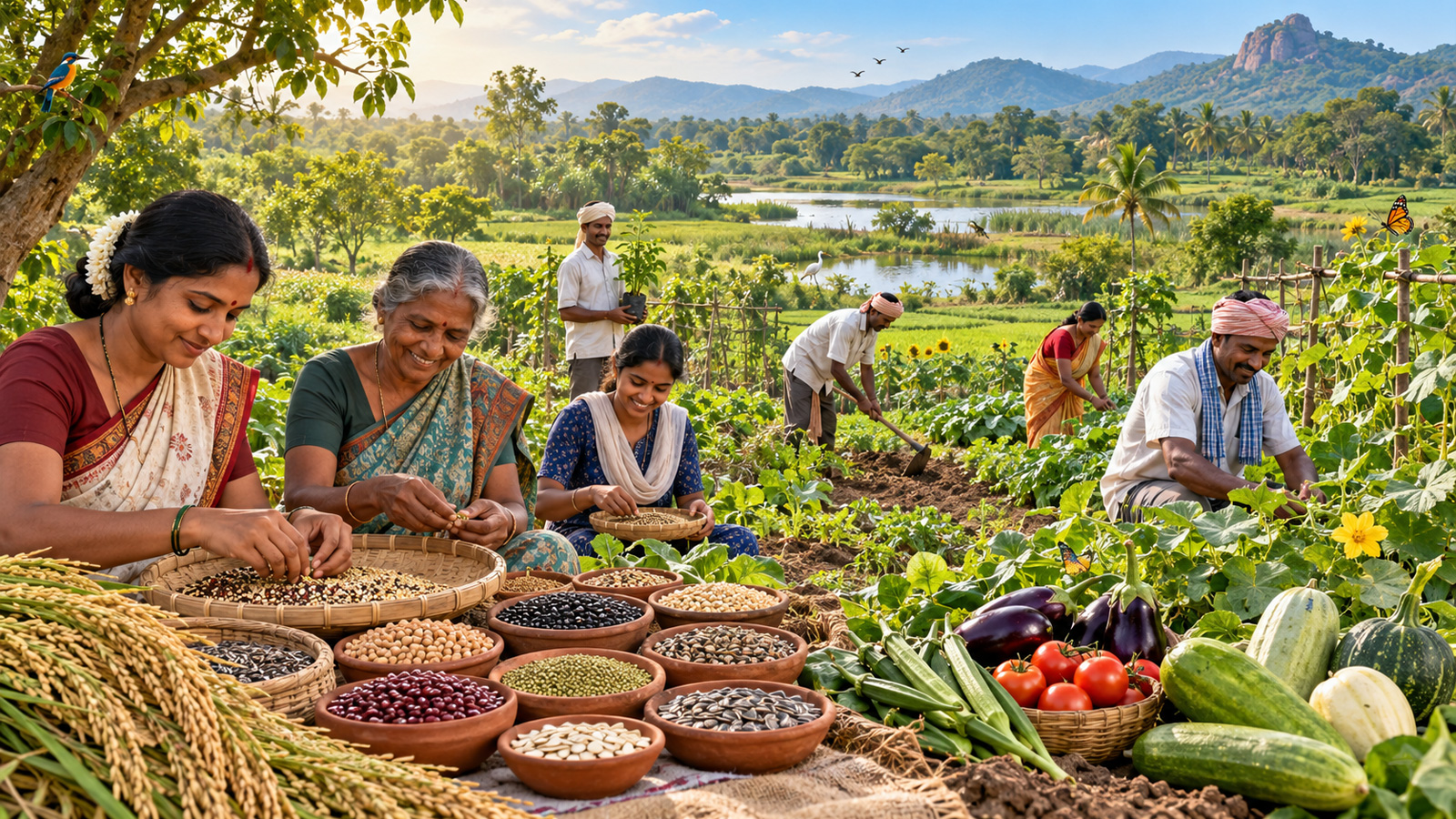
The contributions cover multiple varieties and hybrids of rice, eggplant, cauliflower, cucumber, hot pepper, bottle gourd, bitter gourd, tomato and okra.
They were received from East West Seeds India Pvt. Ltd., Syngenta India Ltd., Devgen Seeds and Crop Technology Pvt. Ltd., Limagrain India Pvt. Ltd., Bayer Science & Innovation Pvt. Ltd., Nunhems India Pvt. Ltd. and Enza Zaden India Pvt. Ltd.
Where resources had been procured through markets or traders and individual benefit claimants could not be identified, the NBA used distribution modalities recommended by an expert committee and approved by the authority.
The funds were apportioned among State Biodiversity Boards and Union Territory Biodiversity Councils based on the cultivation area of the respective resources, using agricultural statistics published by the Ministry of Agriculture and Farmers Welfare.
The top 10 recipient states accounted for approximately ₹1.43 crore. Madhya Pradesh received ₹23,81,072, followed by West Bengal with ₹23,32,913 and Odisha with ₹19,75,559.
Bihar received ₹17,28,852, Gujarat ₹13,29,870, Chhattisgarh ₹11,37,521, Uttar Pradesh ₹9,80,038, Andhra Pradesh ₹9,34,864, Karnataka ₹7,87,392 and Maharashtra ₹7,16,971. The remaining states and Union Territories collectively received ₹58,94,948.
The NBA said the ABS mechanism helps mobilise financial resources for conservation and local development while ensuring equitable sharing of benefits arising from the use of biological resources.
The disbursements support activities such as strengthening Biodiversity Management Committees, updating People’s Biodiversity Registers, conserving traditional crop varieties and medicinal plants, restoring habitats and promoting sustainable management of biological resources at the grassroots.
These measures can strengthen local institutions and increase the participation of farmers, communities and other stakeholders in biodiversity governance.
ABS-funded activities can also complement government programmes supporting tribal welfare, sustainable livelihoods and natural-resource-based enterprises. These include the Pradhan Mantri Janjati Adivasi Nyaya Maha Abhiyan, Pradhan Mantri Janjatiya Vikas Mission and Pradhan Mantri Van Dhan Yojana.
Such convergence can support community-led conservation and livelihood opportunities while drawing on existing institutional mechanisms.
India’s ABS framework contributes to implementing the Biological Diversity Act, 2002, and the National Biodiversity Strategy and Action Plan 2024–2030.
It also supports Target 13 of the Kunming–Montreal Global Biodiversity Framework, concerning fair and equitable benefit-sharing from genetic resources and associated traditional knowledge, and Target 19 on resource mobilisation.
The framework contributes to Sustainable Development Goals relating to Zero Hunger, Decent Work and Economic Growth, Responsible Consumption and Production, Life on Land, and Partnerships for the Goals.
The disbursement comes as India prepares to participate in the seventeenth Conference of the Parties to the Convention on Biological Diversity, beginning on October 19 in Yerevan, Armenia. The NBA said the framework reflected India’s commitment to conservation, sustainable use and equitable benefit-sharing.


