







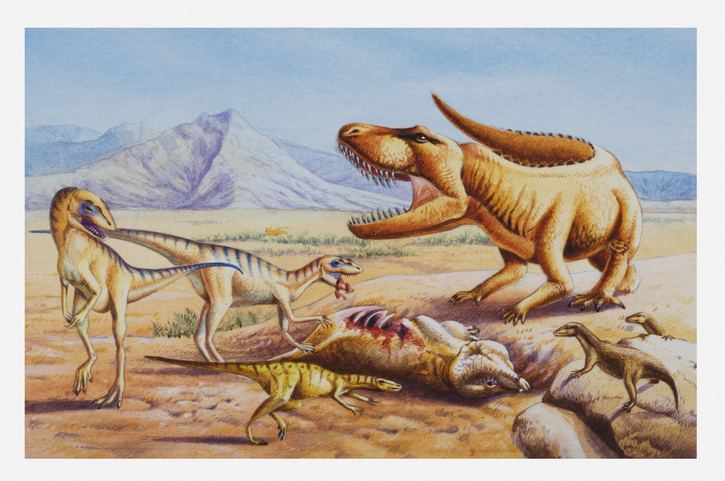
A specimen of Macrocephalosaurus mariensis, the smallest hatchling of a rhynchosaur species ever discovered, has been described in detail in the British Journal of Systematic Palaeontology on Thursday (December 11).
The fossil, unearthed in southern Brazil, consists of a skull measuring under 2.5 centimetres in length and was presented by palaeontologists from the Federal University of Santa Maria (UFSM).
Among Brazilian rhynchosaurs, the presence of a single maxillary sulcus, along with two rows of dentary teeth and an open infraorbital foramen, is observed only in Macrocephalosaurus mariensis, to which the specimen is referred, the report explained.
Analysed via computerized microtomography, the fossil revealed unworn teeth, suggesting the animal perished shortly after birth.
Adult specimens of the species could grow to over two metres and developed highly specialized teeth for eating vegetation. However, this adaptation caused significant wear, with adult teeth often ground down completely, researchers explain.
According to the study, CAPPA/UFSM 0295, the official designation for the juvenile fossil, constitutes the first perinate record of a Hyperodapedontinae, the most abundant and diverse clade of Rhynchosauridae, and one of the oldest archosauromorph hatchlings ever recorded in continental settings.
(Reuters)


