







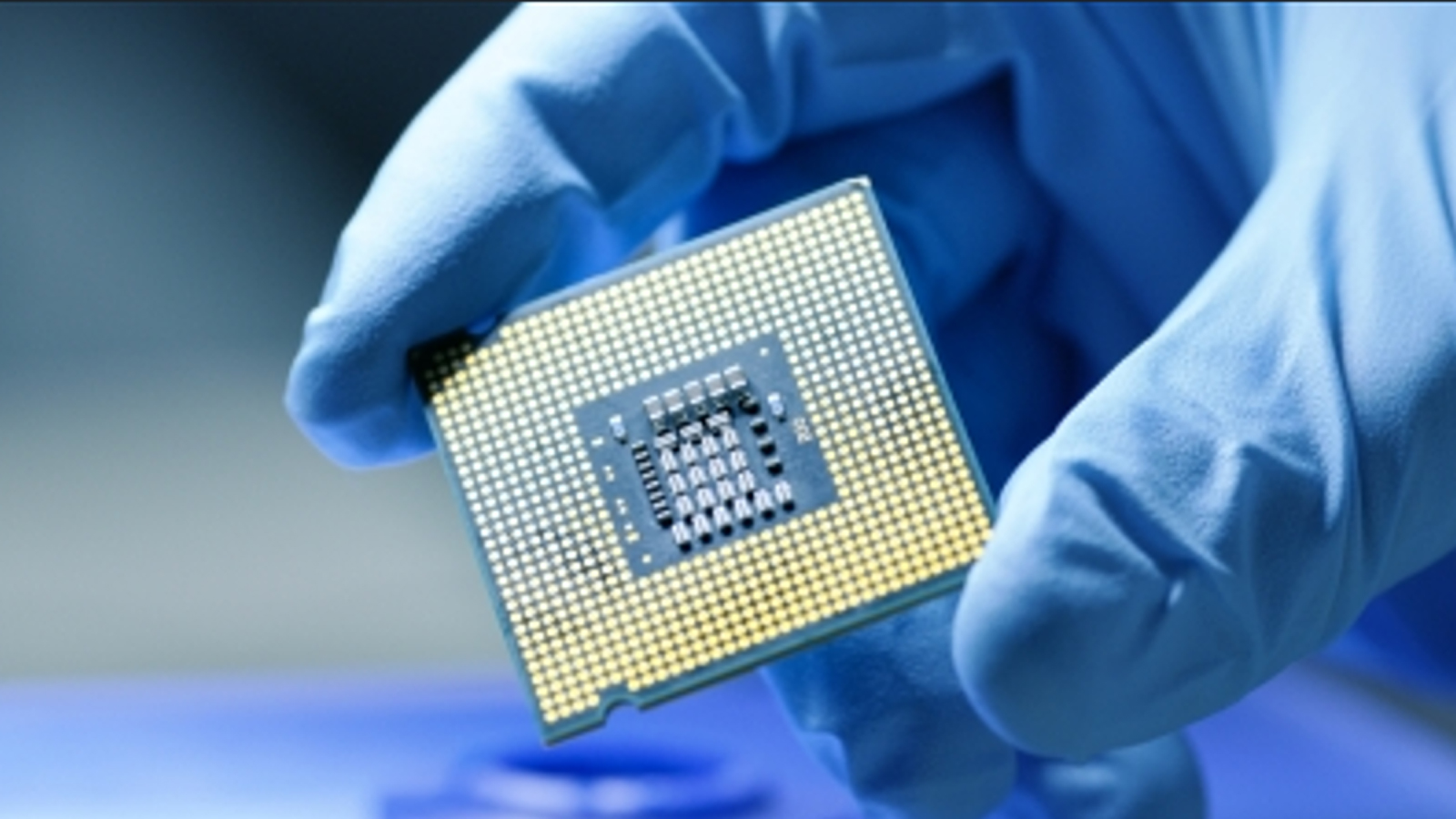
Chinese technology company Huawei has announced a new chip manufacturing approach that it says could help produce advanced semiconductors comparable to some of the world’s most cutting-edge processors, despite ongoing US restrictions on access to key manufacturing technologies.
The company said its proposed chip architecture is based on what it described as the “Tau Scaling Law,” which it claims can achieve transistor density levels equivalent to 1.4-nanometre chips.
Huawei stated that the technology would reduce its dependence on the advanced lithography machines used by global semiconductor leaders and currently inaccessible to the Chinese company because of US sanctions.
The development comes at a time when the semiconductor industry remains central to the strategic competition between the United States and China. Washington has imposed a series of export controls restricting China’s access to high-end chipmaking equipment and advanced semiconductor technologies.
According to Huawei, its upcoming Kirin chips, expected to launch later this year, will use a “LogicFolding” architecture designed to improve computing efficiency and overall chip performance.
The company said the approach relies on stacking multiple layers of circuits within a single chip, enabling faster internal data transfer and better processing capabilities.
If successfully implemented at scale, the move could strengthen China’s efforts to build a more self-reliant semiconductor ecosystem and reduce dependence on foreign suppliers.
The announcement could also pose fresh challenges for NVIDIA in the Chinese market. Last week, Nvidia CEO Jensen Huang told CNBC that the US chipmaker had effectively “conceded” the Chinese market to Huawei amid tightening export restrictions.
Global chipmakers are currently racing to develop increasingly smaller and more powerful semiconductor technologies. Taiwan-based TSMC is already working on 2-nanometre chips and plans to introduce 1.4-nanometre technology in the coming years. Intel and Samsung Electronics are also pursuing next-generation chip manufacturing processes.
-ANI


