







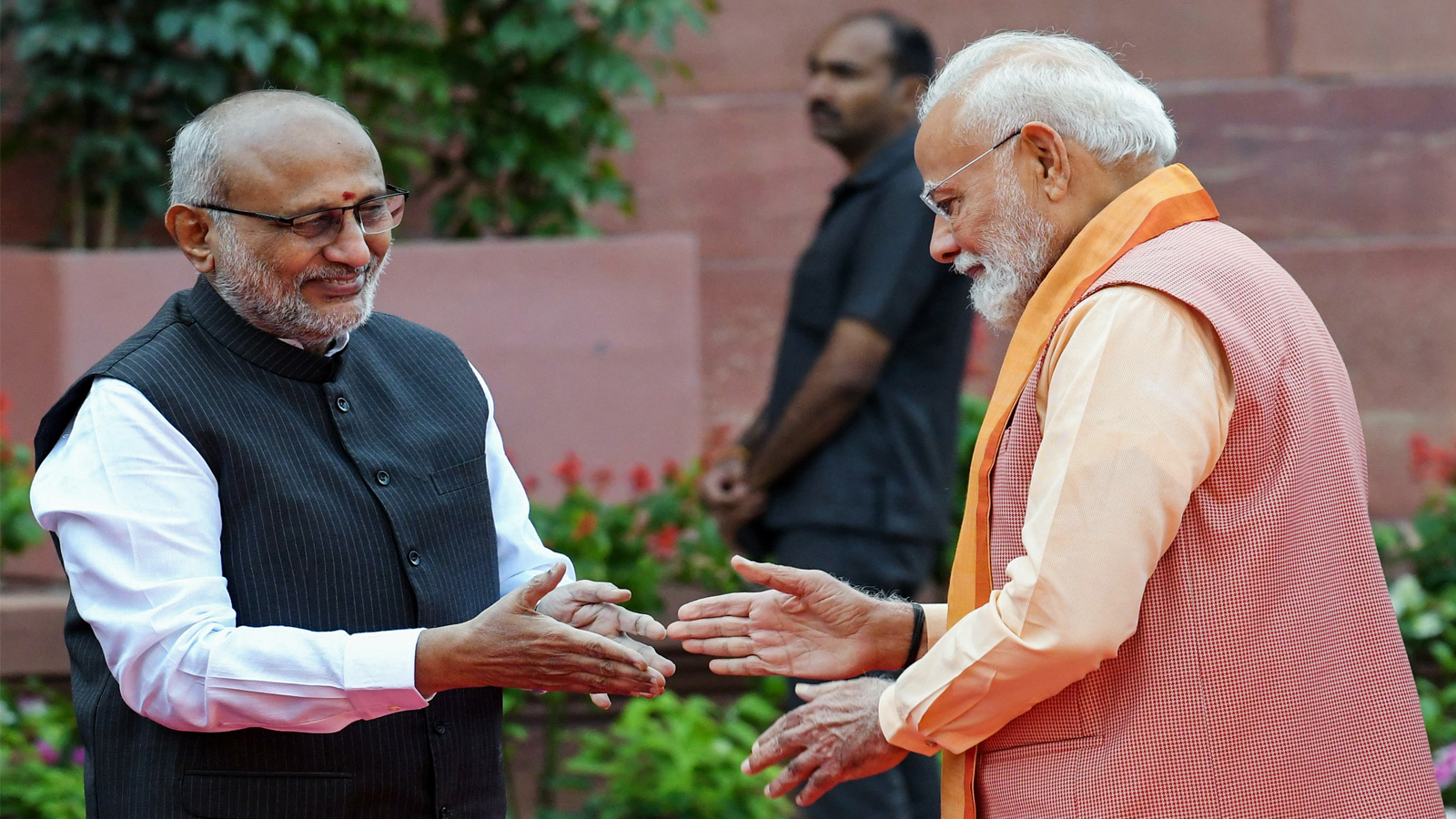
Prime Minister Narendra Modi on Tuesday shared an article written by Vice President C. P. Radhakrishnan, which highlighted India’s development journey during the “Amrit Kaal” and outlined the country’s progress towards becoming a developed nation by 2047.
The article reflects on the government’s initiatives aimed at empowering women, youth, farmers and economically weaker sections, while emphasising inclusive growth, infrastructure development, innovation and national transformation under the vision of “Viksit Bharat”.
Sharing the article on X, the Prime Minister’s Office (PMO) said the Vice President had reflected on initiatives that benefited people across the country, particularly “Nari Shakti, youth and farmers,” while drawing inspiration from spiritual and literary icons such as Swami Vivekananda, Thiruvalluvar and Subramania Bharati.
Vice President Radhakrishnan’s article has highlighted Bharat’s “transformative journey during the Amrit Kaal,” underlining achievements in poverty alleviation, healthcare, infrastructure, education, women empowerment, innovation and national security.
Calling upon citizens to contribute towards nation-building, the Vice President stressed the importance of youth participation in achieving the vision of a developed India by 2047.
Reflecting on India’s Development Journey
In the article titled “Bharat’s Journey of Development”, V-P Radhakrishnan recalled his early years growing up in Tiruppur, Tamil Nadu, and his aspirations of seeing India emerge as a strong and prosperous nation.
Quoting Swami Vivekananda’s call to “Arise, awake, and stop not till the goal is reached,” the Vice President said India’s development over the past decade had demonstrated determination and national resolve.
He noted that India’s economic growth had remained strong despite global uncertainties and emphasised that development had been inclusive in nature.
V-P Radhakrishnan said that nearly 25 crore people have been lifted out of extreme poverty over the past decade, while around four crore permanent houses have been constructed for economically weaker families. The Vice President also highlighted government initiatives related to piped drinking water, sanitation and food security.
He said that over 80 crore people continue to receive free food grains under the Prime Minister’s Garib Kalyan Scheme, while healthcare access has expanded significantly through the Ayushman Bharat programme.
Focus on Farmers and Women Empowerment
The Vice President praised the contribution of Indian farmers, noting that India had emerged as the world’s second-largest food producer with food grain production reaching 350 million tonnes.
He also highlighted the direct transfer of more than ₹4 lakh crore to farmers under the PM-Kisan Samman Nidhi scheme.
On women empowerment, V-P Radhakrishnan said initiatives such as the “Lakhpati Didi” and “Namo Drone Didi” programmes had opened new opportunities for women across sectors including agriculture, science, education and defence.
He added that the Nari Shakti Vandan Adhiniyam would further strengthen women’s participation in Parliament and state legislatures.
Expansion in Education and Infrastructure
V-P Radhakrishnan’s article also outlined India’s progress in higher education and infrastructure development over the last decade.
The Vice President said 13 new IITs had been established in the last ten years, taking the total number of IITs to 23, while the number of AIIMS institutions had increased from seven to 23. Medical colleges have also more than doubled from 387 to 823.
Highlighting infrastructure achievements, he referred to the rapid expansion of highways, airports and railway electrification, along with projects such as the Chenab Rail Bridge, Bogibeel Bridge and the new Pamban Bridge.
The Vice President also highlighted the expansion of connectivity in the northeastern states and border villages through initiatives such as the Vibrant Villages Programme.
Technology, Innovation and National Security
V-P Radhakrishnan said India’s progress in science, innovation and technology had strengthened the country’s global standing.
He highlighted India’s vaccine development efforts during the COVID-19 pandemic, the growth of the semiconductor sector and the country’s rise as a major mobile phone manufacturing and export hub.
V-P Radhakrishnan’s article also touched upon India’s efforts to tackle terrorism, insurgency and Left-Wing Extremism through policy reforms and development initiatives.
Call for Collective Effort Towards Viksit Bharat
Concluding the article, the Vice President urged citizens, particularly the youth, to work with dedication and patriotism towards building a developed India by 2047.
Quoting Swami Vivekananda once again, he said the future of Bharat would depend on the collective efforts of its people during the “Amrit Kaal.”
V-P Radhakrishnan called upon citizens to contribute towards creating a “Viksit Bharat” through hard work, innovation and a spirit of national service.


