







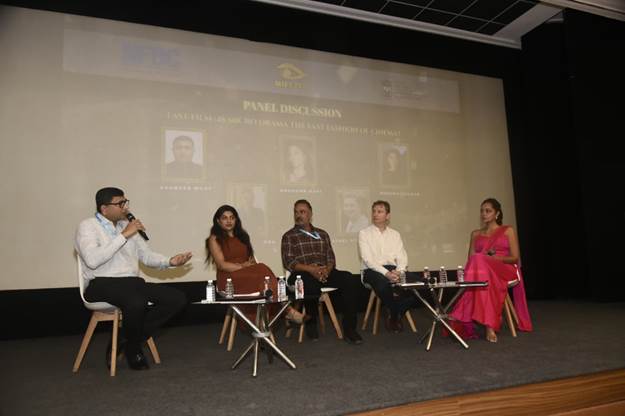
In an age where stories are increasingly consumed on the move and screens fit comfortably in the palm of a hand, a question echoed through the halls of the 19th Mumbai International Film Festival (MIFF): Is micro drama merely the fast fashion of cinema, or is it shaping the future of storytelling?
The answer, according to filmmakers, actors and industry experts gathered for an Open Forum titled *”Fast Film: Is Micro Drama the Fast Fashion of Cinema?”*, was clear. Micro drama is not a fleeting trend but an evolving storytelling format born out of changing audience habits and digital consumption patterns.
Moderated by actor Sheena Chauhan, the discussion featured filmmaker and producer Sameer Mody, actor Archana Kavi, actor Ujjawal Kumar and filmmaker Rafael Stemplewski. The panel explored how short-form narratives are redefining the way stories are created, consumed and experienced in the digital era.
Opening the session, MIFF Festival Director Shri Prakash Magdum welcomed the speakers and stressed the need to understand emerging storytelling formats as the media landscape continues to evolve at an unprecedented pace.
At the heart of the discussion was a shared belief that storytelling is not shrinking—it is adapting.
Tracing the rise of micro drama, Sameer Mody pointed to the COVID-19 pandemic as a turning point, when audiences increasingly turned to mobile devices for entertainment. What emerged was a format that thrives on brevity but demands exceptional precision.
“Every second matters,” was the underlying message. In micro drama, compelling writing, impactful performances and sharp editing must work together within a compressed timeframe to create an emotional impact. Mody argued that the format should not be dismissed as disposable content but recognised as a legitimate and evolving form of cinematic expression.
Actor Archana Kavi viewed micro drama as part of a broader technological journey that has continuously reshaped storytelling—from television to streaming platforms and now mobile-first content. She noted that creators today face the challenge of capturing attention almost instantly, often within the first few seconds. Yet, she said, the format also opens new doors for actors, writers and editors willing to embrace its unique demands.
For actor Ujjawal Kumar, the core of storytelling remains unchanged regardless of length or platform. Emotional connection, he argued, is still the defining ingredient of successful cinema. What changes is the craft required to build that connection more quickly and efficiently in an increasingly crowded digital environment.
Filmmaker Rafael Stemplewski echoed this sentiment, describing micro drama as both an opportunity and a creative challenge. While screen sizes and viewing habits may evolve, he said, authentic human emotions and meaningful narratives remain the foundation of all cinematic experiences. In his view, micro drama represents the latest step in cinema’s long history of adaptation and reinvention.
As the discussion progressed, a consensus emerged among the panelists: micro drama is not replacing traditional filmmaking. Instead, it is expanding the storytelling ecosystem by offering creators another medium through which to engage audiences.
The lively interaction that followed reflected growing interest in the format. Audience members explored questions around creative opportunities, audience engagement and the future of short-form storytelling in an increasingly mobile-first world.
The session concluded on an optimistic note. While viewing habits continue to evolve, the panel agreed that the essence of cinema remains intact. Whether a story unfolds over two hours on a theatre screen or two minutes on a smartphone, its power still lies in its ability to connect with human emotions.
At MIFF 2026, the message was unmistakable: micro drama is not the fast fashion of cinema—it is the next chapter in its evolution.


