







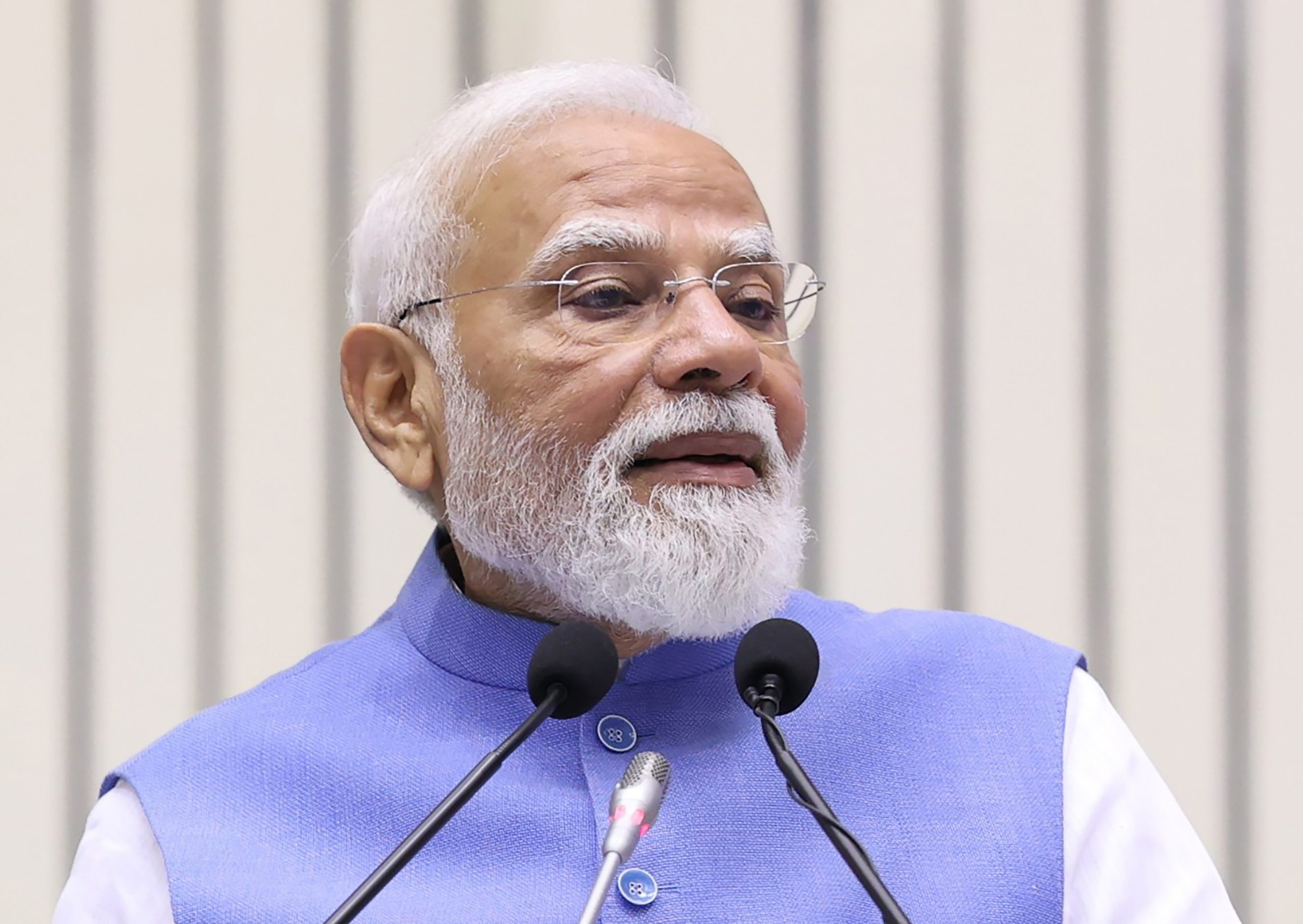
Prime Minister Narendra Modi on Saturday extended greetings to the people of West Bengal on the occasion of Paschimbanga Divas (West Bengal Day), highlighting the state’s rich cultural, intellectual and historical legacy.
In a post on X, the Prime Minister said West Bengal has played a defining role in shaping India’s civilisational and national journey through its contributions across diverse fields.
“Warm greetings to my sisters and brothers of West Bengal on the occasion of Paschimbanga Divas,” he said.
Describing the day as one of deep historical significance, Modi said it marks a crucial chapter in West Bengal’s integration with the Indian Union.
“This day celebrates a state that has profoundly shaped India’s history through its contributions to diverse areas, be it literature, music, art, spirituality, science, trade and commerce, social reform and more. Time and again, West Bengal has enriched India’s national consciousness in countless ways,” he said.
Referring to the significance of June 20, the Prime Minister said the date occupies a special place in the state’s political history.
“Today, June 20, is of immense significance in West Bengal’s history. This was the day that ensured West Bengal remained an integral part of India,” he said.
He also acknowledged the contribution of freedom fighter and statesman Dr Syama Prasad Mookerjee, saying his role in these historical developments was invaluable.
“The role of Dr Syama Prasad Mookerjee was invaluable in this regard. This year, 2026, we are also marking his 125th birth anniversary. The Central Government will work with the West Bengal Government to fulfil the dreams and aspirations of the people. I pray for the progress of West Bengal and the prosperity of its people,” Modi said.
According to the Prime Minister’s Office (PMO), the Prime Minister will visit West Bengal on June 20 and 21 to participate in Paschimbanga Divas celebrations and the 12th International Day of Yoga events.
Paschimbanga Divas, observed annually on June 20, commemorates the state’s foundation and honours its unique cultural identity and historical legacy.
The date traces its significance to 1947, when the Bengal Legislative Assembly voted on the partition of Bengal under the Mountbatten Plan. Members representing the Hindu-majority regions, which later became West Bengal, voted in favour of partition and accession to India, while representatives from the Muslim-majority areas opted either to remain united or join what later became East Pakistan, now Bangladesh.
(ANI)


