







Prime Minister Narendra Modi on Tuesday highlighted India’s rapid infrastructure transformation over the past decade.
Highlighting “12 years of Naya Bharat Nirman”, PM Modi said in a post on X, “The last decade has witnessed record infrastructure upgrading. We are committed to building next-generation infrastructure for the people of our nation to realise our vision of a Viksit Bharat.”
The Prime Minister also shared a thread psoted by MyGovIndia on X, which showcased the scale of India’s infrastructure expansion and connectivity revolution over the past twelve years, highlighting its impact on economic growth, logistics efficiency, mobility, and regional development.
Connectivity Driving India’s Growth Story
Sharing details of the country’s infrastructure achievements, MyGovIndia said that India’s infrastructure transformation has significantly improved connectivity between people, markets, and opportunities, strengthening the foundation for long-term economic growth.
“The strength of a nation is reflected in its ability to connect people, markets, and opportunities. India’s infrastructure transformation over the last 12 years has accelerated mobility, strengthened logistics, and unlocked new avenues of growth,” MyGovIndia added.
According to the Government, enhanced connectivity is not only improving transportation networks but also expanding economic opportunities and supporting inclusive development across the country.
Inland Waterways Emerge as a New Growth Engine
India’s inland waterways sector has witnessed substantial expansion in recent years, emerging as a key component of the country’s multimodal transportation strategy.
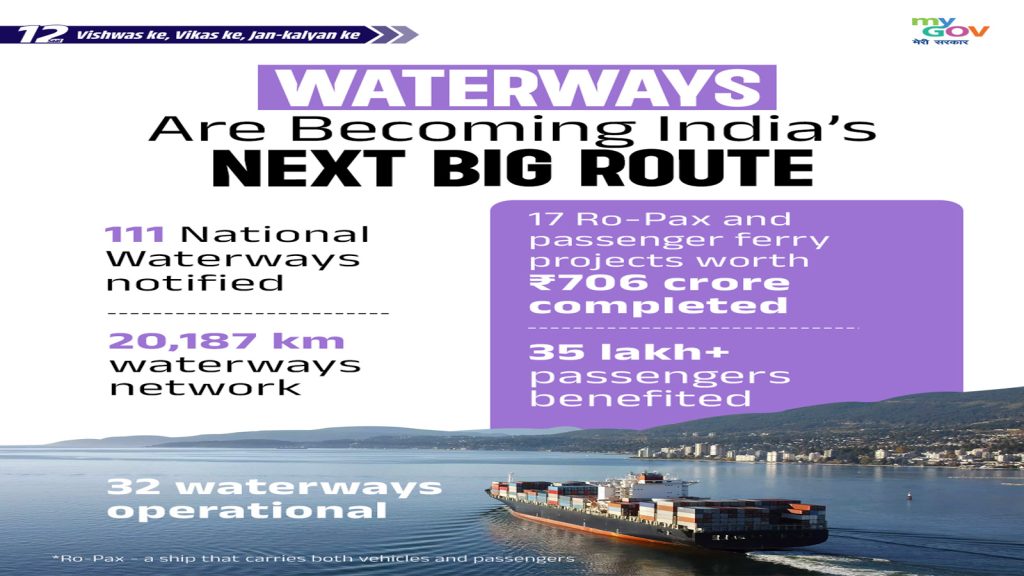
The Government noted that 111 National Waterways have been notified across the country, creating a network spanning 20,187 kilometres. Of these, 32 waterways are currently operational.
To improve passenger and cargo movement, 17 Roll-on/Roll-off Passenger (Ro-Pax) and ferry projects worth ₹706 crore have been implemented, benefiting more than 35 lakh passengers.
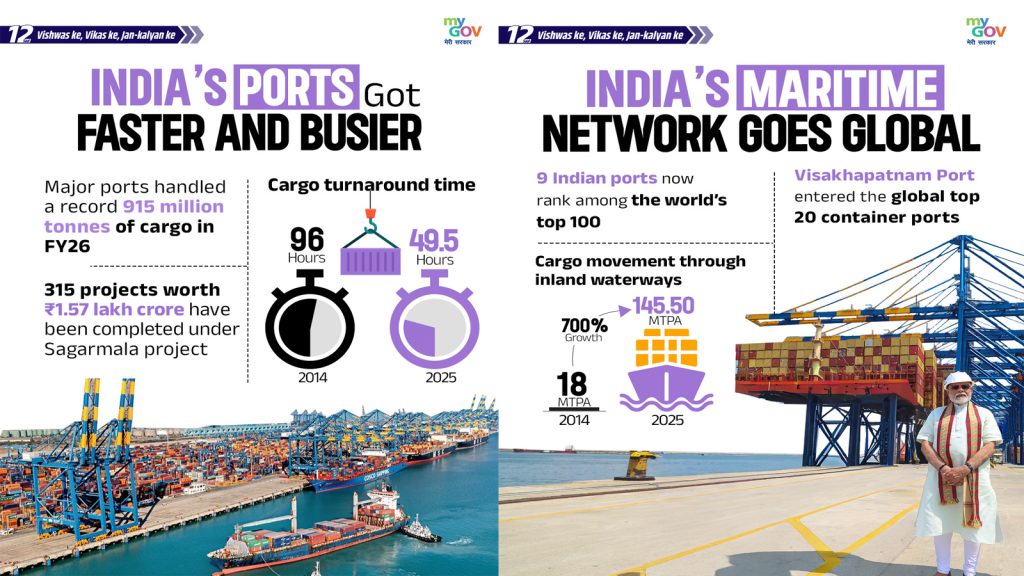
Cargo movement through inland waterways has also increased dramatically, rising nearly 700 per cent from 18 million tonnes per annum (MTPA) in 2014 to 145.50 MTPA in 2025. Officials said this growth reflects the increasing role of waterways in India’s logistics ecosystem and efforts to reduce transportation costs through multimodal connectivity.
Maritime Sector Strengthens Global Standing
India’s maritime infrastructure has also recorded notable progress.
According to Government data, nine Indian ports are now ranked among the world’s top 100 ports, while Visakhapatnam Port has secured a position among the world’s top 20 container ports.
Major ports handled a record 915 million tonnes of cargo during FY26, highlighting the growing efficiency and capacity of the country’s maritime infrastructure.
Port operations have also become significantly faster. Average turnaround time at major ports has reduced from 96 hours to 49.5 hours, improving logistics efficiency and reducing trade costs.
The Government highlighted that under the Sagarmala Programme, 315 projects worth ₹1.57 lakh crore have been completed, strengthening port-led development and enhancing connectivity between ports and hinterland regions.
National Highway Network Expands Rapidly
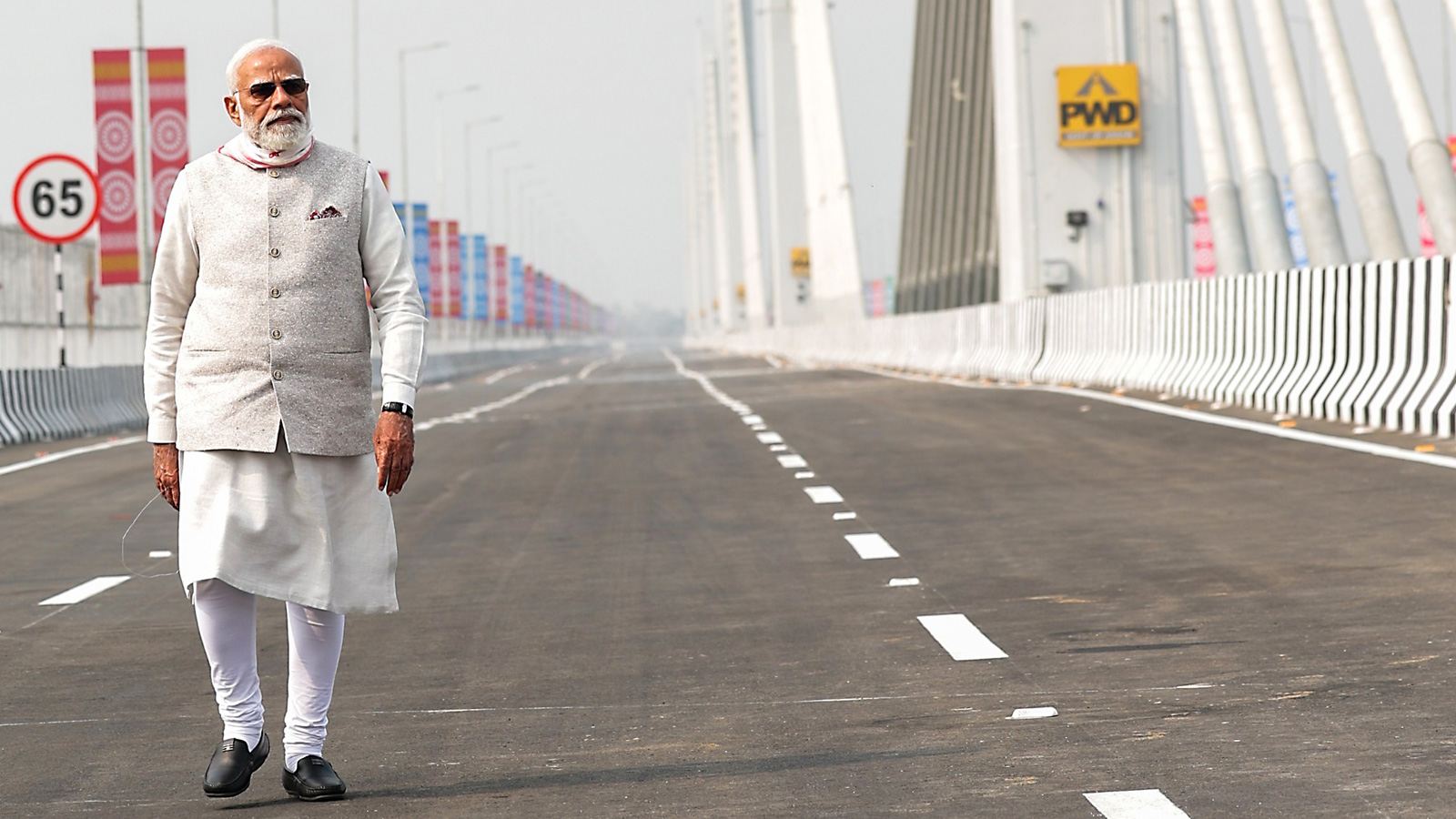
Road infrastructure has emerged as one of the most visible areas of expansion during the past decade.
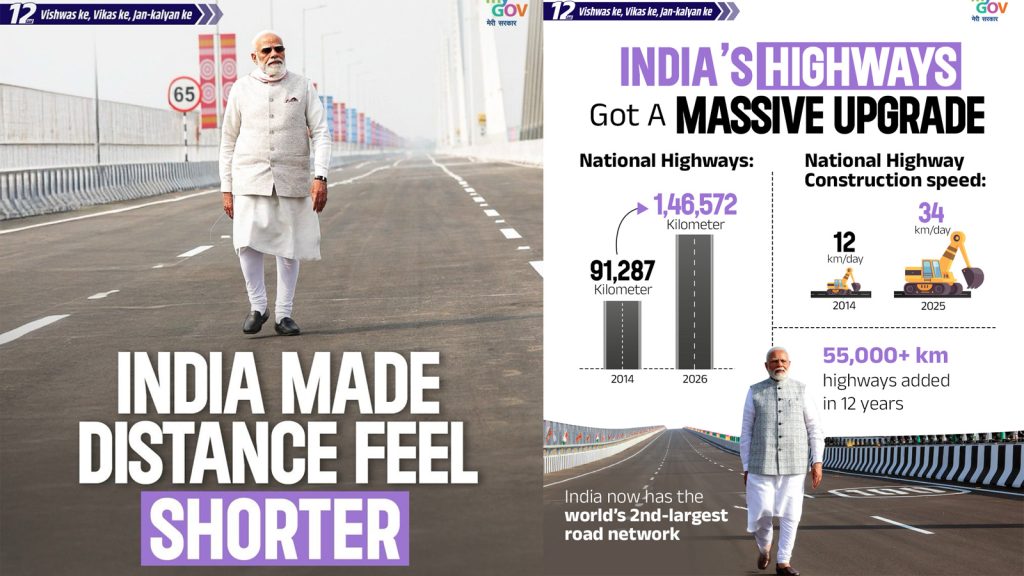
The length of India’s National Highway network has increased from 91,287 kilometres in 2014 to 1,46,572 kilometres in 2026, representing an addition of more than 55,000 kilometres.
The pace of highway construction has also accelerated significantly, increasing from 12 kilometres per day to 34 kilometres per day.
The Government said the expansion has contributed to improved mobility, faster movement of goods, and greater economic integration across regions.
India now possesses the world’s second-largest road network, reinforcing its role as a critical driver of economic growth and connectivity.
Railways Witness Historic Electrification Drive
Indian Railways has undergone one of the largest electrification programmes in the world over the past decade.
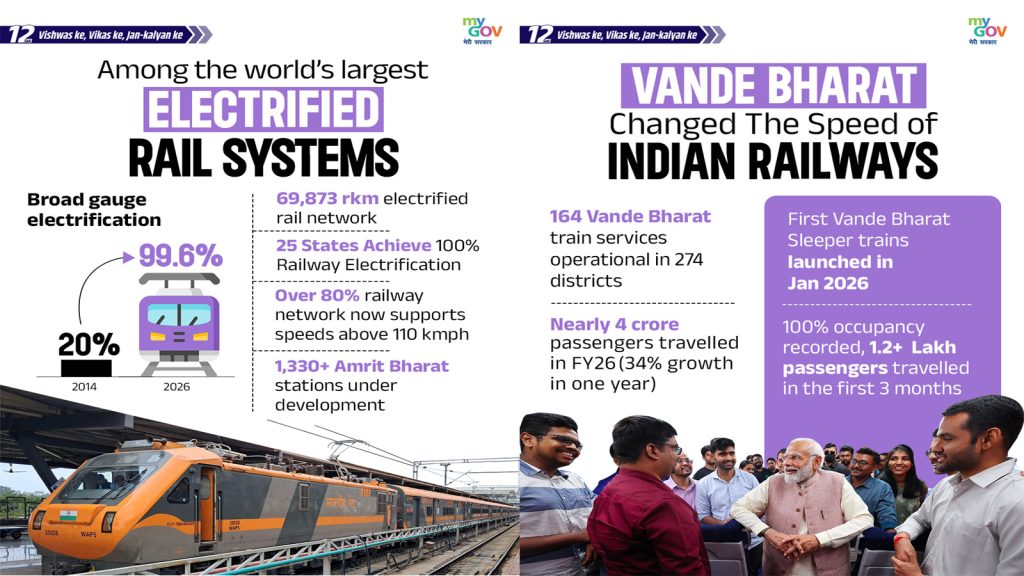
Broad gauge electrification has increased from just 20 per cent in 2014 to 99.6 per cent in 2026. Currently, 69,873 route kilometres of railway tracks have been electrified.
Twenty-five states have achieved complete railway electrification, marking a major milestone in the country’s efforts to improve energy efficiency and reduce dependence on fossil fuels.
The Government also highlighted ongoing railway station redevelopment under the Amrit Bharat Station Scheme, with more than 1,330 stations being modernised and upgraded across the country.
Vande Bharat Trains Transform Rail Travel
The Vande Bharat train network has emerged as a flagship initiative in India’s railway modernisation efforts.
Currently, 164 Vande Bharat train services operate across 274 districts, providing faster, more comfortable, and technologically advanced rail connectivity.
Nearly four crore passengers travelled on Vande Bharat trains during FY26, reflecting an annual growth of 34 per cent.
The recently launched Vande Bharat Sleeper trains have also received a strong response from passengers. According to Government figures, the trains recorded 100 per cent occupancy and served more than 1.2 lakh passengers within the first three months of operation.
The expansion of Vande Bharat services is helping bridge long-distance connectivity gaps while offering a modern travel experience.
Metro Rail Network Becomes World’s Third Largest
India’s urban transportation infrastructure has expanded significantly through investments in metro rail systems.
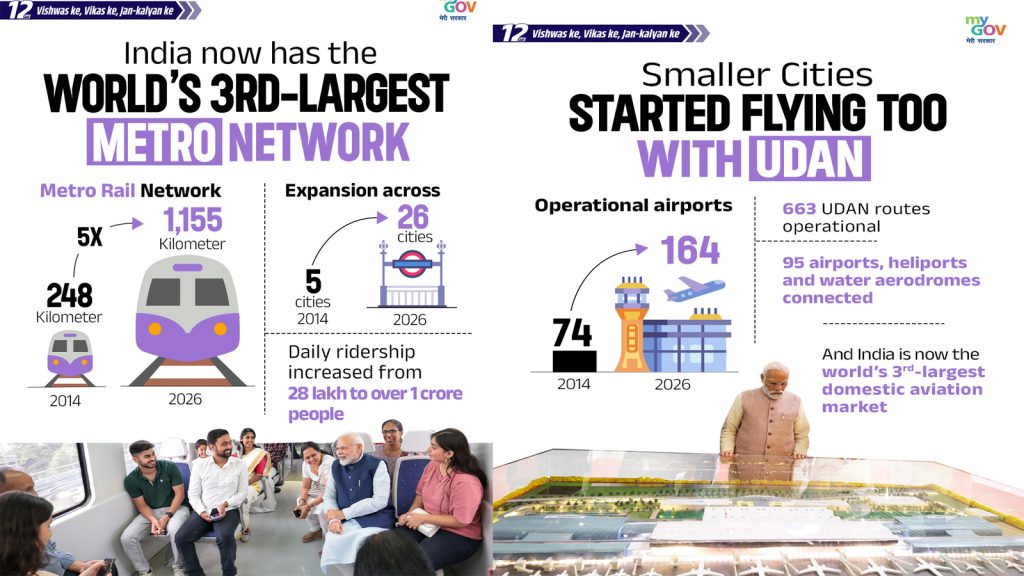
The country’s metro network has grown from 248 kilometres in 2014 to 1,155 kilometres in 2026, making it the third-largest metro network in the world.
Metro services, which were available in only five cities in 2014, now operate in 26 cities across the country.
Daily ridership has increased sharply from 28 lakh commuters to more than one crore passengers, reflecting the growing reliance on metro systems for urban mobility.
The Government said the expansion has reduced travel times, eased congestion, and improved the quality of life for millions of urban residents.
UDAN Expands Affordable Air Connectivity
The Government also highlighted the success of the UDAN (Ude Desh ka Aam Nagrik) scheme in expanding regional air connectivity.
The number of operational airports has increased from 74 to 164 over the past decade, significantly improving access to air travel.
Under the scheme, 663 routes now connect 95 airports, heliports, and water aerodromes, bringing affordable aviation services to smaller cities and remote regions.
The initiative has strengthened last-mile connectivity and contributed to India’s emergence as the world’s third-largest domestic aviation market.
Infrastructure at the Core of Viksit Bharat Vision
The Government said the rapid expansion of transportation and logistics infrastructure over the past twelve years has played a critical role in supporting economic growth, enhancing competitiveness, and improving quality of life.
From highways and railways to ports, waterways, metros, and airports, infrastructure development has become a central pillar of India’s development strategy.
Reiterating the Government’s commitment to continuing this momentum, PM Modi said next-generation infrastructure would remain essential for achieving the goal of a developed India by strengthening connectivity, improving logistics efficiency, and creating new opportunities for citizens and businesses across the country.
As India continues to invest heavily in modern infrastructure, policymakers view connectivity as a key enabler of economic transformation and a cornerstone of the nation’s journey towards becoming a Viksit Bharat.


