







The centuries-old Thewa art of Rajasthan’s Pratapgarh found a place on the global stage during Prime Minister Narendra Modi’s recent visit to Slovakia, where he presented Thewa motif cufflinks to Slovak President Peter Pellegrini.
Known for its intricate gold engravings on coloured glass, Thewa is among India’s most distinctive traditional crafts. The cufflinks showcased the craftsmanship that has been preserved for generations and highlighted India’s rich artisanal heritage before an international audience.
Among those carrying forward the legacy of the craft is Mandsaur-based artisan Rakesh Soni, who has been practising Thewa art for nearly 25 years. Soni, who learnt the craft from his maternal uncle in Pratapgarh, said the Prime Minister’s efforts have helped bring wider recognition to traditional Indian art forms.
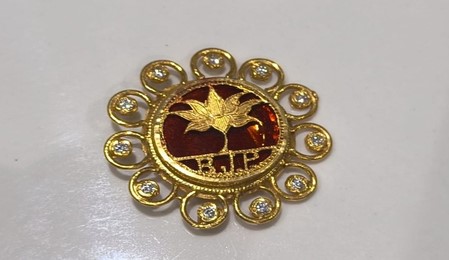
Soni has also crafted a special Thewa brooch for Prime Minister Modi and hopes to present it to him personally. “Thewa work requires precision and patience. It takes around three days to create a single set. This art form dates back nearly 400 years and traces its origins to the Mughal era,” he said.
Thewa art involves creating delicate designs in 23-carat gold and embedding them on multicoloured glass surfaces. Over the years, it has emerged as a symbol of India’s cultural heritage while also generating livelihood opportunities for artisans associated with the craft.
Expressing gratitude to the Prime Minister, Soni said he was pleased to see Thewa art gaining international visibility through such diplomatic exchanges.
Originating in Rajasthan’s Pratapgarh district, Thewa art has survived for centuries through generations of skilled artisans and continues to be regarded as one of India’s finest traditional handicrafts.
IANS


