







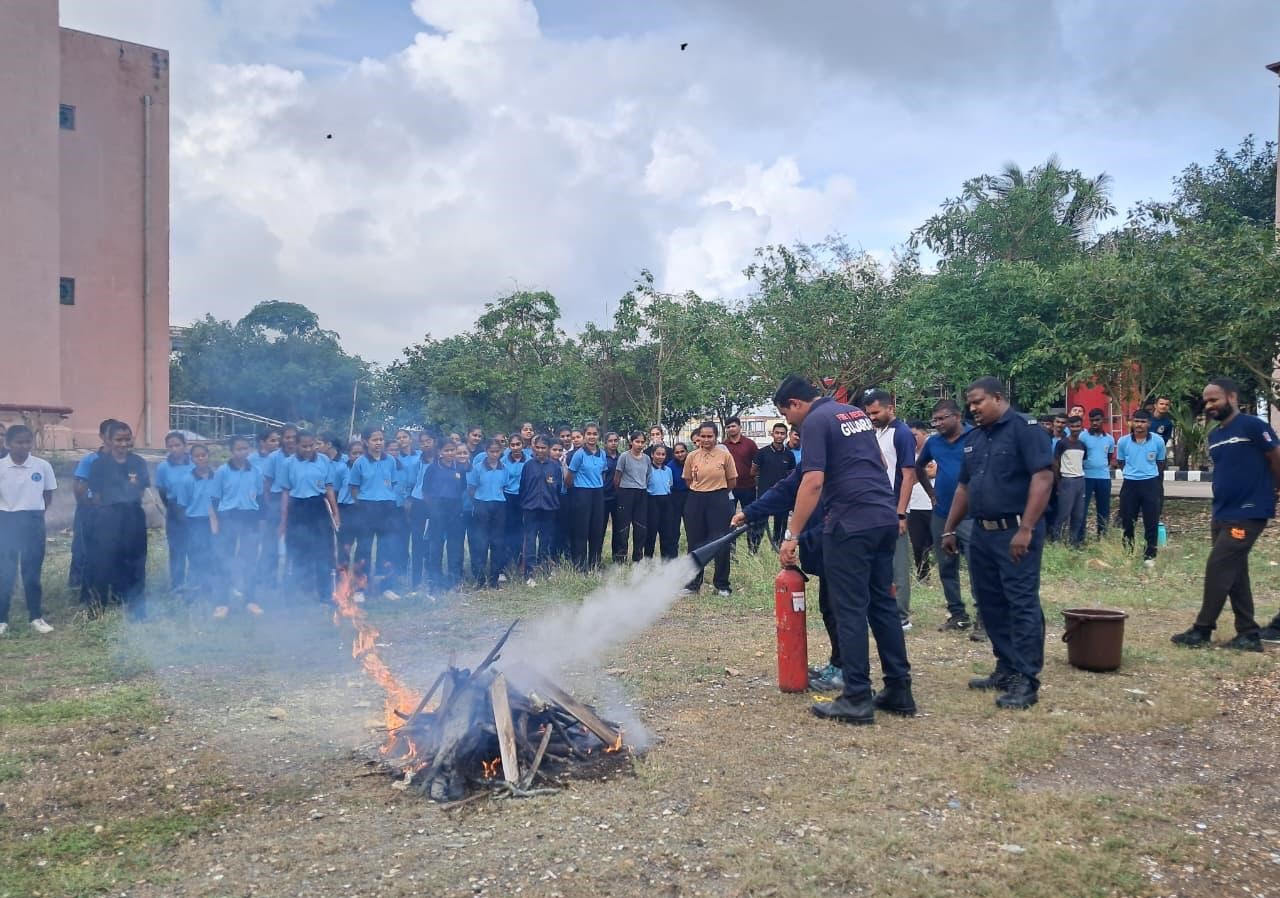
Gujarat has trained 4,526 young volunteers under the first phase of the ‘Yuva Aapda Mitra’ Scheme, as part of an initiative to build a community-based disaster response force across 17 districts, with a target of 50 per cent participation by women.
According to the Gujarat State Disaster Management Authority (GSDMA), the scheme aims to enhance the state’s disaster preparedness by training local volunteers to provide immediate rescue and relief support before specialised response teams reach affected areas.
The initiative, launched by the National Disaster Management Authority (NDMA) in 2016 with 200 volunteers in Bharuch district, has since expanded across Gujarat under the leadership of Chief Minister Bhupendra Patel.
In the ongoing phase of the scheme, 4,526 volunteers have completed training against a target of 11,850 participants from the National Cadet Corps (NCC), National Service Scheme (NSS), My Bharat (MYB), and Bharat Scouts and Guides (BS&G) across 17 districts.
The GSDMA said special emphasis has been placed on increasing women’s participation in disaster management, with a target of ensuring that women constitute half of the trained volunteer force.
Aapda Mitras are community volunteers aged between 18 and 40 years who are physically and mentally fit to undertake immediate rescue and emergency response activities.
Under the earlier ‘Upscaling of Aapda Mitra Scheme’, 5,500 volunteers from the same 17 districts underwent 12 days of training conducted by the State Disaster Response Force (SDRF).
In the current phase, volunteers receive seven days of basic training from SDRF personnel and master trainers, followed by advanced training through the Sardar Patel Institute of Public Administration (SPIPA).
The programme covers Ahmedabad, Amreli, Anand, Bhavnagar, Jamnagar, Junagadh, Kheda, Kutch, Morbi, Narmada, Navsari, Porbandar, Rajkot, Surat, Tapi, Vadodara and Valsad districts.
Each trained volunteer is provided an Emergency Responder Kit worth Rs 10,000 containing 15 essential items, including a life jacket, solar torch, first-aid kit, helmet and a 50-metre defence-grade rescue rope.
For large-scale emergencies, district authorities maintain Emergency Equipment Reserve Resource (EERR) kits valued at Rs 19 lakh, equipped with items such as inflatable rescue boats, chainsaws, satellite GPS devices and walkie-talkies.
Applicants for the scheme must be residents of the respective district and have passed at least Class 7. The age eligibility is between 18 and 40 years, with relaxation provisions for ex-servicemen, retired medical professionals and civil engineers.
Upon successful completion of training, volunteers receive certification, an identity card and insurance coverage of Rs 5 lakh for three years under the scheme’s social security provisions.
The GSDMA said Aapda Mitras from Bharuch actively supported district authorities during the COVID-19 pandemic and the 2020 floods by assisting in relief and public service activities.
“District Emergency Operation Centres (DEOCs) maintain updated contact details of trained Aapda Mitras and mobilise them during emergencies. Citizens and local authorities can approach DEOCs for immediate assistance from trained volunteers during disasters,” officials said.
(IANS Inputs)


