







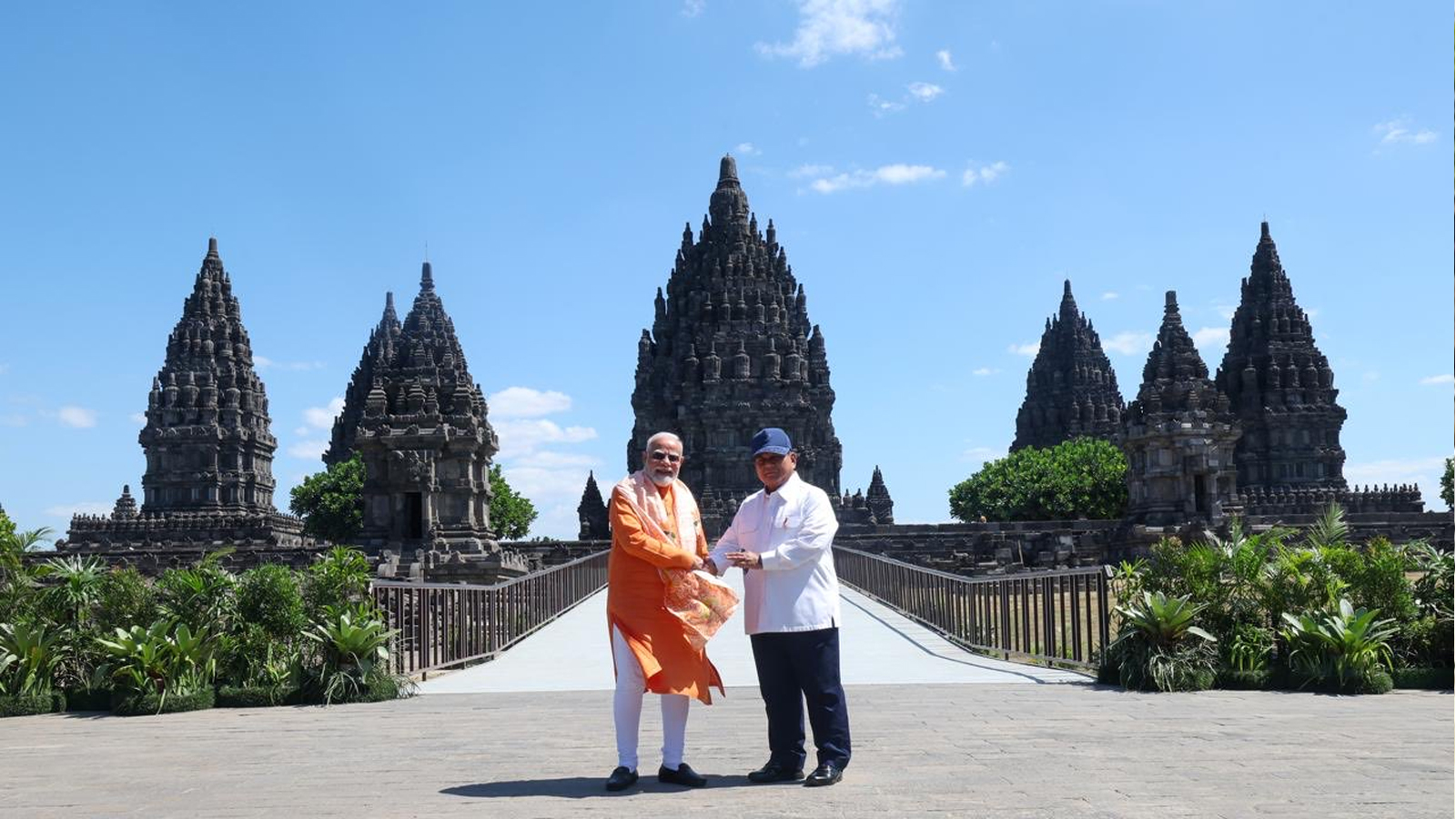
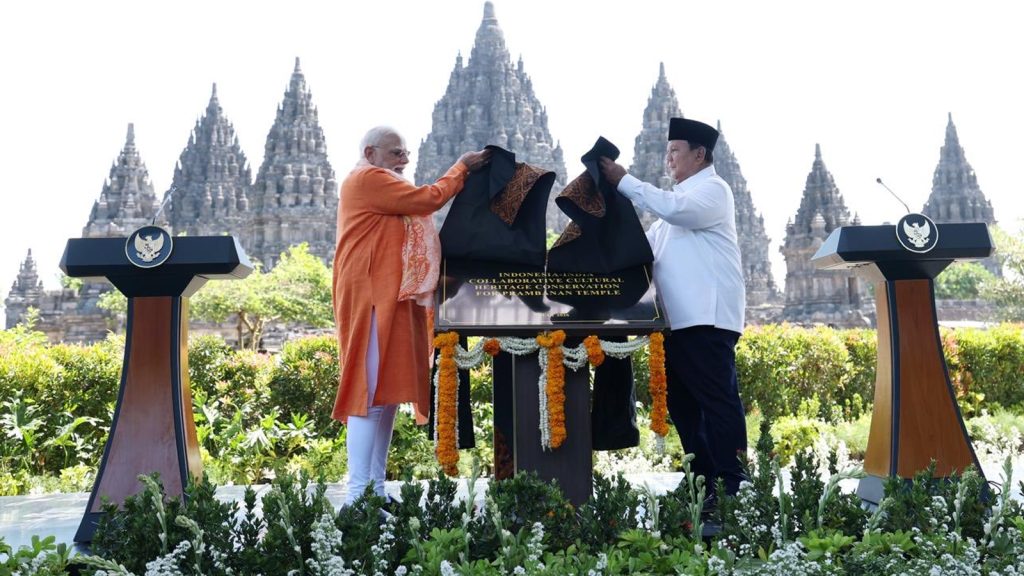
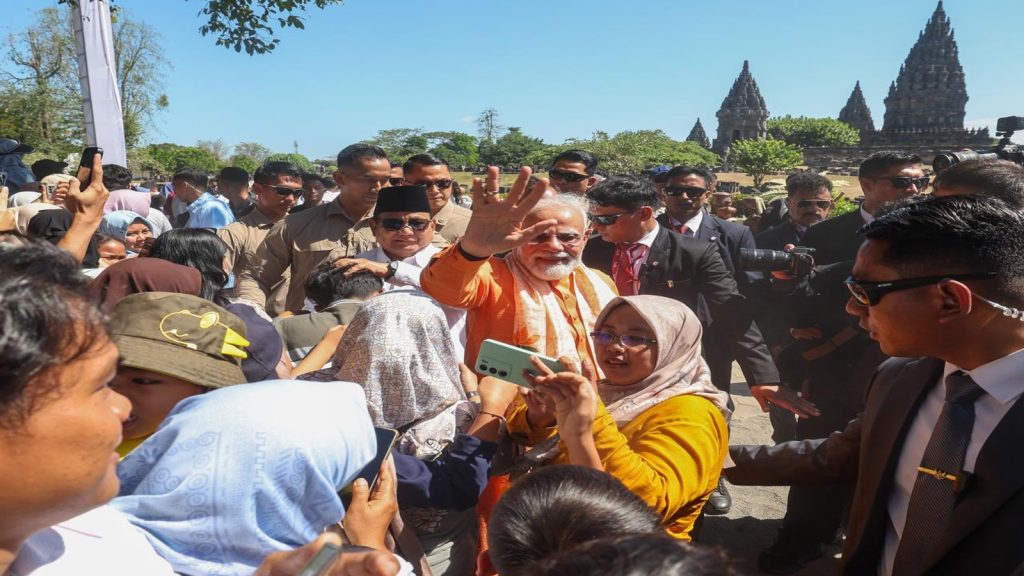
Prime Minister Narendra Modi and Indonesian President Prabowo Subianto on Wednesday jointly inaugurated the India-backed conservation and restoration project at the UNESCO World Heritage-listed Prambanan Temple complex in Yogyakarta, marking a significant milestone in India-Indonesia cultural cooperation and civilisational diplomacy.
In a post on X, PM Modi said, “President Prabowo Subianto and I inaugurated the UNESCO World Heritage Prambanan Temple Compound Restoration and Conservation Project. This initiative is a shining example of the enduring civilisational bonds between India and Indonesia, rooted in a shared heritage that has connected our people for centuries.”
“The magnificent Prambanan Temple stands as a timeless symbol of our cultural and spiritual links. Preserving such heritage is about safeguarding the traditions that continue to inspire generations. India is privileged to partner with Indonesia in this important endeavour. As nations with deep cultural connections, India and Indonesia will continue to work together to celebrate our shared past while building an even stronger future,” he added.
Ministry of External Affairs (MEA) spokesperson Randhir Jaiswal said that the two leaders jointly unveiled a commemorative plaque marking the launch of an India-supported conservation and restoration project for the Prambanan Temple Complex in Yogyakarta, to be undertaken by the Archaeological Survey of India (ASI). “Built in the 9th century and dedicated to the Trimurti (Lords Brahma, Vishnu and Shiva), Prambanan Temple is a sacred symbol of the deep cultural and spiritual bonds between India and Indonesia,” he added.
The launch of the restoration initiative followed the exchange of a Letter of Intent between the two countries during bilateral talks in Jakarta on Tuesday. The project is being undertaken as part of India’s cultural diplomacy and Act East policy, with the Archaeological Survey of India (ASI) partnering Indonesian authorities to conserve and restore several smaller temples within the historic complex.
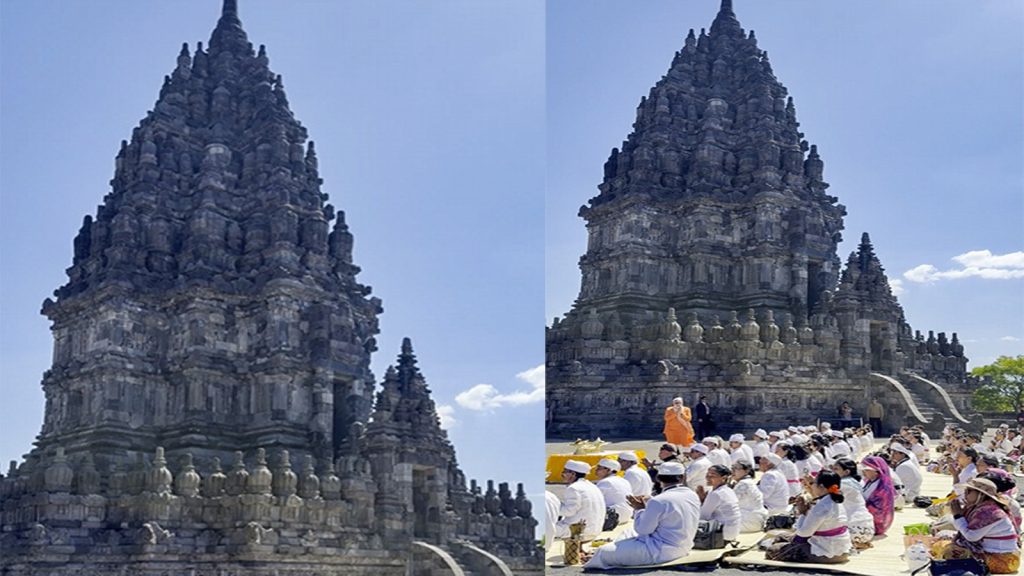
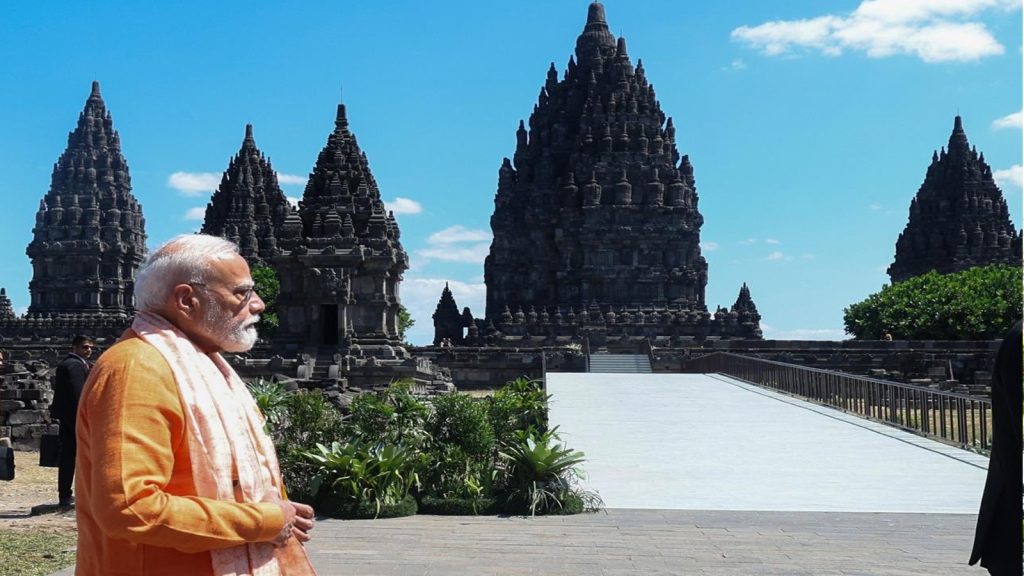
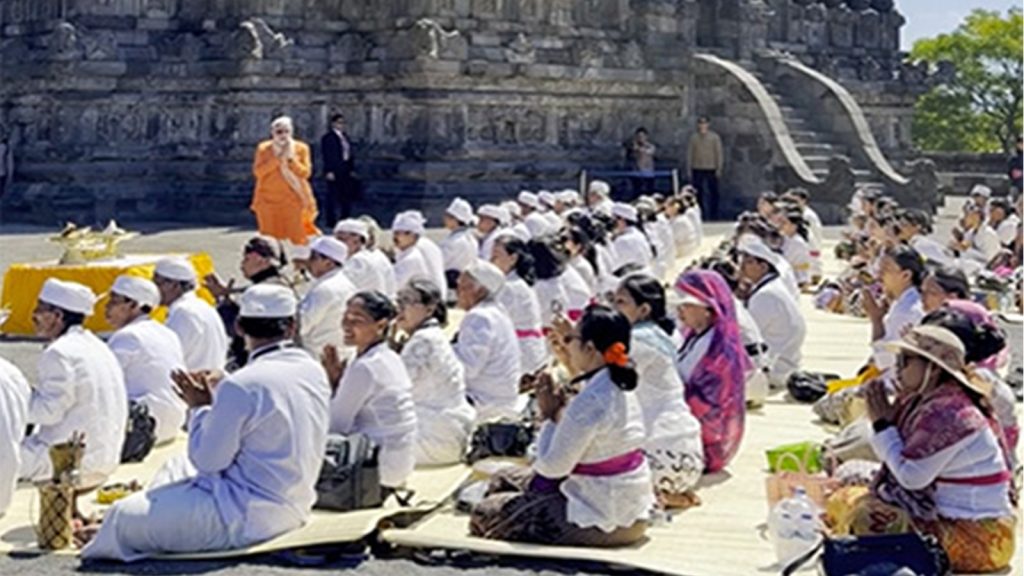
PM Modi offered prayers at the ancient Hindu shrine and interacted with officials overseeing the conservation work. Large crowds waving the national flags of India and Indonesia lined the streets to welcome the two leaders as they travelled to the temple.
Earlier in the day, the Prime Minister shared an aerial video of the temple complex on X, describing it as “majestic Prambanan Temple!”
Speaking during his joint press statement with President Prabowo on Tuesday, PM Modi had underlined the temple’s significance as a symbol of the deep cultural links between the two countries.
“Tomorrow, I will have the privilege of launching the conservation project for the Prambanan Temple in Yogyakarta alongside President Prabowo. More than a thousand years old, the Prambanan Temple stands as a symbol of the shared cultural heritage of India and Indonesia,” he said.
The Prime Minister also highlighted the civilisational bonds that continue to shape bilateral relations.
“India and Indonesia do not just share the sea; we also share our history. Our relationship is rooted in the legacy of the Ramayana and the Mahabharata. We are linked through magnificent monuments such as Borobudur and Prambanan. We are connected through Garuda, Indonesia’s national emblem. We are connected through the joy and celebrations of the Bali Jatra festival,” he said.
Constructed in the 9th century during the Hindu Mataram Kingdom, Prambanan is Indonesia’s largest Hindu temple complex and one of Southeast Asia’s most significant examples of Hindu architecture. Spread across nearly 40 hectares, the complex originally comprised around 240 temples, with the towering 47-metre Shiva temple at its centre standing as its most prominent structure.
The temple complex features shrines dedicated to Shiva, Vishnu and Brahma, while its intricately carved stone reliefs depict scenes from the Ramayana and other Hindu epics, reflecting centuries of cultural exchange between the Indian subcontinent and Southeast Asia.
Although the temple suffered extensive damage due to earthquakes, volcanic eruptions and political upheavals following its abandonment in the 10th century, large-scale restoration efforts began in the early 20th century. UNESCO inscribed Prambanan as a World Heritage Site in 1991, recognising it as one of the finest masterpieces of Hindu architecture in Southeast Asia.
The restoration of Prambanan is the latest in a series of heritage conservation initiatives supported by India across Asia. In recent years, India has assisted in restoring UNESCO World Heritage sites and historic temples in Vietnam, Nepal, Myanmar, Sri Lanka, Cambodia, Laos, Bangladesh and Bahrain, reflecting New Delhi’s commitment to preserving the region’s shared civilisational heritage.
(With agency inputs)


