







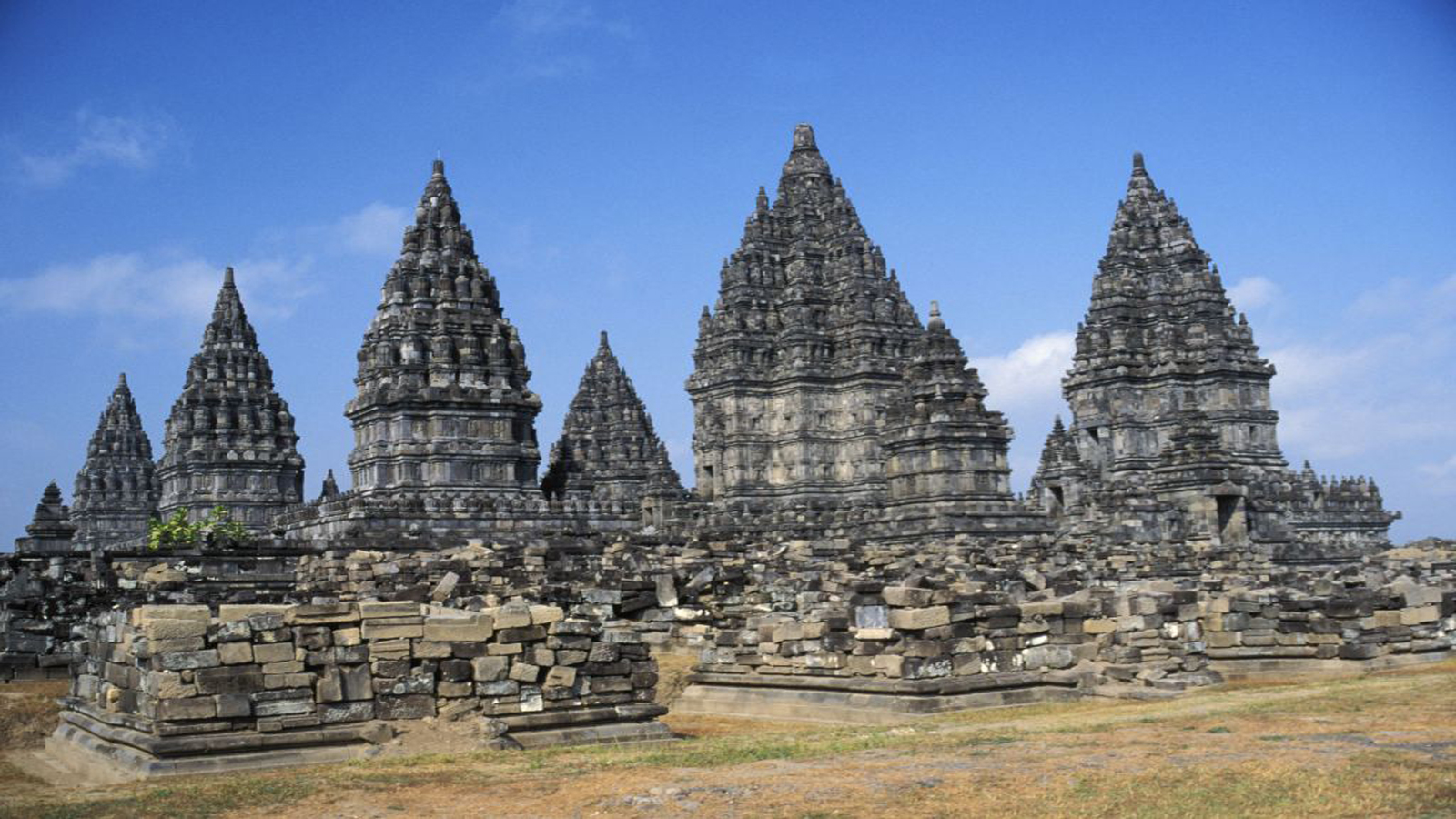
Prime Minister Narendra Modi and Indonesian President Prabowo Subianto on Wednesday jointly inaugurated the India-backed conservation and restoration project at the UNESCO World Heritage-listed Prambanan Temple complex in Yogyakarta, marking a major milestone in India-Indonesia cultural cooperation and civilisational diplomacy.
Accompanied by President Prabowo, PM Modi also offered prayers at the nearly 1,000-year-old Hindu temple complex in Yogyakarta on the Indonesian island of Java.
The restoration project follows the exchange of a Letter of Intent between the two countries during bilateral talks in Jakarta on Tuesday. During the talks, the two leaders welcomed the conservation and restoration work that will be undertaken by the Archaeological Survey of India (ASI).
Describing Prambanan as “a timeless symbol of the shared cultural heritage of India and Indonesia,” PM Modi highlighted the deep civilisational links that have connected the two countries for more than a millennium.
The conservation project forms part of India’s broader cultural diplomacy and Act East policy, under which New Delhi has increasingly partnered with countries across South and Southeast Asia to preserve monuments that reflect the region’s shared civilisational heritage.
Since 2014, the Modi government has supported restoration and conservation of several historically significant temples and heritage sites across Asia.
In 2014, India assisted in restoring the UNESCO World Heritage-listed My Son Sanctuary in Vietnam, one of the most important Shaivite temple complexes and the religious centre of the ancient Champa Kingdom.
In 2015, India provided grant assistance of LKR 326 million to Sri Lanka for the restoration of the historic Thiruketheeswaram Temple, one of the island nation’s five ancient Pancha Ishwarams dedicated to Lord Shiva.
Following the devastating 2016 earthquake in Myanmar, India partnered with the Myanmar government to restore monuments in the UNESCO-listed Bagan Archaeological Zone. The ASI conserved 12 historic pagodas and completed restoration of the iconic Ananda Temple.
In 2017, India restored and conserved 28 cultural heritage sites in Nepal, including the Seto Machhindranath Temple and the Budhanilkantha Temple Dharamshala, as part of its USD 50 million post-earthquake reconstruction assistance.
During his 2019 visit to Bahrain, PM Modi inaugurated the USD 4.2 million redevelopment of the 200-year-old Shreenathji (Shri Krishna) Temple in Manama, preserving one of the Gulf region’s oldest Hindu temples.
In 2020, India financed the reconstruction of the nearly 300-year-old Joy Kali Mata Temple in Bangladesh’s Natore, besides supporting restoration of the Anandomoyee Kali Mata Mandir and the Ramakrishna Temple. In 2021, India announced assistance for rebuilding the historic Ramna Kali Temple, which had been destroyed during Pakistan’s Operation Searchlight in 1971.
In 2022, the ASI undertook extensive conservation work at the UNESCO-listed Angkor archaeological complex in Cambodia, including restoration of Ta Prohm and conservation initiatives around Angkor Wat.
In 2024, India restored key structures at the UNESCO-listed Vat Phou Temple in Laos, one of Southeast Asia’s oldest Shiva temple complexes.
The Prambanan project is the latest addition to this expanding portfolio of heritage conservation initiatives. Under the programme, the ASI will work with Indonesian authorities to restore and conserve several smaller temples within the Prambanan complex.
Prambanan: A monument of shared civilisational heritage
Constructed in the 9th century during the Hindu Mataram Kingdom, Prambanan is Indonesia’s largest Hindu temple complex and among Southeast Asia’s finest examples of Hindu architecture. UNESCO inscribed it as a World Heritage Site in 1991.
Spread across nearly 40 hectares, the complex originally consisted of around 240 temples, centred on the towering 47-metre Shiva temple. It also houses shrines dedicated to Vishnu and Brahma, while its intricately carved stone reliefs depict scenes from the Ramayana and other Hindu epics, illustrating centuries of cultural exchange between the Indian subcontinent and Southeast Asia.
Although Prambanan suffered extensive damage from earthquakes, volcanic eruptions and centuries of neglect following its abandonment in the 10th century, systematic restoration efforts began in the early 20th century. Today, it is recognised as one of the world’s finest surviving monuments of Hindu architecture.
From May to October, the famed Ramayana Ballet is staged under the full moon in an open-air theatre adjacent to the temple complex, adding to Prambanan’s cultural significance as a living heritage site.
(With ANI inputs)


