







India’s cooperative movement has undergone a significant transformation over the past five years, with a series of structural, digital and institutional reforms aimed at strengthening grassroots institutions, expanding rural services and improving economic opportunities. As the Ministry of Cooperation completed five years since its establishment on July 6, 2021, the government highlighted the progress made in modernising the country’s vast cooperative network under the vision of “Sahkar Se Samriddhi.”
The fifth Foundation Day of the Ministry of Cooperation was celebrated on July 6, 2026, at Bharat Mandapam in New Delhi, where several new initiatives were launched to further strengthen the cooperative ecosystem. The occasion marked the transformation of 50,000 Primary Agricultural Credit Societies (PACS) into e-PACS, representing a major step in the digital modernisation of rural cooperative institutions.
The programme also witnessed the laying of foundation stones for 47 grain storage godowns to strengthen cooperative storage infrastructure. The National Dairy Development Board launched a Milk Supply Review Dashboard Portal to improve milk procurement and distribution management. In addition, two initiatives of the National Urban Cooperative Finance and Development Corporation (NUCFDC) – Sahakar CBS and Sahakar Sahyogi – were unveiled. While Sahakar CBS provides a centralised Core Banking Solution for Urban Cooperative Banks, Sahakar Sahyogi is a conversational AI-powered platform designed to enhance customer service and banking operations.
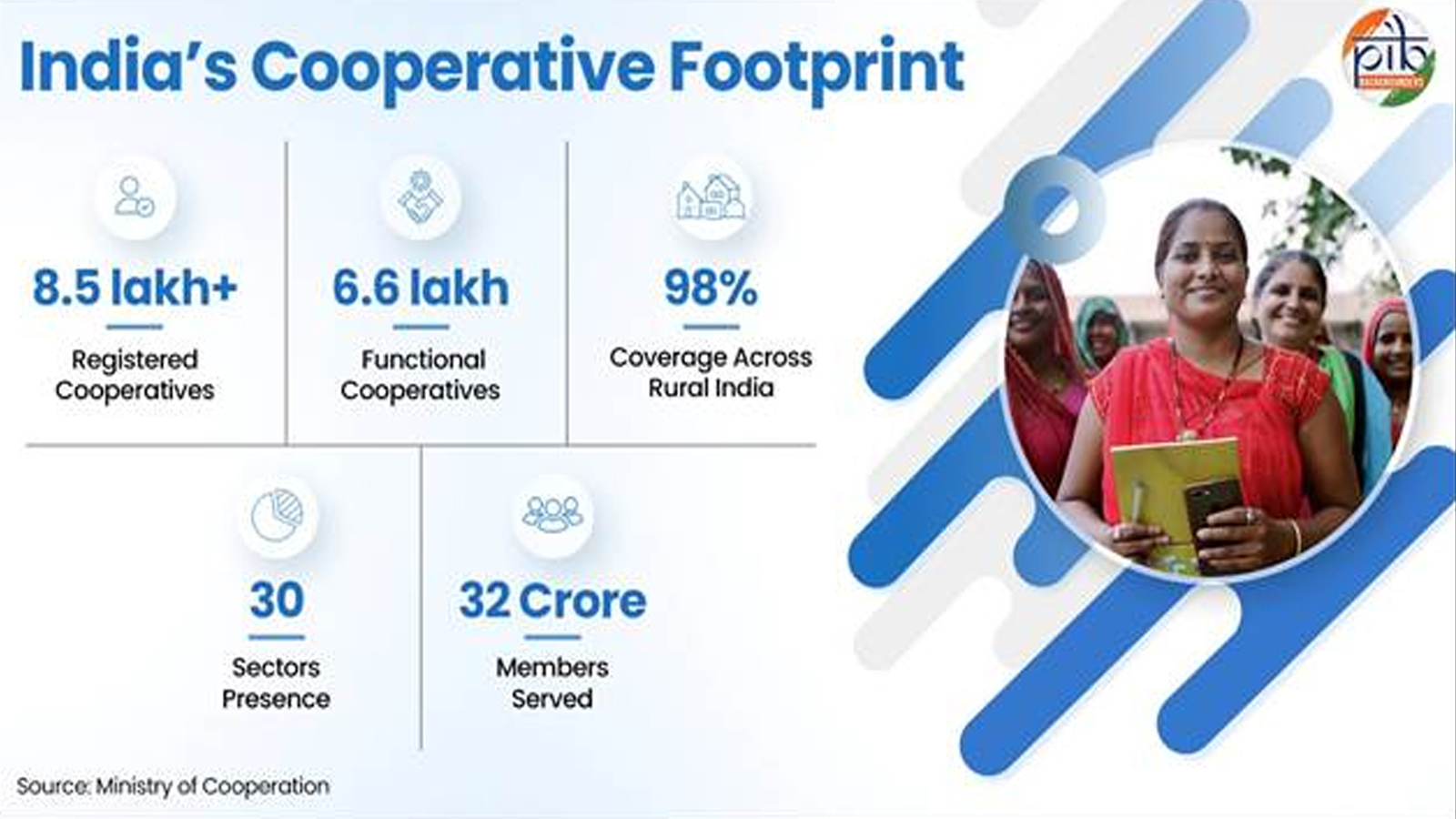
India today hosts one of the world’s largest cooperative ecosystems, spanning sectors such as agriculture, dairy, fisheries, housing, credit, marketing and rural enterprises. These institutions continue to connect farmers, artisans, dairy producers, fishers and workers with finance, markets and livelihood opportunities while supporting inclusive economic participation across the country.
Since the creation of the Ministry of Cooperation, more than 152 major initiatives have been introduced to modernise traditional cooperative institutions, expand their activities and create new avenues for growth. These reforms have focused on making cooperatives more transparent, digitally enabled, inclusive and economically sustainable.
Primary Agricultural Credit Societies have emerged as the cornerstone of this transformation. Traditionally focused on providing rural credit, PACS are now evolving into multi-service centres offering more than 25 different business activities across 32 states and Union Territories through model bye-laws. Their services now extend beyond lending to include retail outlets, storage facilities, healthcare, fuel distribution and digital services.
As of June 2026, 394 PACS had applied to operate retail fuel outlets, with three already commissioned. Around 39,177 PACS are functioning as PM Kisan Samriddhi Kendras, while 54,117 have been converted into Common Service Centres. In addition, 4,248 PACS have received approval to establish Jan Aushadhi Kendras, of which 843 are ready for operations, expanding access to affordable medicines and essential public services in rural areas.
Technology has played a central role in strengthening cooperative governance and service delivery. The financial outlay for the computerisation of PACS has increased from the original allocation of ₹2,516 crore in 2022 to ₹2,925.39 crore in 2025, with the programme scheduled for completion by March 31, 2027. By June 2026, 79,630 PACS had been sanctioned under the scheme, while 63,428 were already using Enterprise Resource Planning (ERP) software. Hardware has been supplied to more than 65,000 PACS, online audits have been completed for over 42,700 societies, and ERP software is now available in 14 languages, significantly improving transparency, accounting and operational efficiency.
The government’s efforts have also expanded cooperative coverage across rural India. So far, 37,454 new multipurpose PACS, dairy cooperatives and fisheries cooperative societies have been registered. PACS now operate in more than 2.55 lakh Gram Panchayats, while dairy cooperatives have expanded to over 87,159 Gram Panchayats and fisheries cooperatives cover more than 29,964 Gram Panchayats, bringing cooperative services to previously underserved regions.
Infrastructure development has emerged as another major priority. Under what is described as the world’s largest decentralised grain storage initiative, 145 PACS have completed cooperative godowns with a combined storage capacity exceeding 68,702 metric tonnes. The storage infrastructure is expected to help reduce post-harvest losses while enabling farmers to store produce locally and secure better market prices.
The cooperative sector is also being integrated with Farmer Producer Organisations (FPOs) to improve aggregation, processing and market access. A total of 1,863 FPOs have been established within the cooperative sector, including 1,117 through PACS. Additionally, 1,070 fisheries FPOs have been formed, with financial assistance of ₹98 crore provided to support their activities.
Policy reforms have also sought to improve the financial health of cooperative institutions. Tax measures include reducing the surcharge from 12 per cent to 7 per cent for cooperatives earning between ₹1 crore and ₹10 crore, lowering the Minimum Alternative Tax from 18.5 per cent to 15 per cent, raising the tax deduction threshold on cash withdrawals from ₹1 crore to ₹3 crore, and increasing cash transaction limits for PACS and Primary Cooperative Agriculture and Rural Development Banks. These measures aim to improve liquidity while reducing compliance burdens.
The dairy sector has received renewed attention under White Revolution 2.0, which aims to increase milk procurement by 50 per cent by 2028-29. So far, 25,282 dairy cooperative societies have been registered, with particular emphasis on expanding women-led dairy cooperatives and strengthening cooperative coverage across the country.
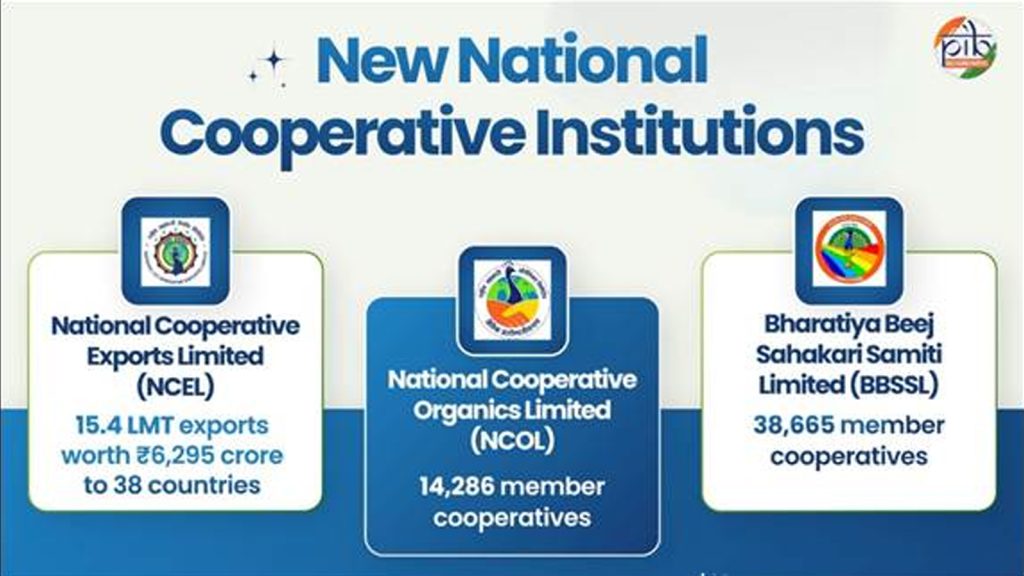
To support sector-specific development, three national multi-state cooperative institutions have been established. National Cooperative Exports Limited (NCEL), which serves as an umbrella organisation for cooperative exports, had exported 15.4 lakh metric tonnes of goods worth ₹6,295 crore to 38 countries by June 2026. National Cooperative Organics Limited (NCOL), responsible for procurement, certification, branding and marketing of organic products, has enrolled 14,286 member cooperatives. Bharatiya Beej Sahakari Samiti Limited (BBSSL), which produces and distributes quality seeds under the Bharat Beej brand, has built a network of 38,665 member cooperatives.
Capacity building has also been prioritised through the establishment of Tribhuvan Sahkari University, India’s first university dedicated to cooperative education, research and skill development. Training programmes are being conducted through the National Council for Cooperative Training (NCCT) and NABARD to strengthen governance, leadership and operational capabilities across cooperative institutions.
The National Cooperative Development Corporation (NCDC) has continued to finance cooperative expansion across sectors. During the financial year 2025-26, the corporation sanctioned ₹1.55 lakh crore and disbursed ₹1.27 lakh crore. It also disbursed ₹2,320 crore to Farmer Producer Organisations and Cluster-Based Business Organisations under the programme for promoting 10,000 FPOs.
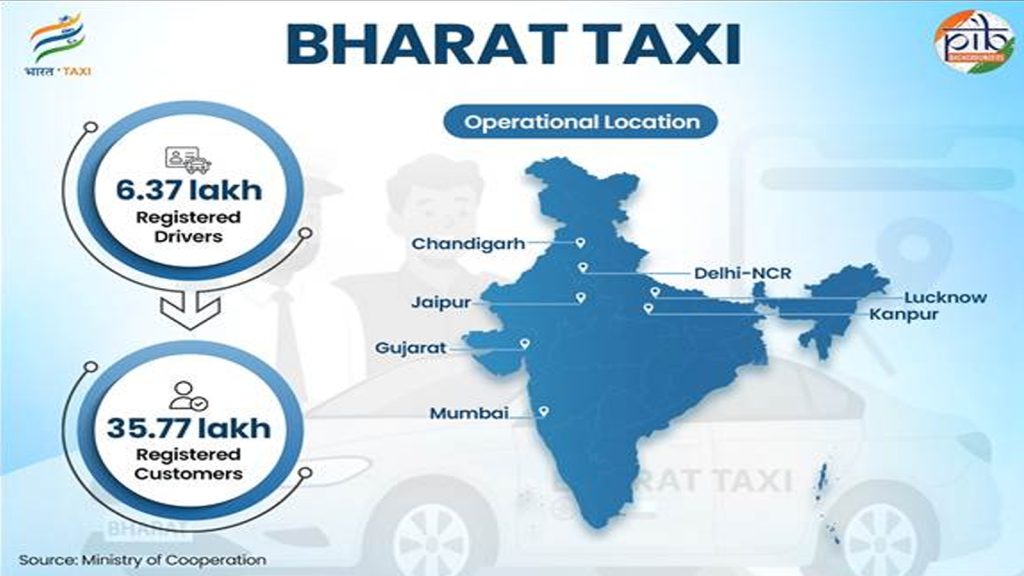
The cooperative model has also entered the mobility sector through Bharat Taxi, a driver-owned platform operated by Sahakar Taxi Cooperative Limited. The service currently has 6.37 lakh registered drivers and 35.77 lakh registered customers. It operates in Delhi-NCR, Gujarat, Lucknow, Chandigarh, Mumbai, Jaipur and Kanpur, with plans to expand operations to Ranchi, Patna, Guwahati, Bhopal, Kolkata, Indore and Nagpur in the coming months.
Five years after the creation of the Ministry of Cooperation, the government’s reform agenda has focused on strengthening institutions, expanding digital adoption, improving rural infrastructure and widening market access. With cooperatives playing an increasingly prominent role in agriculture, finance, dairy, fisheries and emerging sectors, the cooperative movement continues to position itself as a key contributor to inclusive growth and rural development under the vision of “Sahkar Se Samriddhi.”


