







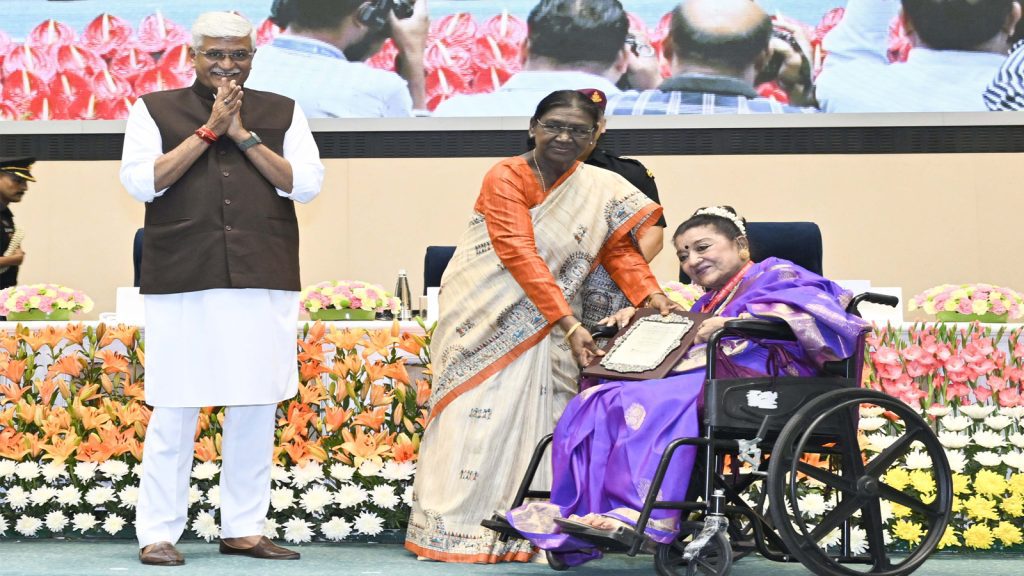
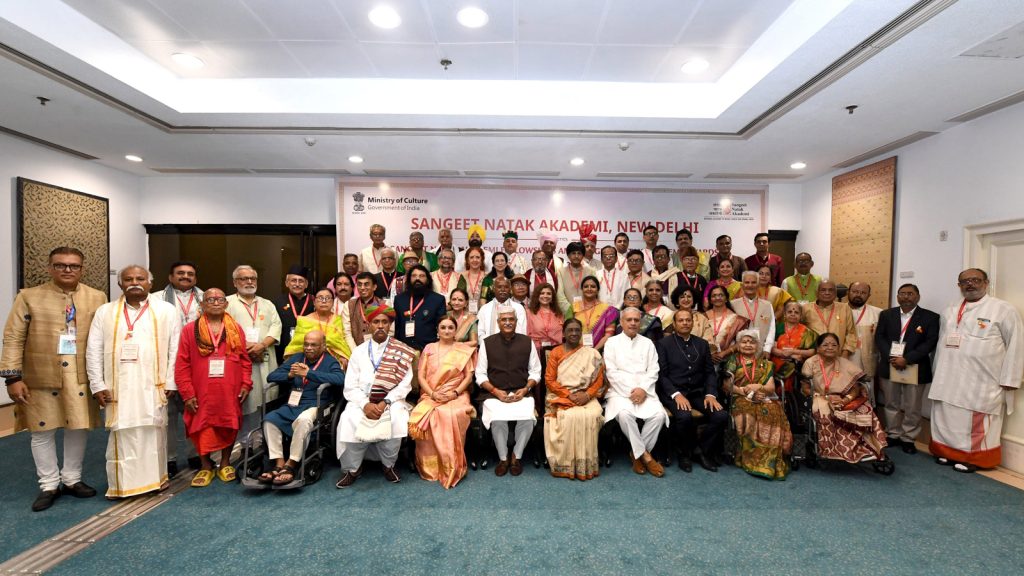
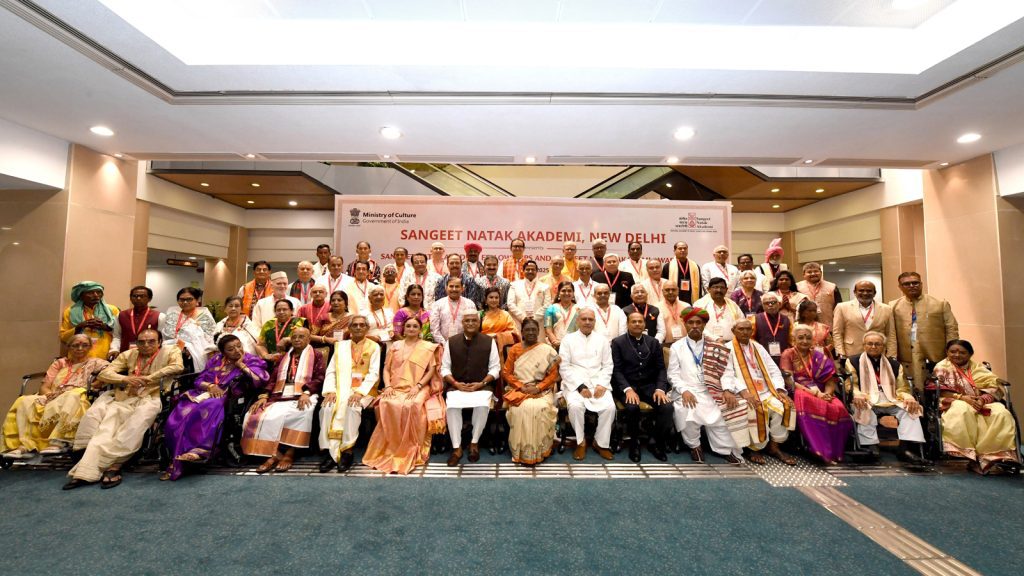
President Droupadi Murmu on Thursday presented the Sangeet Natak Akademi Fellowships and Sangeet Natak Akademi Awards for 2024 and 2025 to eminent artists at a ceremony in New Delhi.
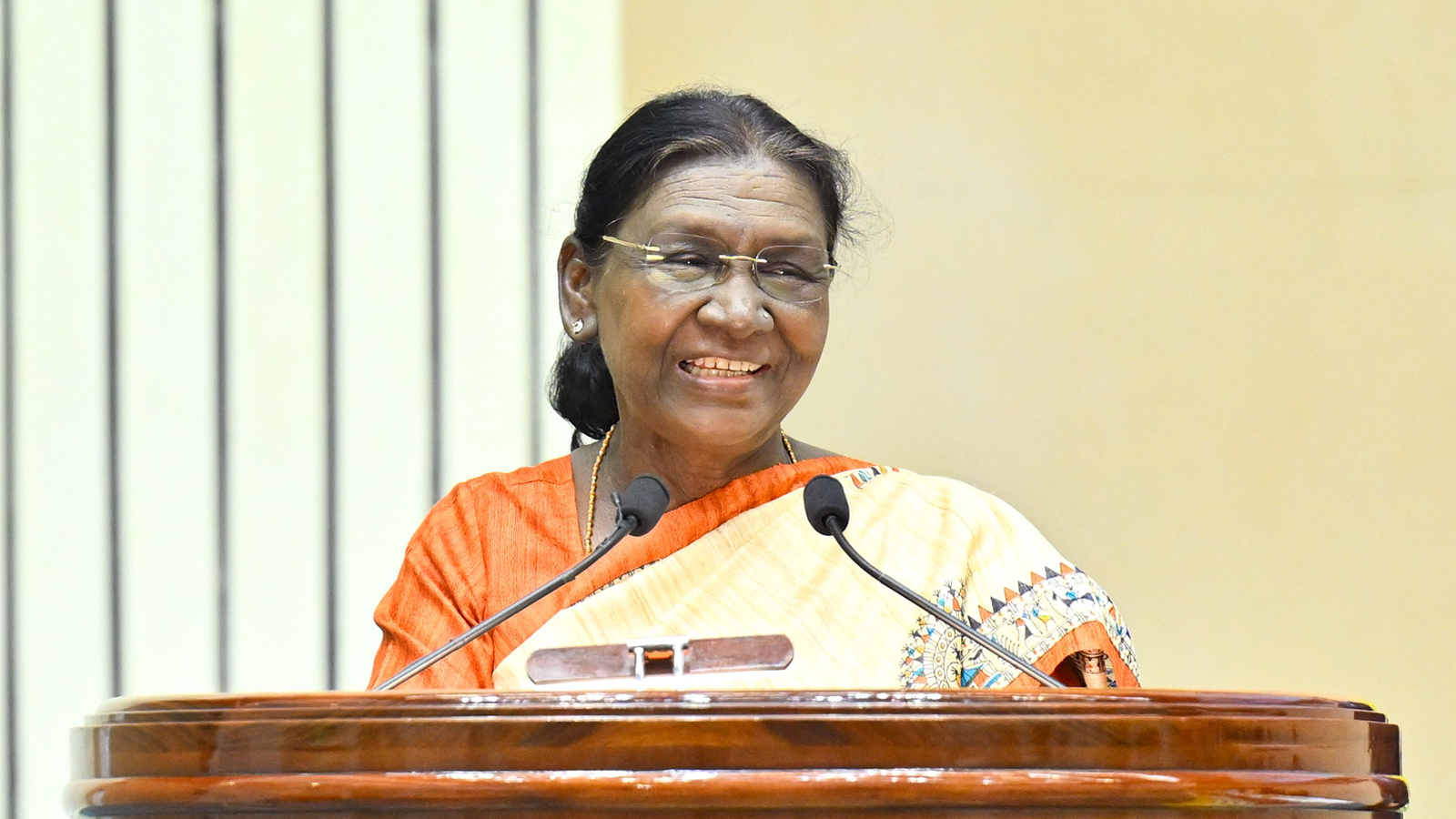
Addressing the gathering, President Murmu said the artists being honoured represent a cultural map of India, carrying forward the country’s diverse traditions through stories, songs, dances, festivals, languages and dialects that have evolved over centuries.
She highlighted the diversity of India’s musical traditions, dance forms and folk theatre, noting that the country’s performing arts are deeply connected with nature. Artists draw inspiration from birds, waterfalls, trees, clouds and rivers, the President said, adding that the relationship between diversity and unity is one of the greatest strengths of Indian arts.
President Murmu emphasised the importance of the Guru-Shishya tradition in preserving India’s artistic heritage. She said the guru has traditionally served as the most important source of knowledge for India’s art forms and stressed the need to ensure that traditional and folk arts are passed on to future generations.
Expressing concern over the threat of extinction faced by several folk art forms in the rapidly changing environment, President Murmu called for greater efforts to document and preserve them. She welcomed the Sangeet Natak Akademi’s Kala-Diksha programme, aimed at nurturing traditional art forms, and urged senior artists to systematically train and mentor the next generation.
The President also underlined the significance of folk and tribal arts, saying they reflect a natural zest for life and a close relationship with nature. These traditions, she noted, preserve the collective memory and consciousness of communities and form an important foundation of India’s cultural identity.
Congratulating the fellowship and award recipients, President Murmu described artists as “bearers of Indian tradition” who are guardians of the country’s collective memory as well as creators of its vision for the future.
She also described the Sangeet Natak Akademi as an important centre of India’s soft power and expressed confidence that the institution would continue to take India’s cultural energy and artistic heritage to audiences across the world.


