







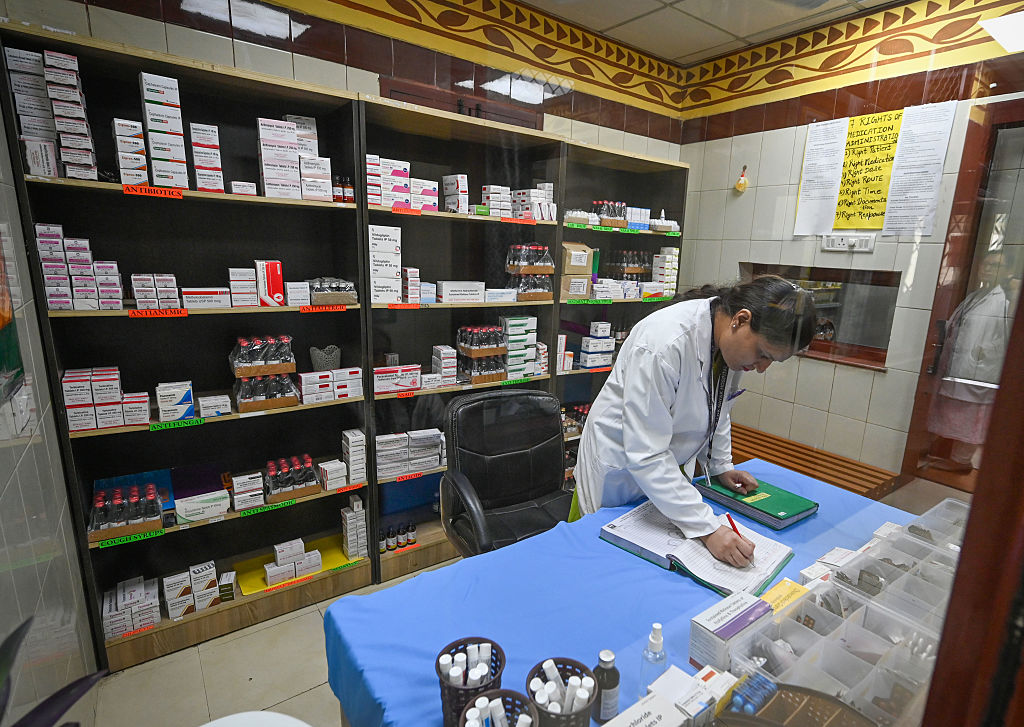
India highlighted its network of over 1.8 lakh Ayushman Arogya Mandirs, which bring a wide range of healthcare services closer to communities, as Union Health Secretary Punya Salila Srivastava reaffirmed the country’s commitment to strengthening healthcare delivery from primary to tertiary care and protecting people from financial hardship.
The Health Secretary was speaking at the Seventh Annual Ministerial Meeting of the Group of Friends of Universal Health Coverage (UHC) & Global Health, held on the sidelines of the 81st United Nations General Assembly (UNGA81) in New York.
The Ayushman Arogya Mandirs provide services spanning reproductive and child health, screening and management of non-communicable diseases, mental health, elderly and palliative care, as well as preventive, promotive and curative healthcare. Srivastava also underscored India’s continued focus on maintaining quality standards in primary healthcare delivery.
Strengthening Financial Protection
Srivastava highlighted the role of Ayushman Bharat Pradhan Mantri Jan Arogya Yojana (AB-PMJAY), the publicly funded health assurance scheme, in expanding financial protection for vulnerable and underserved sections. She also highlighted the Free Drugs and Diagnostics Service Initiative and the Prime Minister’s National Dialysis Programme, which are helping reduce patients’ financial burden and improve access to essential healthcare services, as per a press release from the Ministry of Health and Family Welfare.
India’s Digital Health Ecosystem
Highlighting India’s expanding digital health ecosystem, the Union Health Secretary noted that more than 900 million citizens have unique health identities. Interoperable digital registries of health facilities and healthcare professionals, along with ABHA-enabled health records, are strengthening continuity of care and facilitating access to health services.
Technology Bridging Healthcare Gaps
She also highlighted the growing role of technology in overcoming geographical barriers to healthcare. More than 497 million teleconsultations have been facilitated through e-Sanjeevani, alongside services and innovations including teleradiology, AI-enabled X-rays and Mobile Medical Units. These initiatives are helping extend healthcare services to people in remote and underserved areas.
India Reaffirms Commitment to Hepatitis Elimination
At the UNGA81 side event on “Advancing Global Action to Eliminate Hepatitis”, Srivastava highlighted India’s commitment to the 2030 goal of eliminating Hepatitis B and C as public health threats. She stressed the importance of early diagnosis, affordable treatment and an integrated approach to prevention and care to accelerate progress towards the goal.
Under the National Health Mission (NHM), viral hepatitis screening services are being provided through nearly 1.80 lakh primary healthcare facilities, including Health and Wellness Centres, as well as tertiary care facilities. The programme has expanded to 1,039 treatment centres. Since the launch of the National Viral Hepatitis Control Programme in 2018, nearly 225 million beneficiaries have been screened.
Strengthening Sickle Cell Disease Response
At another UNGA81 global health engagement, Srivastava highlighted India’s comprehensive response to Sickle Cell Disease through the National Sickle Cell Anaemia Elimination Mission, launched in 2023 under the leadership of Prime Minister Narendra Modi, with the goal of eliminating Sickle Cell Anaemia as a public health problem by 2047.
She outlined an approach integrating population-level screening, early diagnosis, counselling, treatment, follow-up and digital tracking into the public health system. The Mission aims to identify the disease and carrier status early, facilitate appropriate counselling and ensure continued access to care.
Under the Mission, more than 7.29 crore people have been screened, over 20 lakh carriers identified and 2.5 lakh people diagnosed, while more than 4.93 crore Sickle Cell Cards have been distributed. These efforts are strengthening the continuum of care and raising awareness among individuals, families and communities about the disease.
-with PIB Inputs


