







India’s approach to plastic waste is changing, with cities and communities increasingly focusing not only on reducing the use of single-use plastic but also on reuse, collection, recycling and converting discarded plastic into useful products.
A decade ago, plastic bags were a routine part of shopping in Indian markets. Today, initiatives across the country are encouraging consumers to carry reusable bags, segregate waste at source and ensure that collected plastic reaches recovery and recycling facilities rather than dumpsites.
The shift has been supported by stricter regulations and improvements in waste-management systems. The Swachh Bharat Mission (SBM), launched on October 2, 2014, has strengthened systems for waste collection, segregation and recovery, while identified single-use plastic items have been prohibited since July 1, 2022.
But the transformation is also being driven by local initiatives and community participation. From cloth-bag campaigns in markets to machines dispensing reusable bags, milk-pouch buy-back programmes and facilities turning difficult-to-recycle plastic into construction material, cities are experimenting with ways to change the journey of plastic waste.
Trichy: Making markets part of the solution
Markets are among the places where single-use plastic can accumulate rapidly. In Tamil Nadu’s Trichy, the city corporation launched an initiative in 2022 to reduce plastic use in three farmers’ markets – Tennur, K.K. Nagar and Woraiyur.
The campaign covered 220 vendors and focused on creating awareness about the environmental impact of single-use plastic while encouraging shopkeepers and consumers to adopt reusable alternatives.
The “ThunippaiThiruvizhai” (Cloth-Bag Festival) was introduced to encourage shoppers to carry cloth bags.
The initiative produced measurable results. Tennur market avoided 2,200 kg of single-use plastic in one year, while K.K. Nagar avoided 620 kg in four months and Woraiyur avoided 300 kg in six months.
The experience highlights how markets can become points for changing everyday consumer behaviour when alternatives are readily available and supported by sustained awareness.
Vita’s ‘Thaila ATMs’ make reusable bags accessible
In Maharashtra’s Vita town, the challenge of making reusable bags convenient has been addressed through “Thaila ATMs”.
The Nagar Parishad has installed five such machines at busy locations. Similar to vending machines, they allow shoppers to obtain cotton bags by inserting a coin or note.
The machines use Global System for Mobile Communications (GSM) technology to monitor bag availability remotely and alert the municipal council when stocks fall below a specified level.
The initiative also creates livelihood opportunities for women from local Self-Help Groups, who stitch the bags supplied through the machines.
Around 6,000 bags have been sold, while the weekly market has recorded sales of nearly 200 bags in a single day.
The initiative is part of broader efforts in Maharashtra to reduce plastic consumption through a combination of enforcement and public awareness. In Indapur, authorities seized 25 kg of plastic bags and imposed a ₹90,000 fine.
At the same time, communities are promoting alternatives. A Self-Help Group in Wardha distributed 17,000 paper bags, while cloth and jute bags are being encouraged for repeated use.
Andaman initiative gives used milk pouches a value
Another approach is being tested in the Andaman and Nicobar Islands, where a buy-back initiative encourages residents to return used plastic milk pouches rather than discard them.
Collection points were established where consumers could exchange used pouches for rewards, including fresh milk and discounts. Awareness campaigns were conducted to encourage participation and promote responsible disposal and recycling.
The initiative was implemented in collaboration with the Andaman and Nicobar Islands Integrated Development Corporation Limited (ANIIDCO) and the Sri Vijaya Puram Municipal Council (SVPMC).
By November 2024, the programme had collected 17,600 milk pouches, with participating residents receiving 352 litres of milk as rewards.
By attaching a tangible value to discarded packaging, the initiative seeks to make returning plastic a regular household practice.
Bengaluru: Giving discarded plastic a second life
In Bengaluru, efforts are focused on recovering plastic and connecting waste collection with livelihoods.
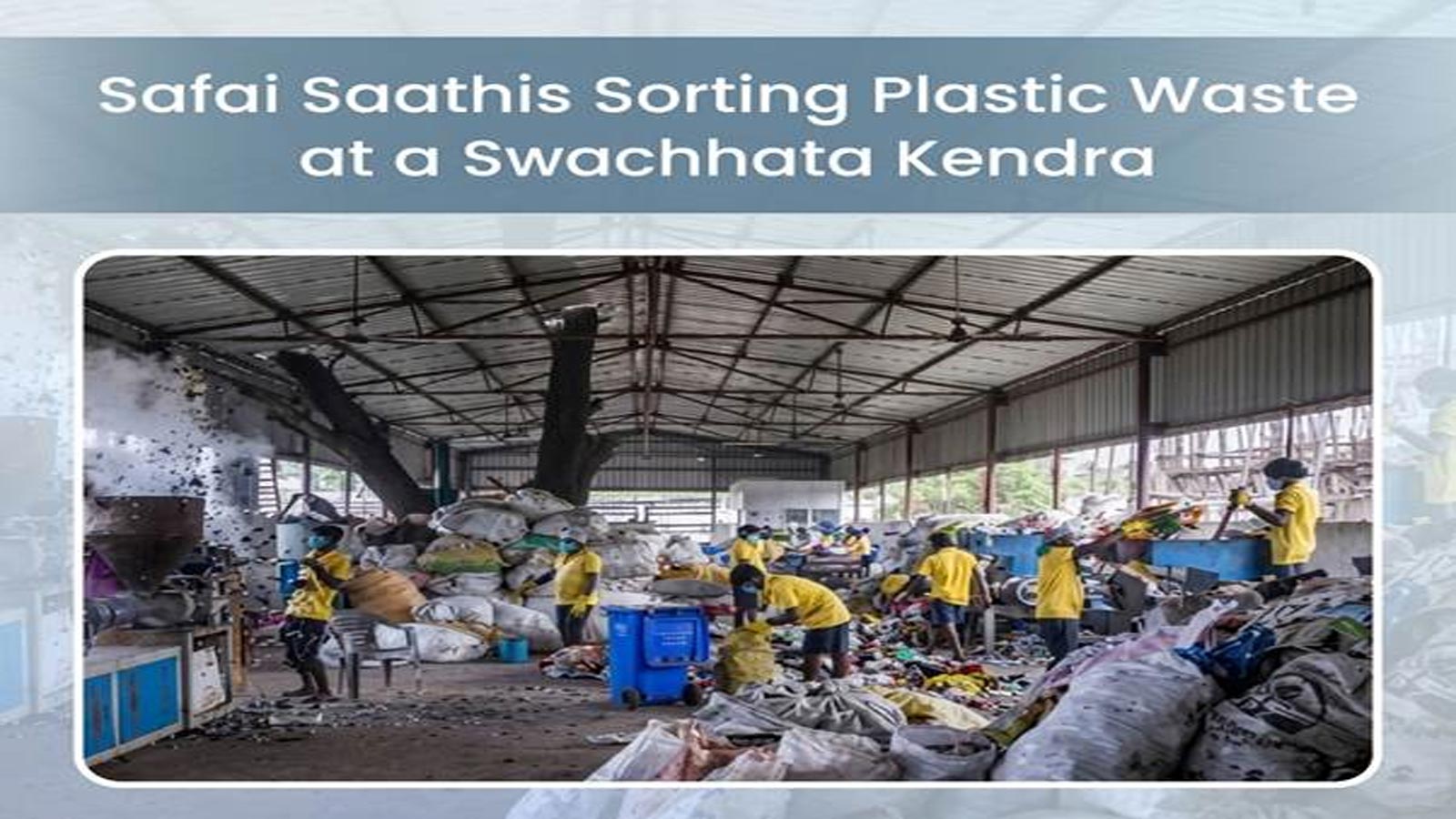
Under the United Nations Development Programme’s Project Prithvi, a Material Recovery Facility known as Swachhata Kendra was established in 2019 for Safai Saathis.
The facility sorts collected plastic waste and processes it through shredding and baling, producing material that can be supplied to recyclers.
Managed by social organisation Hasiru Dala, the centre also provided employment to 76 Safai Saathis during the COVID-19 pandemic, linking plastic recovery with livelihood opportunities.
The processed plastic is used in products including roads, agricultural water pipes and furniture.
The model demonstrates how material recovery can move plastic waste away from disposal sites and back into the productive economy.
Patiala turns difficult plastic waste into chipboards
Some of the most challenging plastic waste to recycle is multilayered plastic (MLP), commonly found in chocolate and biscuit wrappers, chips packets and shampoo sachets.
MLPs combine different materials such as plastic, paper and aluminium, making them difficult to separate and recycle through conventional processes.
Patiala has sought to address this problem through a Plastic Recycling Facility (PRF) supported through corporate social responsibility funding.
At the facility, low-value plastic waste is sorted, cleaned and shredded into flakes. The flakes are then subjected to hot and cold pressing to produce chipboard, an alternative to plywood.
The resulting material can be used for furniture, roofing and temporary shelters and is designed to be resistant to water and termites.
The facility has a capacity of 10 tonnes of plastic waste a day and produces around 75 to 100 chipboards, giving difficult-to-recycle plastic a productive use while reducing the amount sent to landfills.
From reducing plastic to building a circular economy
These initiatives illustrate different stages of the plastic-waste management cycle – reduce, reuse, return, recover and recreate.
The broader objective of the Swachh Bharat Mission is to strengthen source segregation, door-to-door collection, scientific waste processing and material recovery. Local initiatives demonstrate how these systems can be reinforced through community participation and practical alternatives.
As the Swachh Bharat Mission approaches its 12th anniversary on October 2, experiences from Trichy, Vita, the Andaman and Nicobar Islands, Bengaluru and Patiala show how local interventions can influence everyday habits and create new pathways for discarded plastic.
The approaches differ – from kilograms of plastic avoided and bags distributed to milk pouches collected and chipboards produced – but they point towards the same objective: keeping plastic in productive use for longer and reducing its journey to dumpsites and landfills.
The emerging plastic story in Indian cities is therefore increasingly about not just managing waste, but finding ways to reduce what is used, reuse what can be reused, recover what can be recovered and recreate value from what was once considered waste.


