







India is expanding its semiconductor ambitions from building individual fabrication and packaging facilities to creating a more comprehensive domestic ecosystem covering chip design, manufacturing, advanced packaging, equipment, materials, research and talent.
The next phase of this effort is being driven by Semicon 2.0, approved by the Union Cabinet on July 15, 2026, with an outlay of ₹1,27,500 crore. The programme builds on the foundation created by Semicon 1.0 and seeks to strengthen India’s position as a trusted participant in global semiconductor value chains.
The development comes as Prime Minister Narendra Modi inaugurated SEMICON India 2026 at Yashobhoomi, New Delhi, on September 17. Held from September 17 to 19 under the theme “Silicon to Systems: Building the Ecosystem,” the event brings together global industry leaders, policymakers, investors, academia and start-ups.
Why semiconductors matter
Semiconductors are at the heart of modern electronic systems. From smartphones and computers to automobiles, medical equipment, satellites, defence systems and data centres, virtually every major technology sector depends on semiconductor-based components.
The growth of artificial intelligence, 5G and 6G, Internet of Things, electric mobility, autonomous vehicles and data centres is expected to drive further demand for chips.
The global semiconductor market grew at a compound annual growth rate of 6.5 per cent between 2014 and 2024 and is projected to grow at around 8.5 per cent over the next five to 10 years.
Recent supply disruptions and geopolitical tensions, however, have highlighted vulnerabilities arising from concentration in the global semiconductor supply chain. Major economies are consequently seeking to strengthen domestic capabilities and diversify supply sources.
India’s growing demand
India’s semiconductor demand is projected to reach USD 110 billion by FY2030 and exceed USD 200 billion by FY2035.
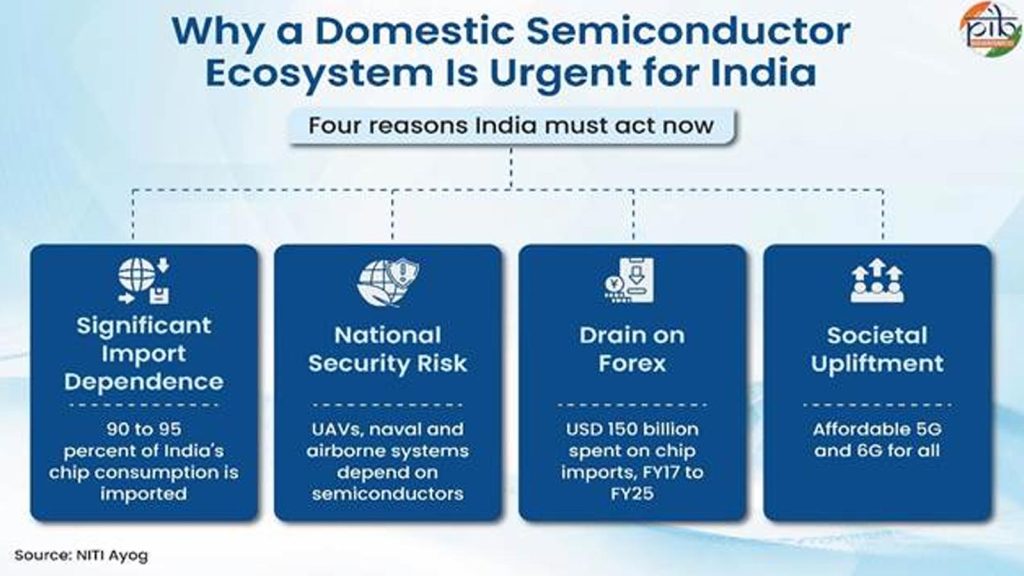
Domestic manufacturing, however, remains at an early stage. India spent nearly USD 150 billion on semiconductor product imports between FY2017 and FY2025, with imports growing at a CAGR of 23 per cent during the period.
If that trend continues, annual semiconductor-related imports could reach USD 240 billion by 2035.
The figures underline the scale of the challenge as well as the opportunity for India to develop capabilities across the semiconductor value chain.
From silicon to a chip
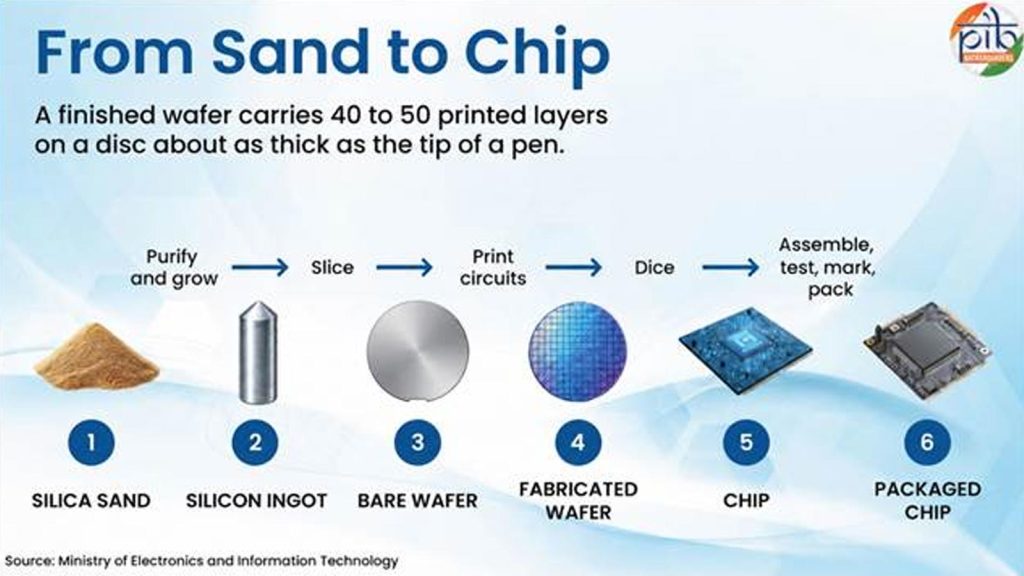
Silicon remains the most widely used semiconductor material. Derived from silica, it is purified and formed into cylindrical ingots, which are sliced into thin wafers and polished.
Inside a semiconductor fabrication plant, wafers undergo hundreds of carefully controlled processes, including deposition, photolithography, etching and ion implantation.
Photolithography transfers intricate patterns onto the wafer. These patterns ultimately form transistors, interconnections and other components. The process is repeated across multiple layers to create increasingly complex integrated circuits containing millions or billions of transistors.
Once fabricated, semiconductor devices move through Assembly, Testing, Marking and Packaging (ATMP) or Outsourced Semiconductor Assembly and Test (OSAT) processes. Packaging protects the chip and allows it to connect with other electronic components, while testing verifies its performance and quality.
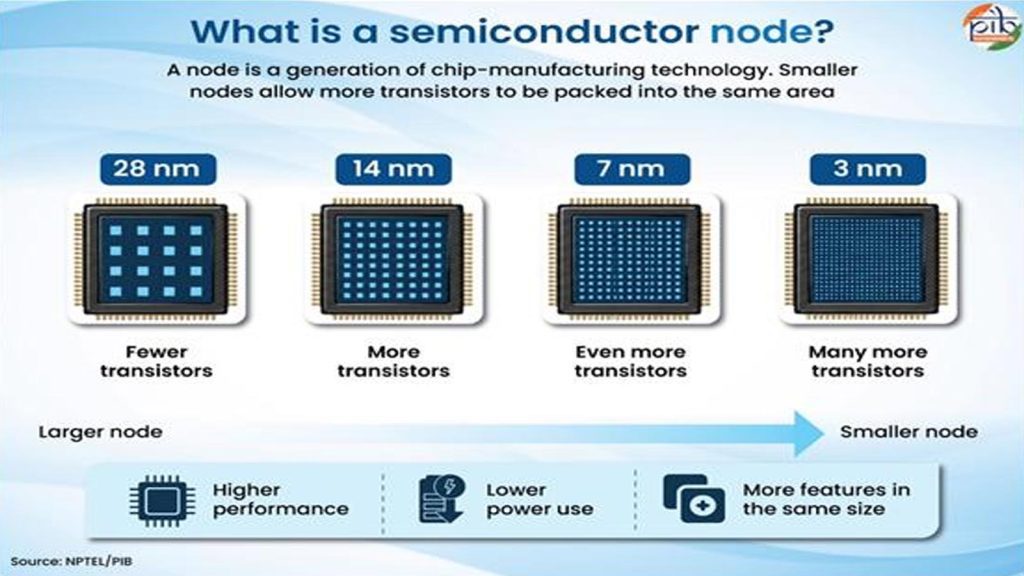
Semiconductor “nodes” broadly identify generations of manufacturing technology. While older labels such as 90 nm, 45 nm and 28 nm referred more directly to particular physical dimensions, modern node names are largely shorthand for process generations.
Advanced nodes are important for high-performance computing and leading-edge processors, while mature nodes remain critical for automobiles, industrial electronics, telecommunications, power systems and consumer products.
Semicon 1.0 laid the foundation
India’s current semiconductor push took shape with the approval of Semicon 1.0 in December 2021, with an outlay of ₹76,000 crore.
The programme sought to establish a domestic semiconductor and display manufacturing ecosystem through schemes covering semiconductor and display fabs, compound semiconductors, silicon photonics, sensors and ATMP/OSAT facilities.
The Design Linked Incentive (DLI) Scheme was also introduced to strengthen domestic semiconductor design capabilities.
The programme has since generated a pipeline of investments and projects across the country.
According to the government, 12 semiconductor manufacturing units have been approved, representing cumulative investment of more than ₹1.64 lakh crore.
These comprise one silicon fab, one silicon carbide fab, one Gallium Nitride Micro LED Display Fab and nine ATMP/OSAT units across Gujarat, Assam, Uttar Pradesh, Odisha, Punjab and Andhra Pradesh. Five of these units have commenced commercial production.
The design ecosystem has also expanded, with 24 chip design projects approved with a combined value of about ₹900 crore.
More than one lakh engineers from 500 organisations, including 400 academic institutions and 100 start-ups, have been provided access to advanced chip-design tools. These organisations have developed more than 300 chip designs.
India has also established semiconductor cooperation with the United States, Japan, European Union, Singapore and the Netherlands.
A Joint Declaration of Intent on an India-Germany Semiconductor Ecosystem Partnership was signed during the German Chancellor’s visit to India in January 2026. India also joined Pax Silica during the India AI Impact Summit in February 2026.
The country hosts around 7 per cent of the world’s semiconductor-domain Global Capability Centres and employs nearly 20 per cent of the global semiconductor chip-design workforce.
Semicon 2.0 expands the ambition
Semicon 2.0 takes the next step by broadening the policy focus beyond fabs and packaging.
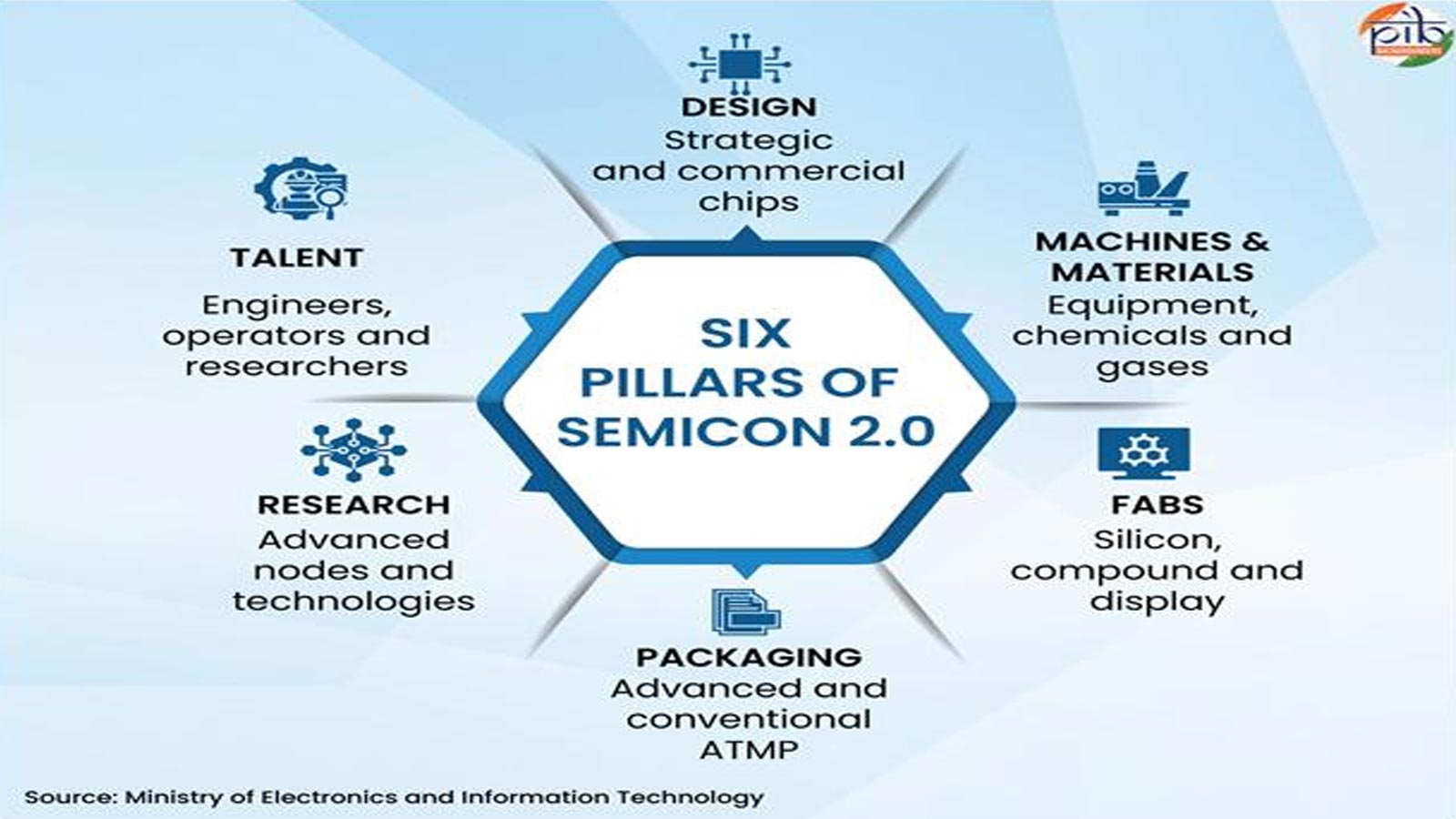
With an outlay of ₹1,27,500 crore, the programme rests on six strategic areas covering research and development, chip design, machines and materials, new fabs, advanced packaging, and talent development.
The objective is to create a more complete domestic value chain rather than concentrating only on the final stages of semiconductor production.
The emphasis on machines and materials is particularly significant because semiconductor manufacturing depends on specialised equipment and highly controlled materials. Strengthening these capabilities can reduce vulnerabilities further up the supply chain.
The programme also seeks to build India’s research and talent base, recognising that semiconductor manufacturing and design require highly specialised engineering skills and long-term research capabilities.
Strategic technology and national security
The semiconductor industry has become closely linked to economic competitiveness and national security.
Countries including Taiwan, South Korea, Japan, China and the United States play major roles across the global semiconductor ecosystem. Taiwan alone accounts for more than 60 per cent of global chip production and nearly 90 per cent of advanced chips.
Such concentration has made resilient and diversified supply chains a strategic priority.
India’s approach combines domestic capacity building with international partnerships because no single country currently controls the entire semiconductor value chain. Different economies specialise in areas ranging from design and fabrication to equipment, materials, memory and packaging.
Semiconductor capabilities already supporting strategic missions
India’s semiconductor capabilities also have a strategic dimension.
The Semiconductor Laboratory (SCL), Mohali, has developed flight-grade chips for satellites and launch vehicles capable of operating under extreme space conditions.
The Chandrayaan-3 lander carried an Indian-made camera chip supporting its imaging systems. SCL’s Vikram processor is used in satellite launch vehicles and rockets.
The Aditya-L1 mission to study the Sun also uses radiation-hardened ADC chips developed by SCL.
These applications illustrate how domestic semiconductor capabilities can support sectors where reliability and technological control are critical.
Policy ecosystem widens beyond semiconductors
The semiconductor push is supported by a broader electronics manufacturing policy framework.
The National Policy on Electronics 2019 provides the overarching framework for electronics system design and manufacturing. Other measures include the Scheme for Promotion of Manufacturing of Electronic Components and Semiconductors (SPECS), Modified Electronics Manufacturing Clusters Scheme (EMC 2.0) and Production Linked Incentive schemes for large-scale electronics manufacturing and IT hardware.
The Electronics Components Manufacturing Scheme, with an enhanced outlay of ₹40,000 crore in Budget 2026–27, is aimed at developing a stronger component manufacturing ecosystem and increasing domestic value addition.
The Mobile Phone Manufacturing Scheme 2026 seeks to strengthen India’s global competitiveness in mobile manufacturing, deepen supply chains and increase domestic value addition.
Semicon 2.0 also includes support for research, development and innovation, while India’s 100 per cent Foreign Direct Investment policy for electronics manufacturing facilitates global investment and technology partnerships.
The road ahead
India’s semiconductor ecosystem has expanded significantly since the launch of Semicon 1.0. The country has moved from having no commercial chip plant in 2021 to approving 12 semiconductor manufacturing units, with five already in commercial production.
The next challenge is to connect these facilities with a deeper domestic network of designers, equipment manufacturers, materials suppliers, researchers, skilled engineers and advanced packaging capabilities.
Semicon 2.0 is intended to provide long-term support for that transition.
The broader objective is not simply to manufacture chips in India, but to build capabilities across the value chain, strengthen supply-chain resilience, create high-value employment and support strategic sectors ranging from AI and telecommunications to automobiles, defence, space and advanced manufacturing.
As India hosts SEMICON India 2026 under the theme “Silicon to Systems: Building the Ecosystem,” the country’s semiconductor journey is moving into a phase focused on connecting individual capabilities into a broader industrial and technological ecosystem.


