







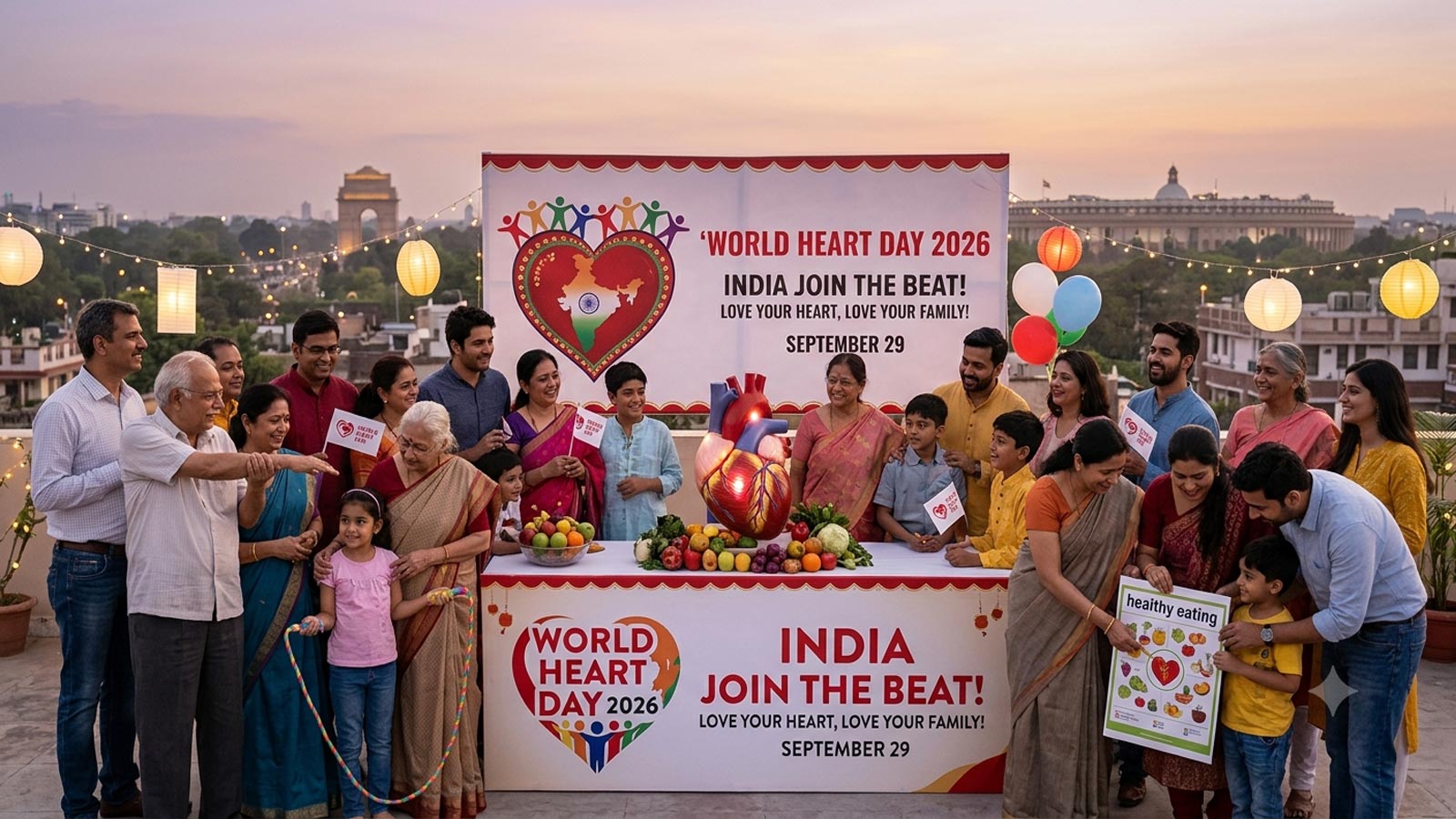
A heart problem does not always announce itself with dramatic chest pain. Sometimes it can remain unnoticed until a heart attack or stroke occurs. This hidden nature of cardiovascular disease (CVD) is at the centre of World Heart Day 2026, being observed on September 29 with the World Heart Federation’s (WHF) “Don’t Miss a Beat” campaign.
The campaign calls attention to symptoms that may be overlooked, while encouraging people to protect their cardiovascular health and seek medical attention when warning signs appear. The WHF has also declared 2026 the Year of Neglected Cardiac Diseases, placing conditions that have historically received less attention on the global cardiovascular agenda.
The focus comes against a backdrop of a continuing global cardiovascular burden. The World Health Organization (WHO) identifies cardiovascular diseases as the leading cause of death worldwide. Its latest fact sheet estimates that 19.8 million people died from CVDs in 2022, accounting for about 32 per cent of all deaths. Heart attacks and strokes together were responsible for 85 per cent of those CVD deaths. More than three-quarters of cardiovascular deaths occurred in low- and middle-income countries.
When heart disease stays hidden
Cardiovascular disease is not a single condition. It includes coronary heart disease, cerebrovascular disease, peripheral arterial disease, rheumatic heart disease, congenital heart disease and other disorders affecting the heart and blood vessels.
One of the challenges is that CVD can exist without obvious symptoms. The WHF notes that the first indication may sometimes be a heart attack or stroke. Possible warning signs include chest pain or pressure, discomfort in the arms, neck, shoulder, jaw or back, breathlessness, unusual tiredness, dizziness, fainting, palpitations and swelling of the legs or feet.
Symptoms can also differ between individuals. The WHF notes that women may experience more diffuse discomfort or symptoms such as nausea, dizziness, palpitations, cold sweating or unexplained fatigue rather than the classic presentation of intense chest pain.
That is why the 2026 campaign’s message is not simply about recognising a heart attack. It is also about noticing changes that may otherwise be dismissed as tiredness, indigestion, ageing or lack of fitness.
India’s cardiovascular challenge
India faces a substantial cardiovascular health burden. WHO India identifies CVDs as a leading cause of mortality and highlights hypertension and diabetes as important contributors to cardiovascular risk. WHO’s India hypertension information estimates that about 220 million people in the country live with hypertension, while only around 12 per cent have their blood pressure under control.
Hypertension is particularly important because it can remain asymptomatic for years. WHO describes raised blood pressure as one of the most important risk factors for CVD and notes that poor awareness, inadequate primary-care management and insufficient follow-up contribute to poor control.
India’s National Non-Communicable Disease programme is using digital systems to strengthen management of hypertension and diabetes. The Ministry of Health and Family Welfare’s NCD portal reported 76.94 crore beneficiaries enrolled and 9.36 crore patients under treatment for hypertension and diabetes as of June 1, 2026, with the system being used by 31 States and Union Territories.
The risk factors that can be changed
The global cardiovascular burden is not driven only by factors that individuals cannot control. WHO identifies several major modifiable behavioural and environmental risk factors, including tobacco use, unhealthy diets, physical inactivity, harmful alcohol use and air pollution. These can contribute to intermediate risk factors such as raised blood pressure, blood glucose, blood lipids and overweight or obesity.
This makes prevention a central part of heart health.
Stopping tobacco use, reducing salt intake, eating more fruits and vegetables, undertaking regular physical activity and avoiding harmful alcohol consumption can reduce cardiovascular risk. WHO also emphasises the importance of identifying cardiovascular disease early so that counselling and appropriate treatment can begin.
The WHF’s 2026 campaign similarly encourages movement as part of everyday heart health. Its “Keep the Beat” initiative challenges people to undertake 20 minutes of movement a day during September, with activities ranging from walking and cycling to sport and dancing.
Know the numbers before symptoms appear
One of the most practical messages emerging from heart-health campaigns is that prevention cannot depend entirely on waiting for symptoms.
Blood pressure can be measured quickly, and WHO recommends regular monitoring because hypertension frequently produces no symptoms. Blood glucose and cholesterol levels are also important components of cardiovascular risk assessment.
For people with established risk factors or a family history of cardiovascular disease, medical advice can help determine which checks and preventive measures are appropriate.
The principle is particularly relevant in a condition where the absence of symptoms does not necessarily mean the absence of risk.
Time matters during a heart attack
When a heart attack does occur, recognising the warning signs and reaching emergency medical care quickly can make a critical difference.
WHO describes a heart attack as a medical emergency caused by a sudden interruption of blood flow to part of the heart muscle. It notes that “time lost is heart muscle lost” and that early recognition and emergency treatment improve the prospects for survival and recovery.
Persistent or severe chest discomfort, breathing difficulty, fainting or other suspected heart-attack symptoms should therefore not be treated as something to wait out at home. Emergency medical services should be contacted immediately.
From awareness to lifelong heart health
World Heart Day 2026 goes beyond a single day of awareness. Its central message is that cardiovascular health requires attention throughout life – from healthier food and regular physical activity to tobacco avoidance, blood-pressure control, early detection and timely treatment.
The challenge is also broader than individual behaviour. The WHF has called for stronger national cardiovascular health plans, while WHO’s regional work highlights the importance of primary healthcare, prevention and consistent management of hypertension and other cardiovascular risks.
For India, where hypertension and other non-communicable diseases place a major burden on the health system, improving awareness and control at the primary-care level remains an important part of the response.
This World Heart Day, the message is simple: a heart problem may not always be obvious, but the risk factors and warning signs should not be ignored. Recognising them early can be an important step towards protecting heart health.


