







Gujarat plans to install grid-connected rooftop solar systems on 15,000 additional government buildings during the current financial year, with the expansion expected to add around 65 MW of renewable energy capacity, Climate Change Minister Arjun Modhwadia said.
The programme, implemented by the Gujarat Energy Development Agency (GEDA) under the state Climate Change Department since 2011-12, is aimed at increasing renewable energy use, reducing dependence on conventional electricity and lowering power expenditure at government offices.
According to the state government, rooftop solar systems were installed on 1,377 government buildings during 2025-26, adding 17.1 MW of capacity. By March 2026, the programme had covered a cumulative 6,014 government buildings, with total installed capacity reaching 95 MW.
“The biggest expansion of installation of rooftop solar systems on government buildings is taking place this year as we plan to install on 15,000 government buildings. The proposed expansion is expected to add around 65 MW of solar capacity, further strengthening the use of renewable energy across the state’s public infrastructure,” Modhwadia said.
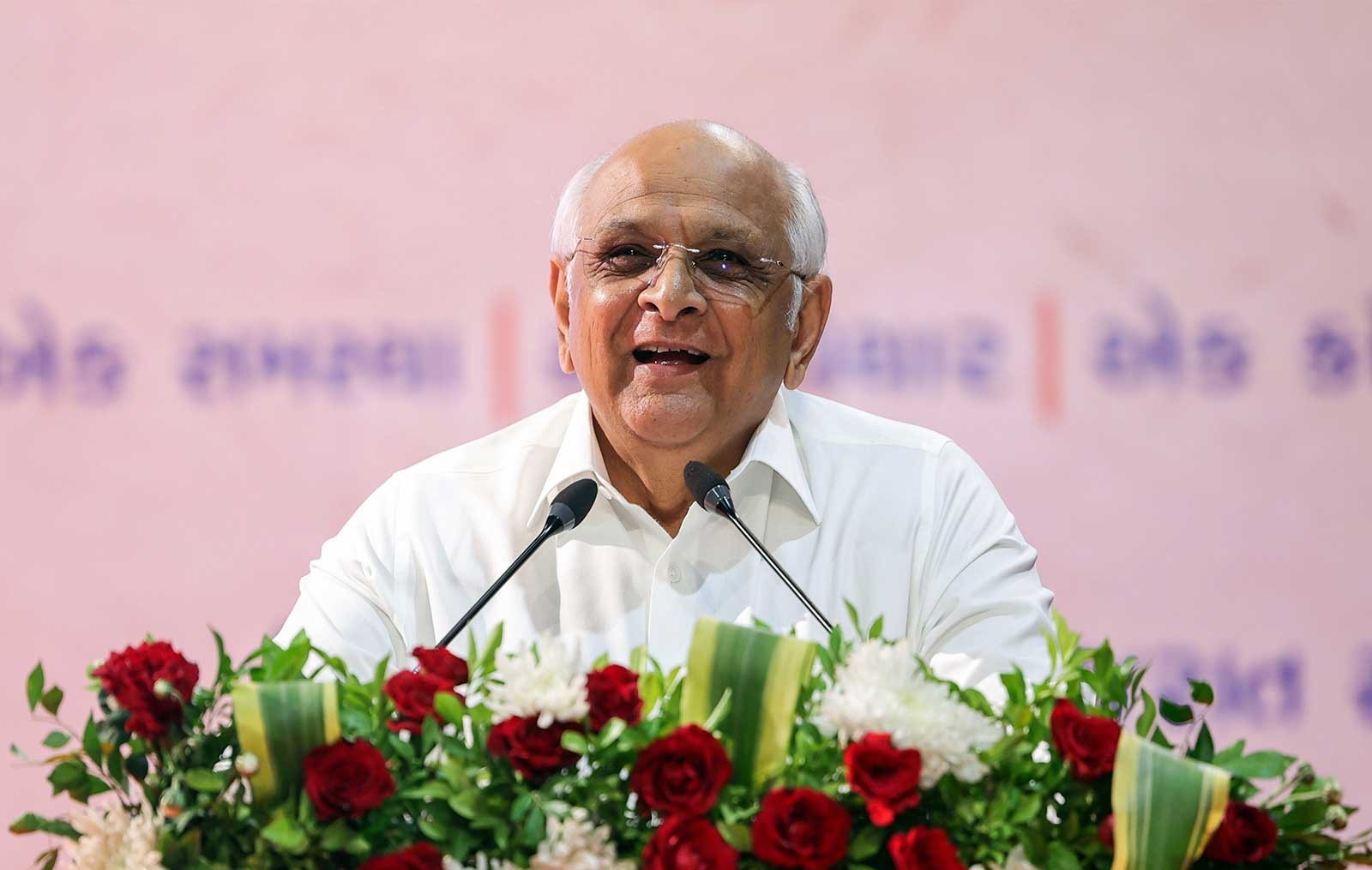
The programme is being expanded under Chief Minister Bhupendra Patel’s leadership as part of the state government’s efforts to increase the use of solar power across public infrastructure.
Minister of State for Climate Change Pravin Mali said the installations were expected to deliver environmental and economic benefits.
“The solar installations are expected to generate multiple environmental and economic benefits, including reduced consumption of conventional electricity, lower electricity expenditure for government offices and a reduction in pollution associated with conventional power generation,” Mali said.
For 2026-27, the state government has made a budget provision of Rs 314 crore for the programme, GEDA Director Dharmendra Patel said.
Of the total allocation, Rs 278 crore has been earmarked for general government buildings, Rs 3 crore for buildings under the Social Justice and Empowerment Department and Rs 33 crore for those managed by the Tribal Development Department.
Under the scheme, rooftop solar systems are installed on buildings under the Gujarat government’s jurisdiction, with projects receiving 100 per cent capital-cost support through the Climate Change Department’s annual budget allocation.
The state has also introduced an Industrial Internet of Things (IIoT)-based Renewable Energy Monitoring System this year to digitally monitor renewable energy installations on government buildings.
Modhwadia said the system integrates smart meters, sensors and IoT gateways connected through GPRS, 4G and Ethernet networks. It provides automated remote alerts and records performance data at 15-minute intervals, generating up to 96 readings a day.
“The system’s robust infrastructure integrates smart meters, sensors, and IoT gateways connected via GPRS, 4G, and Ethernet. It delivers automated remote alerts and captures performance data every 15 minutes, generating up to 96 daily readings,” he said.
According to the state government, the monitoring interface currently tracks renewable energy capacity comprising 142.5 MW of solar power and 68.3 MW of wind power.
The rooftop solar initiative is part of Gujarat’s broader renewable energy expansion. Citing the latest data from the Union Ministry of New and Renewable Energy, the state government said Gujarat has an installed renewable energy capacity of 47,178 MW, making it the leading state in the country in terms of renewable energy capacity.
Solar and wind power account for a major share of the state’s renewable energy portfolio, with Gujarat continuing to expand clean-energy generation and related infrastructure.
The government said the expansion of rooftop solar installations on public buildings, coupled with digital monitoring of renewable energy assets, is aimed at improving energy efficiency, reducing conventional power consumption and supporting the state’s transition towards cleaner energy.
(With ANI inputs)


