







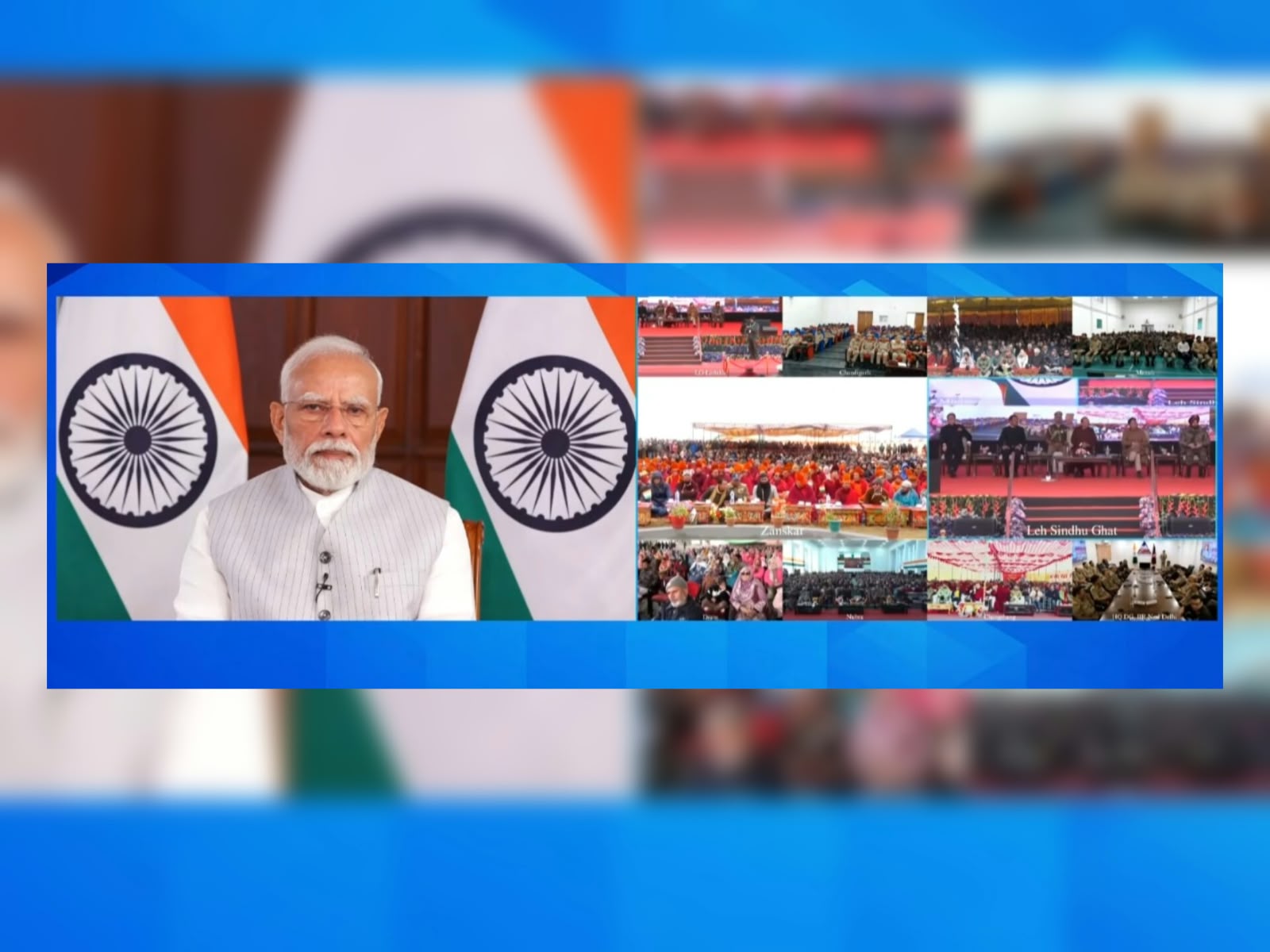
Prime Minister Narendra Modi on Thursday inaugurated and dedicated five major development projects worth around ₹3,350 crore in Ladakh through video conferencing, highlighting the government’s focus on strengthening connectivity, improving power and water infrastructure, promoting education and tourism, and preserving the region’s rich cultural heritage.
Addressing the gathering, the Prime Minister said the projects would improve access to essential services and create new economic opportunities for the people of Ladakh. “Today, several key development projects have been inaugurated in Ladakh. These projects will make travel easier, enhance power infrastructure, boost water availability, and provide fresh impetus to the conservation of our ancient heritage,” he said.
The five projects include the new terminal building of Kushok Bakula Rinpoche Airport in Leh, the Nimmu–Padum–Darcha road, the Hanu hydroelectric project and its associated transmission network, 40 reservoirs under Project Amrit Him Sarovar, and a Petroglyph Conservation Park in Leh.
PM Modi also acknowledged the contribution of engineers, labourers, local workers and Border Roads Organisation (BRO) personnel who executed infrastructure projects under Ladakh’s challenging geographical and climatic conditions.
Airport Expansion and Strategic Road Connectivity
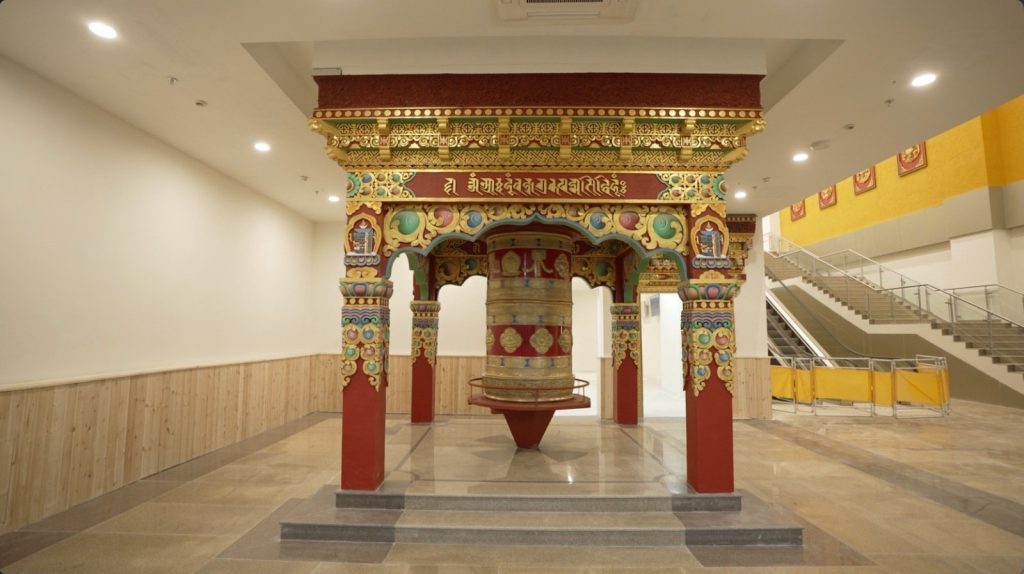
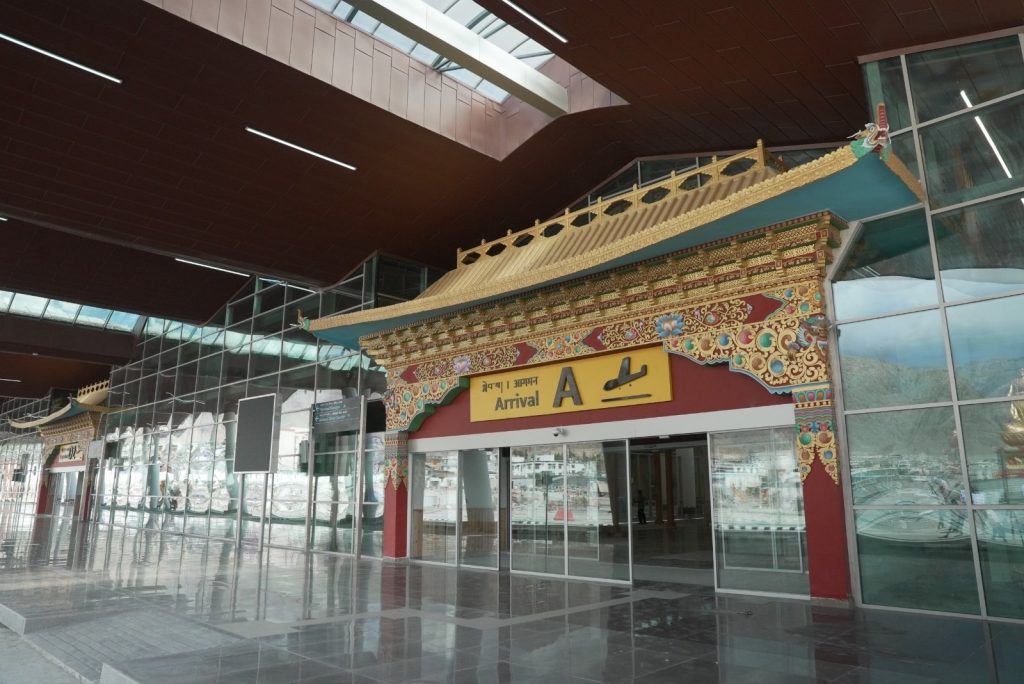
Highlighting the importance of modern transport infrastructure, the Prime Minister inaugurated the new terminal building of Kushok Bakula Rinpoche Airport in Leh, constructed at a cost of around ₹650 crore.
The facility is expected to increase the airport’s annual passenger-handling capacity from 10 lakh to 35 lakh, supporting tourism and improving air connectivity to the region.
The terminal incorporates geothermal heating and solar energy systems suited to Ladakh’s extreme climatic conditions. Emphasising the need to balance infrastructure expansion with environmental protection, PM Modi said, “Our effort is to develop modern infrastructure in Ladakh while taking full care of the local environment.”
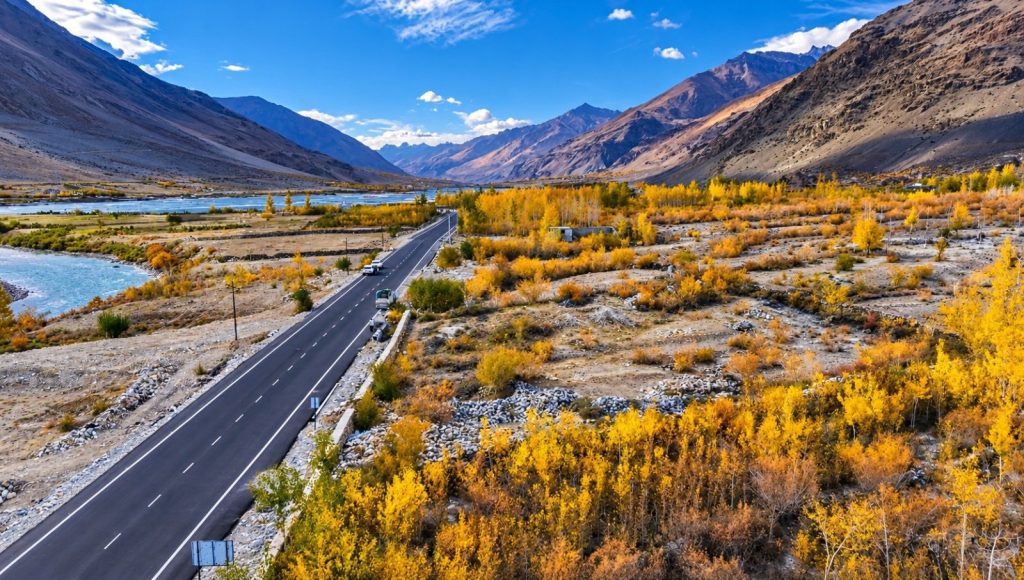
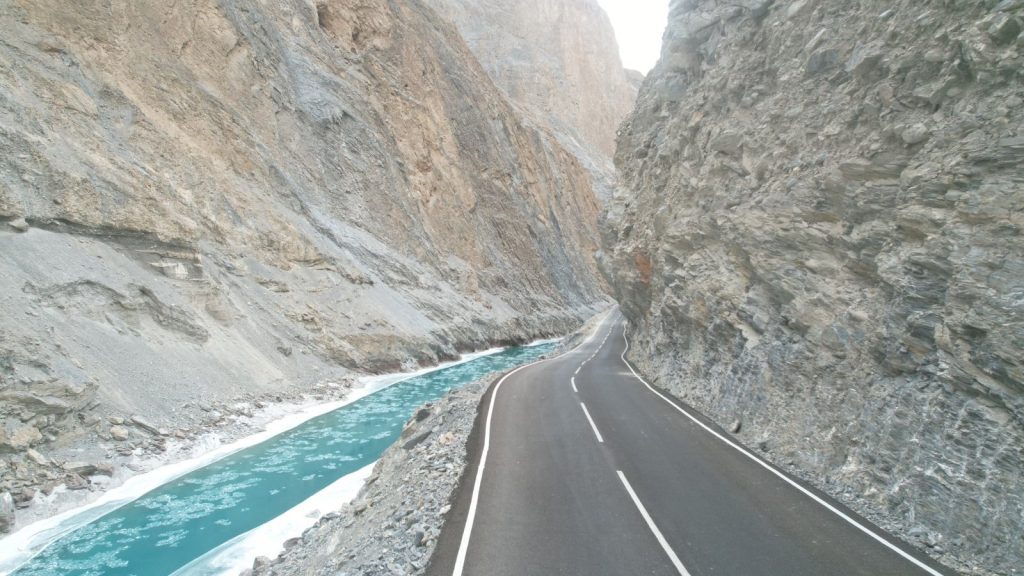
The Prime Minister also dedicated the Nimmu–Padum–Darcha road, built at a cost of approximately ₹2,500 crore. The strategic corridor is expected to reduce travel time between key locations from around 12 hours to nearly three hours.
Underscoring the road’s economic significance, PM Modi said, “This road will also greatly help trade and business.” Improved connectivity is expected to facilitate the movement of people and goods while strengthening commercial activities in the region.
Boost to Power Infrastructure and Water Security
The Prime Minister dedicated the Hanu hydroelectric project along with its associated transmission network, highlighting the importance of reliable electricity for households, healthcare facilities, educational institutions and local enterprises.
Referring to the benefits of improved power infrastructure, PM Modi said, “Every sector will benefit from it.” He also referred to ongoing efforts to develop modern power generation facilities in Puga Valley.
Emphasising water security and agricultural needs in the high-altitude region, the Prime Minister dedicated 40 newly constructed reservoirs under Project Amrit Him Sarovar.
“These will help in providing water for irrigation to farmers at the time of need,” he said, highlighting the role of water conservation infrastructure in supporting agriculture and rural livelihoods.
Ladakh’s Development Since Becoming a Union Territory
Reviewing infrastructure development in the region since Ladakh became a Union Territory in 2019, the Prime Minister highlighted improvements in road connectivity, drinking water access, healthcare and other essential services.
According to the figures cited in his address, Ladakh’s road network has expanded from approximately 1,800 kilometres to more than 4,000 kilometres. The number of major bridges has increased from 19 to nearly 75, while the number of helipads has risen from seven to more than 40.
Tap water coverage has increased from around 3.5 per cent to nearly 99 per cent of households, while hospital bed capacity has doubled. The Prime Minister also highlighted the ongoing construction of the Zojila Tunnel, which is expected to improve all-weather connectivity between Ladakh and the rest of the country.
“Today, for the Central Government, the development of Ladakh is a top priority,” PM Modi said.
Tourism, Agriculture and Employment Opportunities
The Prime Minister emphasised the potential of tourism and local entrepreneurship to generate employment and strengthen the regional economy. He highlighted efforts to promote winter tourism and adventure tourism, along with the development of more than 40 border settlements under the Vibrant Villages Programme.
According to the figures cited by him, the number of homestays in Ladakh has increased from around 150 to approximately 3,000, creating additional opportunities for local residents and supporting tourism-related livelihoods.
The Prime Minister also highlighted the expansion of protected cultivation, with around 11,000 greenhouses operating across the region.
“These have created new possibilities for increasing farmers’ income,” he said, referring to the opportunities offered by modern agricultural practices in Ladakh’s challenging climatic conditions.
PM Modi also highlighted the commercial potential of local products, including sea buckthorn, GI-tagged apricots, handicrafts, high-altitude flowers and traditional Pashmina wool produced by the Changpa community.
Emphasising the importance of market access and branding, he said, “Our effort is that the products here get new markets, get better branding, and their benefits reach the producers directly!”
Focus on Education, Research and Sports
Emphasising opportunities for the younger generation, the Prime Minister said the government was working to ensure that students in Ladakh could access quality education, advanced technologies and research facilities without having to depend on other cities.
“Our special focus is on the new generation of Ladakh; the youth here should receive quality education, get the opportunity to learn new technologies, and they should not have to depend on other cities,” PM Modi said.
He highlighted the construction of a major Centre of Excellence in Leh and proposals for satellite campuses of IIT Jammu and IIM Jammu. These initiatives are aimed at expanding access to higher education, research and specialised skill development within the region.
The Prime Minister also underscored the sporting potential of Ladakh’s youth, particularly in ice hockey, winter sports and mountaineering. Referring to the new sports policy, he said efforts were being made to improve training facilities and help local athletes compete at national and international levels.
“We are striving to provide the local youth with enhanced training and facilities so they can scale new heights on national and international platforms,” he said.
High Court Bench and Digital Connectivity
Addressing the need for improved access to justice, the Prime Minister said the government had approved the establishment of a High Court Bench for Ladakh in August 2026. The move is expected to improve access to judicial services for residents of the Union Territory.
He also highlighted the expansion of BharatNet and high-speed internet connectivity in remote areas. Improved digital access is expected to support e-governance, online education, tourism businesses, homestays, restaurants and local artisans seeking to reach wider markets.
The Prime Minister noted that online business was opening new avenues of income for local entrepreneurs and service providers.
Preserving Ladakh’s Ancient Heritage
The Prime Minister inaugurated India’s first Petroglyph Conservation Park in Leh to preserve the region’s ancient rock art and historical heritage.
He said the initiative would help protect valuable cultural assets and enable future generations, as well as visitors from India and abroad, to learn more about Ladakh’s history.
“People coming from the country and the world will also become familiar with the rich history of Ladakh,” PM Modi said.
He also highlighted the importance of preserving the region’s ancient monasteries, Buddhist traditions and cultural festivals, including the legacy associated with the revered Kushok Bakula Rinpoche.
Concluding his address, the Prime Minister reiterated the government’s commitment to Ladakh’s development and emphasised the importance of combining modern infrastructure with environmental protection, cultural preservation and economic opportunities for local communities.
“Together we all will take Ladakh to new heights of development,” he said.
-PIB


