







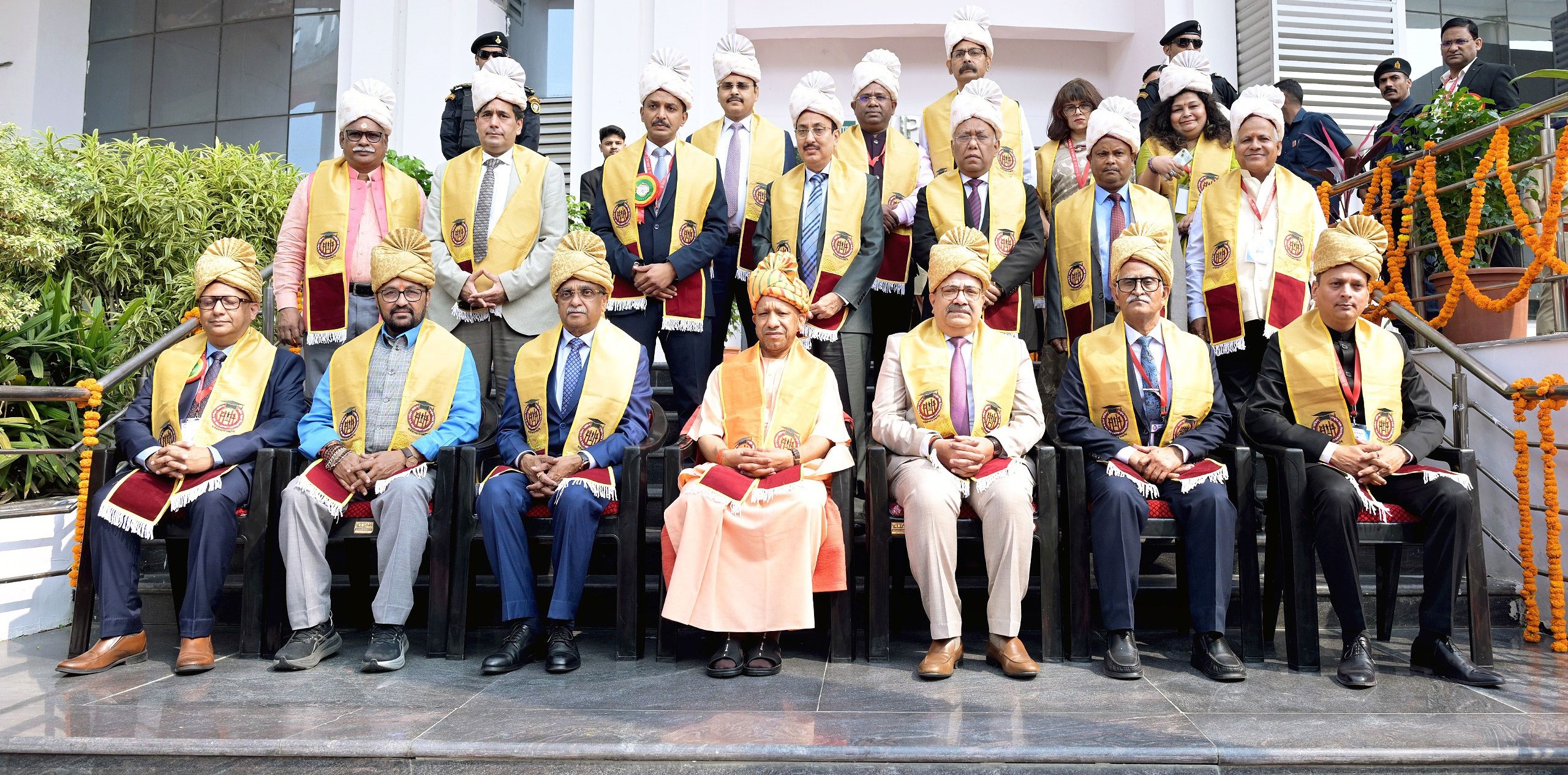
Uttar Pradesh Chief Minister Yogi Adityanath on Saturday said the state had moved from “mafia rule” to a system governed by the rule of law, asserting that no individual or office was above the Constitution.
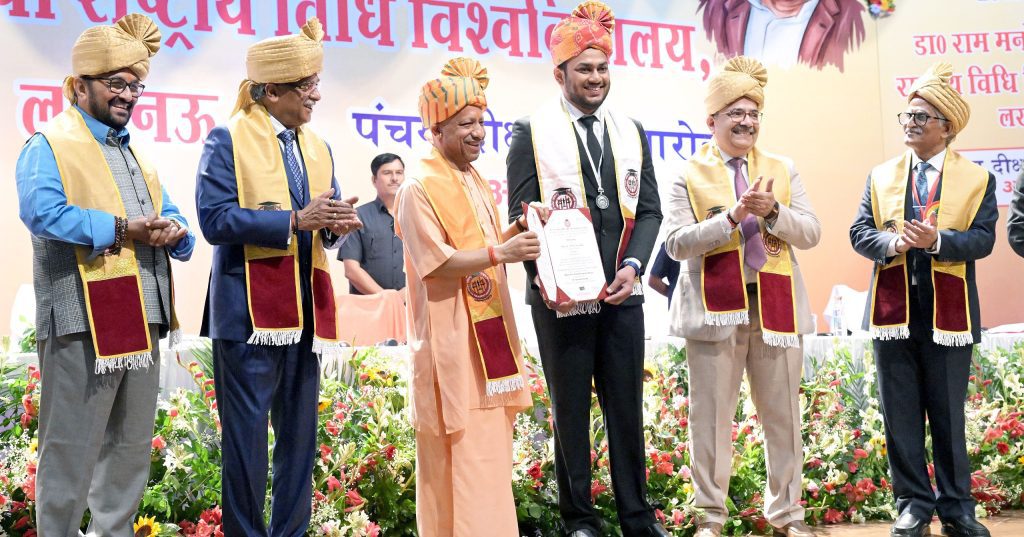
Addressing the fifth convocation ceremony of Dr Ram Manohar Lohia National Law University in Lucknow, Adityanath said concerns over law and order and investment uncertainty before 2017 had hampered Uttar Pradesh’s development.
He claimed that the influence of criminal and mafia elements had obstructed progress, while improvements in law and order under his government had transformed the state’s image.
Emphasising the responsibility of the legal fraternity, the Chief Minister urged young advocates to speak out against injustice and uphold constitutional principles.
He said that while history would ultimately deliver its verdict, lawyers had a responsibility to present arguments based on facts and evidence.
Referring to significant milestones in India’s democratic history, Adityanath cited August 15, 1947, January 26, 1950, and June 25, 1975, when the Emergency was imposed.
He said the Emergency underscored the fundamental distinction between the rule of law and the rule of an individual.
Citing Justice H.R. Khanna’s dissenting opinion during the Emergency, the Chief Minister said decisions taken in defence of constitutional principles secured a lasting place in history.
He urged graduating students to remain committed to truth, righteousness and continuous learning, drawing upon ancient Indian teachings that emphasise speaking the truth, following the path of righteousness and never neglecting education.
Referring to the ideals of socialist leader Dr Ram Manohar Lohia, Adityanath said legal professionals should possess a mind like Lord Shiva, a heart like Lord Krishna and unwavering commitment to their word like Lord Ram.
Linking the responsibilities of young lawyers to the vision of Viksit Bharat by 2047, the Chief Minister said India’s development aspirations must be pursued with integrity, evidence and a strong commitment to constitutional values.
He also highlighted Uttar Pradesh’s roadmap to becoming a one-trillion-dollar economy by 2029-30.
Speaking about the growing use of artificial intelligence (AI) in the legal profession, Adityanath said technology could simplify complex tasks, but final decisions must remain guided by human judgment.
He cautioned that errors in legal drafting could have serious consequences, including the wrongful deprivation of an innocent person’s liberty.
The Chief Minister also expressed concern over emerging challenges posed by deepfakes and cybercrime, particularly their implications for the authenticity and reliability of evidence.
Highlighting measures to strengthen cybersecurity, he said cyber police stations had been established in all 75 districts of Uttar Pradesh, while cyber help desks were operational in 1,583 police stations.
He added that one million young people were being trained in artificial intelligence under the AI Pragya initiative.
Adityanath encouraged young advocates to help resolve land and family disputes in rural areas, oppose injustice and remain steadfast in their principles despite external pressure.
He also urged them to stay connected to their roots and pursue lifelong learning.
Supreme Court Justice Vikram Nath, who attended the ceremony, told graduating students that earning a degree marked the beginning of a new journey rather than the end of their education.
He said the true test of education began beyond university walls and that success should be measured by the positive impact individuals made on others’ lives.
Justice Nath urged graduates to demonstrate constitutional values, compassion and sensitivity in their professional and personal conduct.
Allahabad High Court Chief Justice Arun Bhansali highlighted the university’s contributions to legal education, the judiciary, academia and public service.
He expressed confidence that its graduates would uphold the institution’s traditions and contribute to strengthening the rule of law.
The ceremony began with the lighting of a ceremonial lamp and floral tributes to Goddess Saraswati, followed by a Saraswati Vandana.
Adityanath also presented medals to meritorious students across various academic programmes.
(IANS Inputs)


