







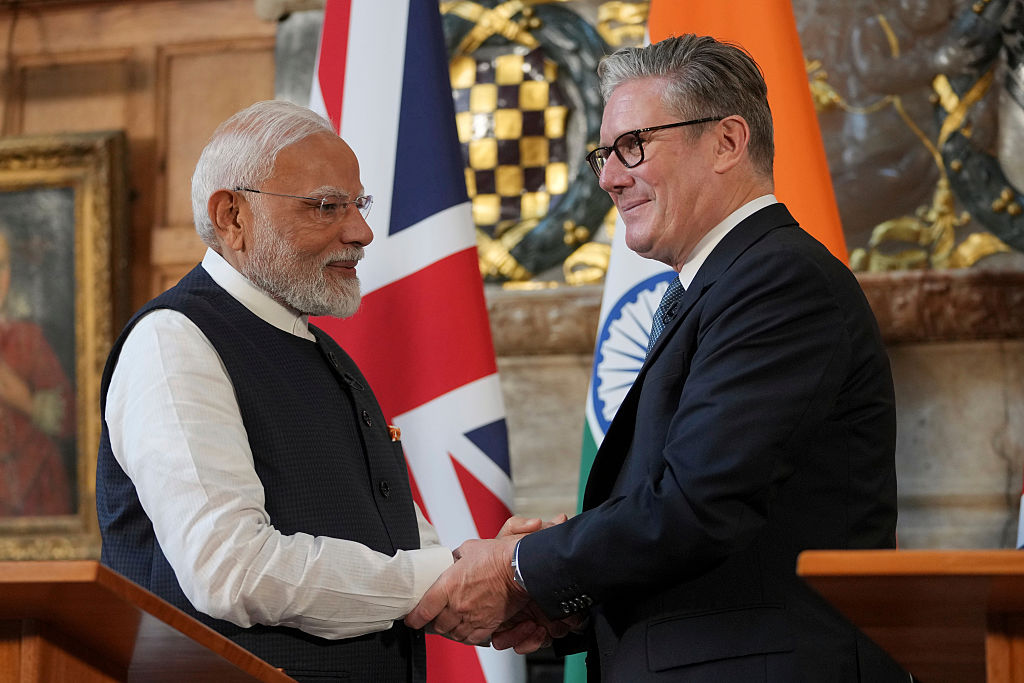
The India-United Kingdom Comprehensive Economic and Trade Agreement (CETA) has come into effect, marking a significant milestone in bilateral economic ties by opening wider market access, reducing tariffs, strengthening services trade and enhancing professional mobility between the two countries.
Described by the government as a “modern and comprehensive” trade pact, the agreement grants zero-duty access to nearly 99% of India’s exports, covering almost the entire value of bilateral trade. It is expected to improve India’s export competitiveness, attract investment and create employment opportunities across sectors including agriculture, textiles, engineering, pharmaceuticals, food processing, marine products, electronics and services.
According to the Ministry of Commerce and Industry, the agreement also seeks to promote digital trade, innovation, sustainable development and stronger people-to-people ties while protecting India’s sensitive sectors through calibrated market access and phased tariff liberalisation.
Bilateral trade
India and the UK remain important economic partners.
In 2025-26, merchandise trade between the two countries stood at USD 25.12 billion, with India’s exports valued at USD 13.44 billion and imports at USD 11.68 billion, resulting in a trade surplus of USD 1.76 billion.
Services trade reached USD 35.44 billion in 2024, with India exporting services worth USD 21.66 billion and importing USD 13.78 billion, generating a surplus of USD 7.88 billion.
Key benefits
The agreement is expected to benefit a wide range of stakeholders:
-Farmers and fisherfolk through duty-free access for several agricultural and marine products in the UK market.
-Labour-intensive industries, including textiles, leather, footwear, gems and jewellery, handicrafts, food processing, plastics, auto components and chemicals, through improved export competitiveness.
-MSMEs through simplified customs procedures, paperless trade and digital systems that lower compliance costs.
-Women, youth and professionals through dedicated provisions supporting entrepreneurship, labour rights, gender equality and greater mobility.
-Businesses through streamlined trade facilitation, digital cooperation and improved integration into global value chains.
Safeguards for domestic industry
While expanding market access, the agreement protects India’s sensitive sectors.
India has offered tariff concessions on 89.5% of tariff lines, covering 91% of UK exports, while maintaining exclusions or phased tariff reductions for sensitive sectors such as dairy, cereals, pulses, edible oils, apples and several strategic manufacturing industries.
For automobiles, India has adopted a quota-based and phased liberalisation approach, protecting small and mid-segment internal combustion engine vehicles and affordable electric vehicles while gradually opening access for premium vehicles.
Sector-wise gains
The agreement is expected to deliver significant benefits across multiple sectors.
-Textiles: Zero-duty access on 1,143 tariff lines is expected to improve India’s competitiveness against countries such as Bangladesh, Pakistan and Cambodia.
-Agriculture: Duty-free access on 1,437 tariff lines is projected to increase agricultural exports to the UK by over 50% in the next three years.
-Food processing: Zero-duty access across 985 tariff lines is expected to boost exports of processed food.
-Leather and footwear: Duty-free access could help exports to the UK exceed USD 900 million.
-Marine products: Elimination of UK tariffs on seafood is expected to improve returns for exporters and coastal communities.
-Engineering goods: Exports to the UK are projected to more than double to over USD 7.5 billion by 2029-30.
-Electronics and software: Zero-duty access and expanded services commitments are expected to boost exports of smartphones, optical fibre cables and IT-enabled services.
-Pharmaceuticals: Duty-free access is expected to strengthen the competitiveness of Indian generic medicines and medical devices in the UK market.
-Chemicals, plastics, sports goods, toys, gems and jewellery: Tariff reductions are expected to improve export competitiveness and generate employment.
Services and mobility
CETA secures one of the UK’s most comprehensive services commitments for India, covering all 12 major service sectors and 137 sub-sectors.
The agreement facilitates the temporary movement of business visitors, investors, intra-corporate transferees, contractual service suppliers and independent professionals.
India and the UK have also agreed to pursue Mutual Recognition Agreements (MRAs) for qualifications in nursing, accountancy and architecture within 12 months of the agreement coming into force.
A key feature is the Double Contribution Convention (DCC), under which Indian professionals on assignments of up to 60 months in the UK will no longer have to make dual social security contributions. The measure is expected to benefit over 75,000 Indian professionals and around 900 Indian companies, with annual savings estimated at over USD 600 million.
Investment ties
The UK is India’s sixth-largest source of foreign direct investment, with cumulative equity investments of USD 35 billion until September 2024. India’s outward investment in the UK stood at USD 19 billion until March 2024.
As of July 2025, 971 Indian companies were operating in the UK, employing more than one lakh people, while 667 British companies operated in India, employing over five lakh people.
The UK is also home to an Indian diaspora of 1.864 million people, according to the 2021 Census.
The government said the agreement lays the foundation for a resilient, innovation-driven and future-ready economic partnership by combining expanded market access with stronger trade, investment, digital cooperation and professional mobility while safeguarding India’s long-term development priorities.


