







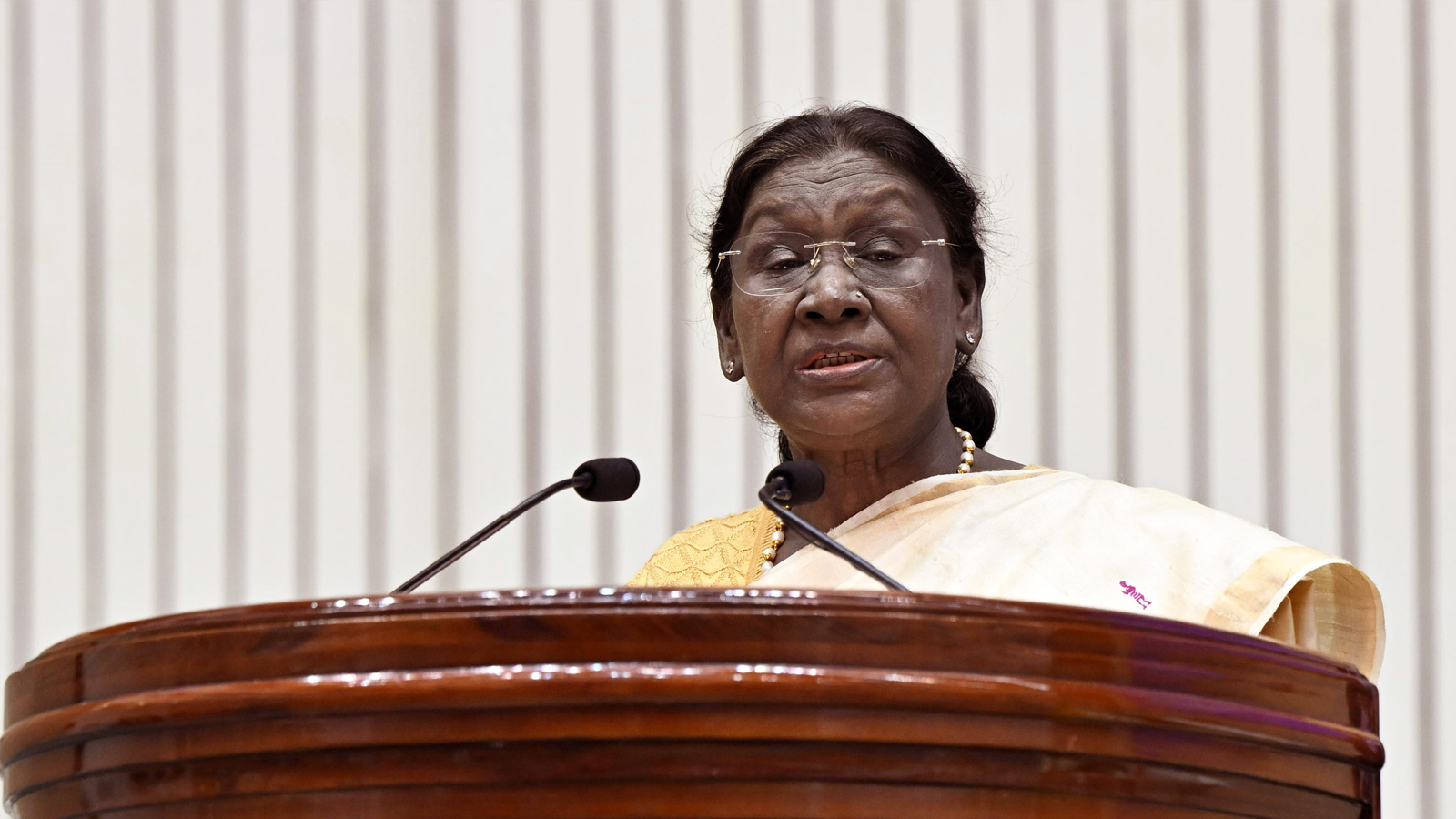
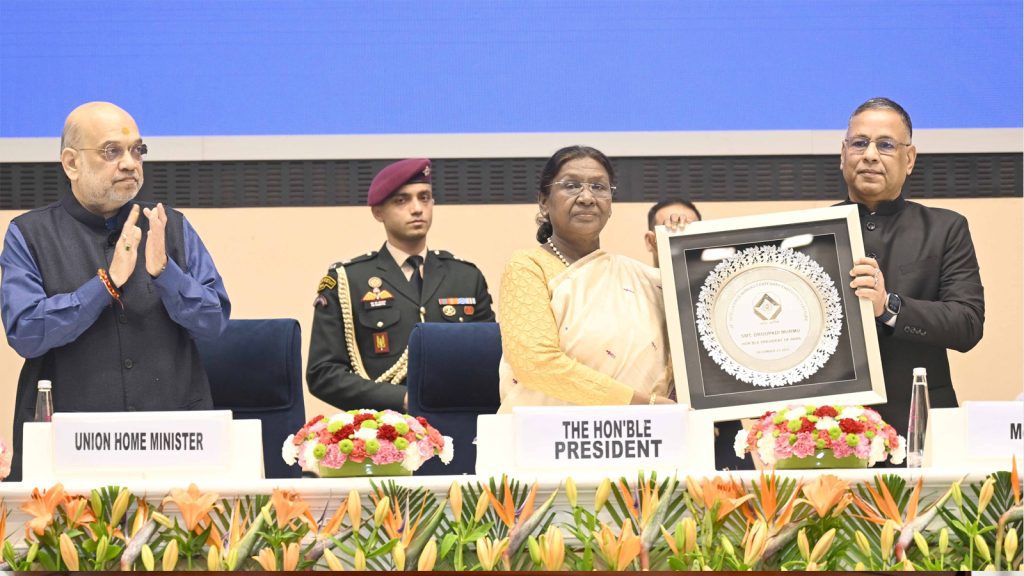
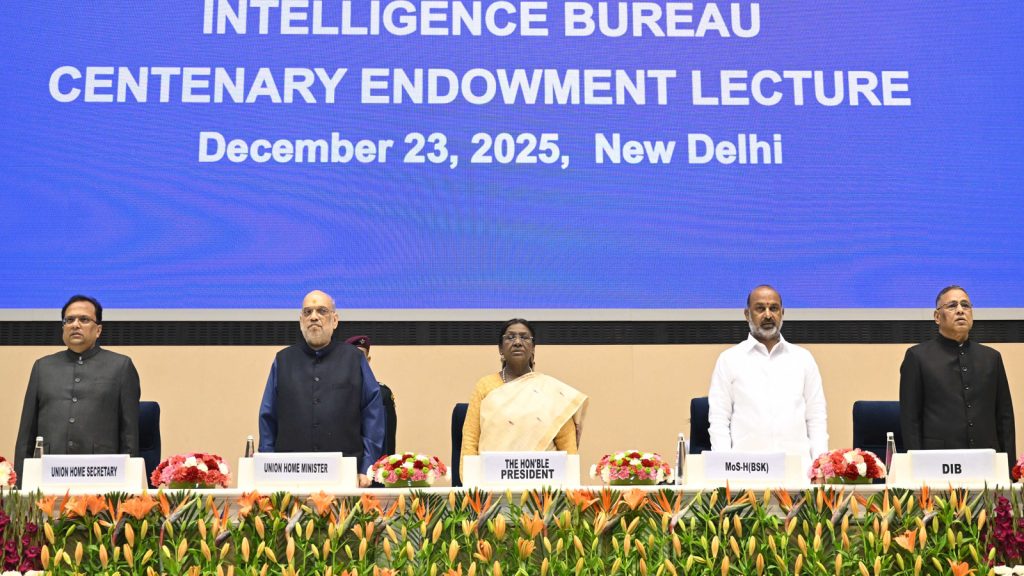
President Droupadi Murmu on Tuesday underscored that national security is among the key drivers of economic investment and growth, calling for greater community participation and citizen engagement to build a “people-centric” security framework for a developed India.
Addressing the IB Centenary Endowment Lecture on “People-Centric National Security: Community Participation in Building Viksit Bharat” in New Delhi, the President said that placing citizen welfare and public participation at the heart of national security strategies can empower people to become effective sources of intelligence and security.
“Security is among the key drivers of economic investment and growth. Building a ‘Surakshit Bharat’ is necessary for building a ‘Samriddh Bharat’,” she said.
Praising the Intelligence Bureau (IB) for its role since Independence, President Murmu said the organisation has played a stellar role in safeguarding India’s unity and integrity. She described IB personnel as “invisible heroes” whose contributions to internal security often go unnoticed.
The President said national security is not the sole responsibility of government agencies but of every citizen. “Alert citizens can provide formidable support to government agencies. When organised as communities, they can achieve great synergy in supporting national security efforts,” she said, adding that Jan Bhagidari should be the cornerstone of people-centric security.
She called upon institutions, including the IB, to spread awareness about citizens’ Fundamental Duties under the Constitution, many of which relate directly to national security. Students, teachers, media, resident welfare associations and civil society organisations, she said, could play a key role in promoting these duties.
Highlighting evolving threats, President Murmu noted that while border tensions, terrorism, militancy and insurgency remain traditional concerns, cybercrime has emerged as a major security challenge in recent years. She warned that misinformation on social media poses a serious risk and called for the creation of fact-based digital communities to counter false narratives in the national interest.
“The most complex challenges to national security today are non-traditional and digital in nature,” she said, stressing the need to build technologically competent communities to tackle cyber fraud, phishing and online abuse. Digital platforms, she said, can empower citizens to report such crimes and enable predictive policing through real-time data analysis.
The President also said trust between citizens and security agencies is a precondition for effective community participation. “Our civil police and internal security agencies must work with the spirit of serving the people. This spirit of service will build trust,” she said.
On left-wing extremism, President Murmu said it is close to total eradication, crediting intensive security operations combined with a holistic approach focused on socio-economic inclusion. She noted that Naxal-affected districts have reduced from 126 in 2014 to just 11 now, with only three remaining in the most-affected category.
She highlighted initiatives such as financial inclusion, education through Ekalavya Model Residential Schools, skill development programmes, rehabilitation incentives, and community-led cultural activities as key factors behind the transformation of affected regions. Referring to the recently organised Bastar Olympics 2025, she said the event symbolised positive change, with participation from nearly four lakh players, including youth who had earlier been associated with Naxalism.
Concluding her address, the President expressed confidence that by empowering citizens through participation and vigilance, India can effectively address the complex security challenges of the 21st century and move rapidly towards becoming a peaceful, secure and prosperous nation.


