







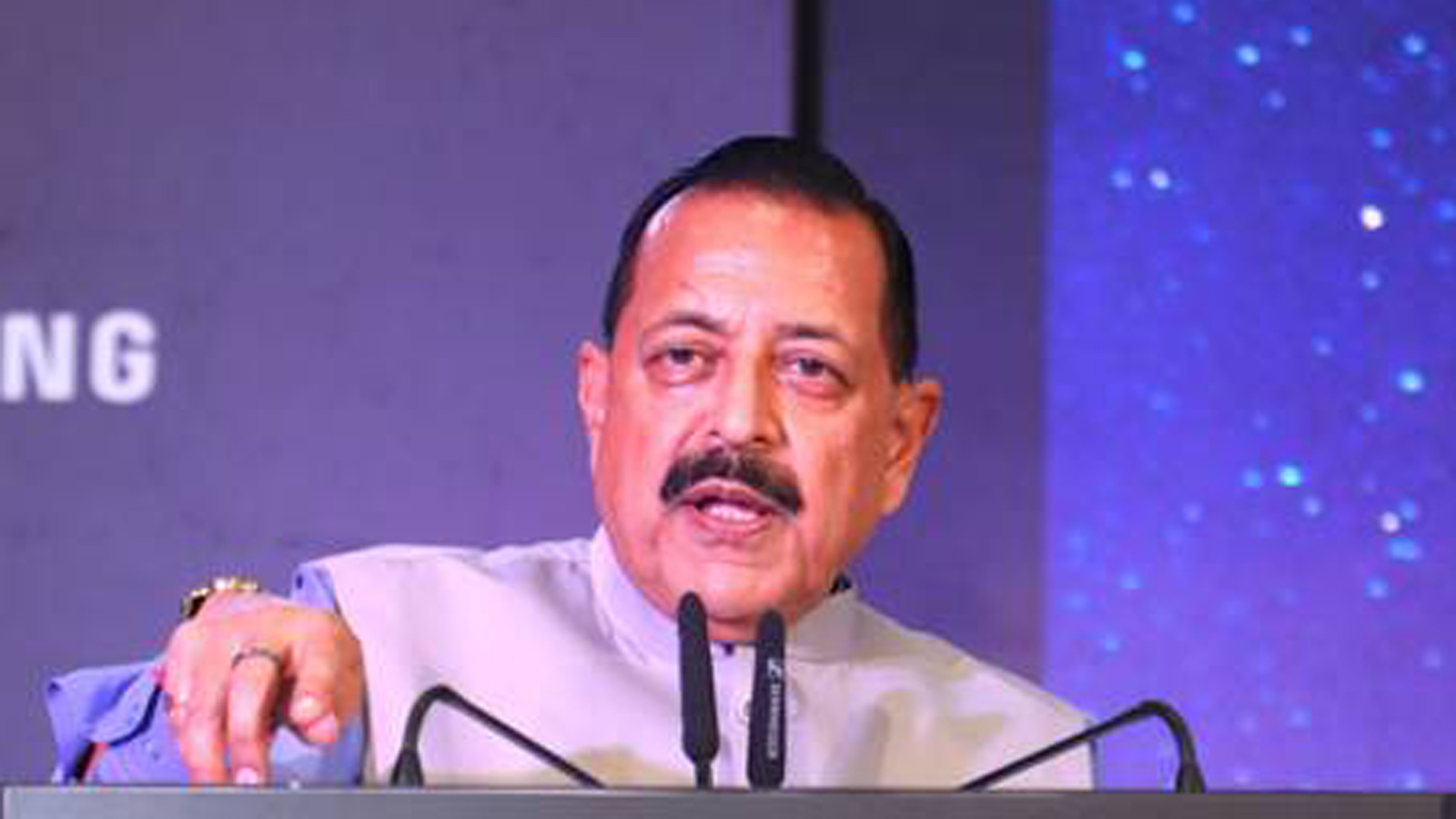
Union Minister of State (Independent Charge) for Science and Technology, Dr. Jitendra Singh, on Friday said that Artificial Intelligence (AI), quantum technology, space and nuclear energy will define the next phase of India’s economic growth, technological leadership and global competitiveness, asserting that the country is rapidly emerging as a major force in frontier technologies.
Speaking during a fireside conversation at a media conclave in New Delhi, the Minister said India is progressing alongside the world’s leading nations in several critical technology domains and is steadily building capabilities that will shape the future of economic development, national security and geopolitical influence.
Highlighting the progress of the National Quantum Mission (NQM), launched in 2023, Singh said the mission has already achieved more than half of its targeted outcomes within just three years. He noted that India has made significant advances in quantum-secure communication, a technology with wide-ranging applications in defence, cybersecurity, strategic communications and the protection of sensitive information.
“The pace of progress under the National Quantum Mission reflects India’s growing scientific capabilities and commitment to becoming a global leader in emerging technologies,” he said, adding that the country is making rapid strides in quantum communication, quantum computing and related research.
The Minister stressed that nations unable to keep pace with advancements in space, nuclear and quantum technologies risk falling behind not only in economic development but also in strategic security.
On Artificial Intelligence, Singh described AI as an indispensable technology that will increasingly transform governance, education, healthcare, industry, research and public service delivery. He said the government is simultaneously strengthening the country’s digital ecosystem through investments in computing infrastructure, data resources, cloud capacity and reliable energy systems to support AI-driven growth.
Calling technological innovation the principal driver of modern economic progress, the Minister said India is embracing frontier technologies while remaining committed to inclusive development, democratic values and social welfare.
Singh credited a series of policy reforms under Prime Minister Narendra Modi’s leadership for creating new opportunities in science, innovation and entrepreneurship. He said the opening of India’s space sector has already fostered a vibrant startup ecosystem, while recent reforms in the nuclear sector are expected to attract greater investments, technological collaboration and capacity building.
He also highlighted the growing importance of nuclear energy in supporting India’s expanding digital economy, noting that the increasing demand for advanced computing, data centres and AI infrastructure would require dependable and clean sources of energy.
Discussing education reforms, Singh described the National Education Policy (NEP) 2020 as a transformational initiative that has fundamentally changed India’s higher education and research landscape. He said the policy has introduced flexibility and multidisciplinary learning, enabling students to pursue careers based on their interests and abilities rather than rigid academic pathways.
The Minister said that the NEP is encouraging more students to enter research and innovation voluntarily, strengthening India’s scientific ecosystem while nurturing future innovators, entrepreneurs and technology leaders.
He further observed that India’s research and development landscape is witnessing a structural transformation, with innovation increasingly driven by partnerships between academia, industry, startups and private enterprises rather than government institutions alone.
Scientific advancement, he said, depends on the effective pooling of financial, technological and intellectual resources, and India is steadily creating an ecosystem that encourages such collaborative efforts.
Looking ahead, Singh said AI and quantum technologies are expected to transform societies at an unprecedented pace over the coming decades. He emphasised that the institutions, policies and technological capabilities being developed today will determine the future trajectory of nations.
Urging young Indians to play an active role in the country’s scientific and technological transformation, the Minister said the present generation has access to knowledge and learning resources on a scale never seen before. He encouraged students to develop a scientific temper, embrace innovation and contribute to India’s emergence as a leading knowledge-based economy.
Singh concluded by saying that reforms in education, research, space, nuclear energy and emerging technologies are laying a strong foundation for India’s goal of becoming a developed nation by 2047 while positioning the country among the world’s foremost innovation-driven economies.


