







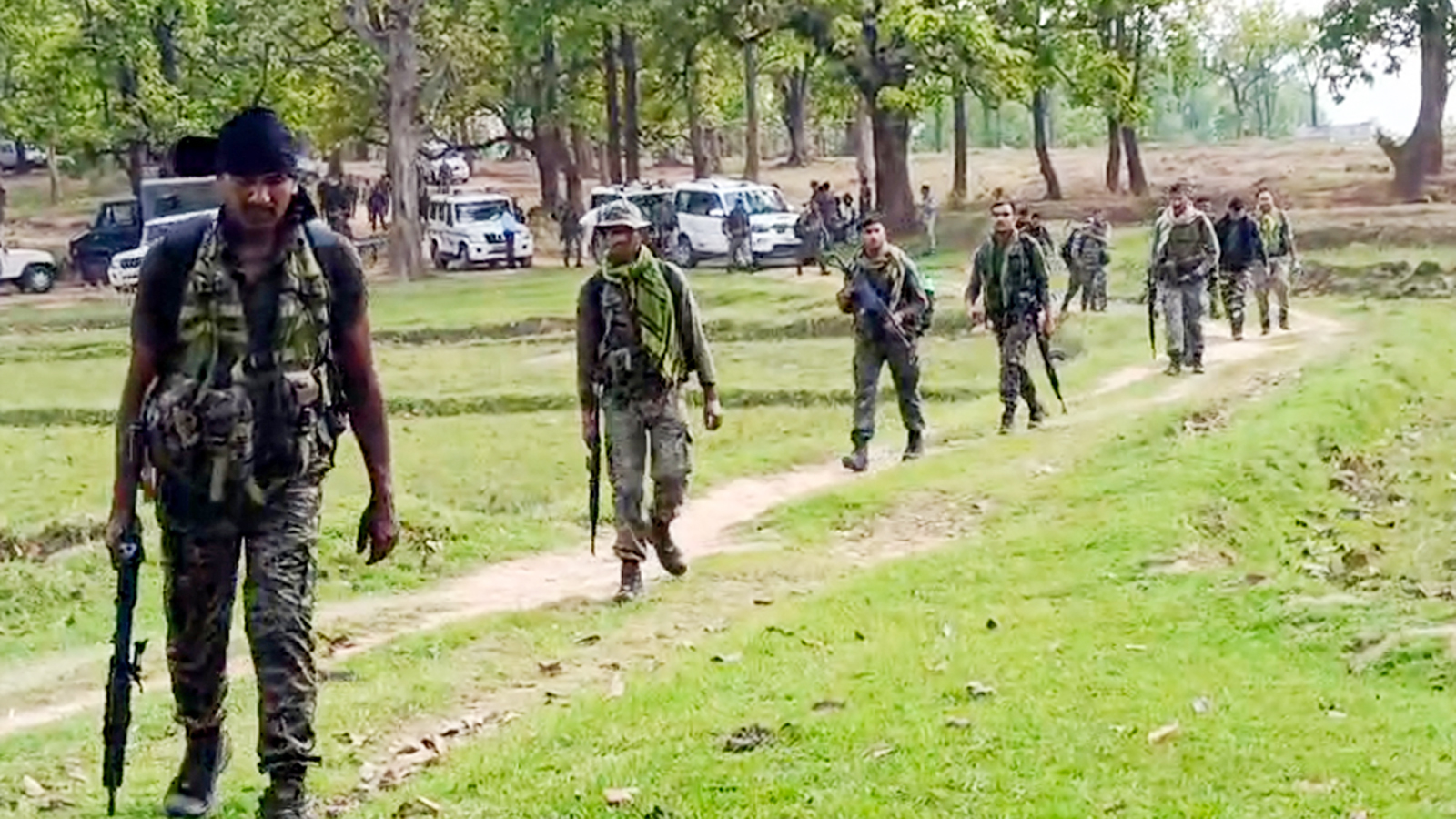
India reached a major internal security milestone on 31 March 2026, becoming effectively free from Left-Wing Extremism after nearly six decades of violence. This outcome was achieved through a 12-year integrated approach combining security operations, development expansion, welfare delivery, rehabilitation measures, and technology-driven policing. The entire framework operated through three core pillars: Vishwaas, Nirman, and Jan Kalyan, which worked in a continuous and interlinked cycle where security enabled development, development strengthened trust, and trust accelerated welfare delivery.
New era of peace and security
Left-Wing Extremism (LWE) in India originated from the Naxalbari movement in 1967 in West Bengal, inspired by Maoist ideology and the belief in armed revolution. Over time, multiple extremist groups consolidated into CPI (Maoist) in 2004, creating one of the country’s most widespread internal security challenges. The movement thrived in remote, forested, and tribal regions where governance, infrastructure, and connectivity were historically weak.
Between 2004 and 2014, the violence peaked sharply, recording 17,542 incidents, 1,913 security force fatalities, and 5,019 civilian deaths. The year 2010 marked the worst phase with 1,936 incidents and 720 civilian deaths. At its height, the issue was officially recognised as the most serious internal security challenge in India, with a spread larger than other insurgencies in Kashmir and the Northeast.
Vishwaas: Restoring trust in the state
The Vishwaas pillar focused on rebuilding confidence in governance through sustained security presence, stronger inter-agency coordination, structured surrender frameworks, and continuous community engagement in vulnerable regions. It marked a shift from fragmented responses to a unified national approach.
A National Policy and Action Plan for LWE was introduced in 2015, replacing earlier ad-hoc strategies. This framework combined deployment of Central Armed Police Forces (CAPF), targeted funding mechanisms, and development-linked counter-insurgency planning. A three-pronged doctrine of dialogue, security, and coordination guided operations.
The security architecture expanded significantly with 597 fortified police stations compared to just 66 before 2014. Police stations reporting Naxal incidents dropped from 333 to 16. Over 408 CAPF camps were established in recent years, along with 68 night-landing helipads for rapid deployment. Security forces were supported with 400 bullet-proof and blast-proof vehicles and dedicated medical facilities.
Elite forces such as CoBRA, CRPF, District Reserve Guard (DRG), STF, Jharkhand Jaguar, Chhattisgarh Police, and Andhra Pradesh Greyhounds were integrated into a coordinated operational structure with joint training and improved interoperability.
Technology became a major force multiplier. UAVs, drones, satellite imagery, AI-based analytics, call-data analysis, mobile tracking systems, and social media monitoring enabled intelligence-led operations and real-time surveillance.
Operations followed a “Trace, Target, Neutralise” doctrine, with major missions such as Operation Black Forest, Operation Double Bull, Operation Octopus, and Operation Thunderstorm significantly weakening Maoist networks. These operations resulted in the dismantling of strongholds, elimination of armed cadres, and expansion of state control in previously inaccessible regions.
A strong focus was also placed on cutting financial and logistical support systems. The National Investigation Agency (NIA) investigated over 100 LWE-related cases, leading to asset seizures exceeding ₹40 crore. The Enforcement Directorate attached additional assets, while state agencies conducted parallel confiscations.
The rehabilitation framework encouraged surrender and reintegration. Incentives included financial assistance up to ₹5 lakh for higher-ranked cadres, monthly stipends, and additional support for reintegration. Between 2024 and March 2026, thousands of cadres surrendered, reflecting declining operational strength and increasing confidence in rehabilitation pathways.
Nirman: Building infrastructure and connectivity
The Nirman pillar focused on integrating remote and tribal regions into the national mainstream through infrastructure development, connectivity expansion, and service delivery systems.
More than 12,249 km of roads were constructed in LWE-affected areas since 2014, with projects worth over ₹20,000 crore approved. Over 9,600 mobile towers were installed, enabling connectivity in 96% of villages in the most affected regions. Financial inclusion expanded significantly with over 1,800 bank branches, more than 1,300 ATMs, and tens of thousands of banking correspondents deployed across remote areas.
Education and skill development also received major attention. Hundreds of Eklavya Model Residential Schools were sanctioned and developed, along with industrial training institutes and skill development centres. More than 90,000 youth and women received skill training, expanding livelihood opportunities and economic participation.
Civic action programmes supported healthcare outreach, tribal engagement, and community development through targeted investments.
Jan Kalyan: Welfare and inclusion
The Jan Kalyan pillar focused on ensuring dignity, inclusion, and equitable access to welfare systems. It aimed to bring marginalized and tribal communities into the mainstream through direct benefit delivery, housing support, education access, and livelihood assistance.
Surrendered cadres were supported through structured rehabilitation measures, including skill development, housing assistance under national housing schemes, and financial support for self-employment. Children of surrendered individuals were provided access to free education up to Class XII.
Major national initiatives such as the Aspirational Districts Programme, PM-JANMAN, and Dharti Aaba Janjatiya Gram Utkarsh Abhiyan strengthened health, education, infrastructure, and livelihood outcomes in tribal areas.
Bastar’s turnaround: Security, roads and reintegration
Bastar in Chhattisgarh was once among the most affected LWE regions due to difficult terrain and weak governance presence. Over the last decade, a combined approach of security operations, infrastructure expansion, and community participation transformed the region.
The formation of the Bastariya Battalion in 2017 included over 1,100 recruits, many from local tribal communities, strengthening trust between security forces and residents. Over 3,240 km of roads and hundreds of mobile towers improved connectivity, linking villages to markets, schools, healthcare, and government services.
A rehabilitation plan for around 3,000 surrendered cadres supported reintegration through skill development and livelihood assistance. Several security camps were later converted into service centres offering healthcare, banking, agriculture, and citizen services.
Cultural initiatives such as Bastar Pandum and the Bastar Olympics strengthened social cohesion and tribal identity while encouraging youth participation.
Between 2014 and 2026, the number of LWE-affected districts reduced dramatically from 126 to just 2. The most affected districts declined from 35 to zero. Violence indicators also showed sustained improvement, with incidents dropping from 870 in 2014 to 234 in 2025, and fatalities reducing from 310 to 100 in the same period.
The declaration of a Naxal-Free India on 31 March 2026 reflects a coordinated national transformation driven by security enforcement, infrastructure development, welfare delivery, and rehabilitation. The shift from fragmented responses to a unified, multi-dimensional strategy enabled long-term stability in regions once affected by prolonged violence. The outcome marks not just the end of a security challenge, but the beginning of a sustained phase of development, inclusion, and governance expansion across previously underserved areas.


