







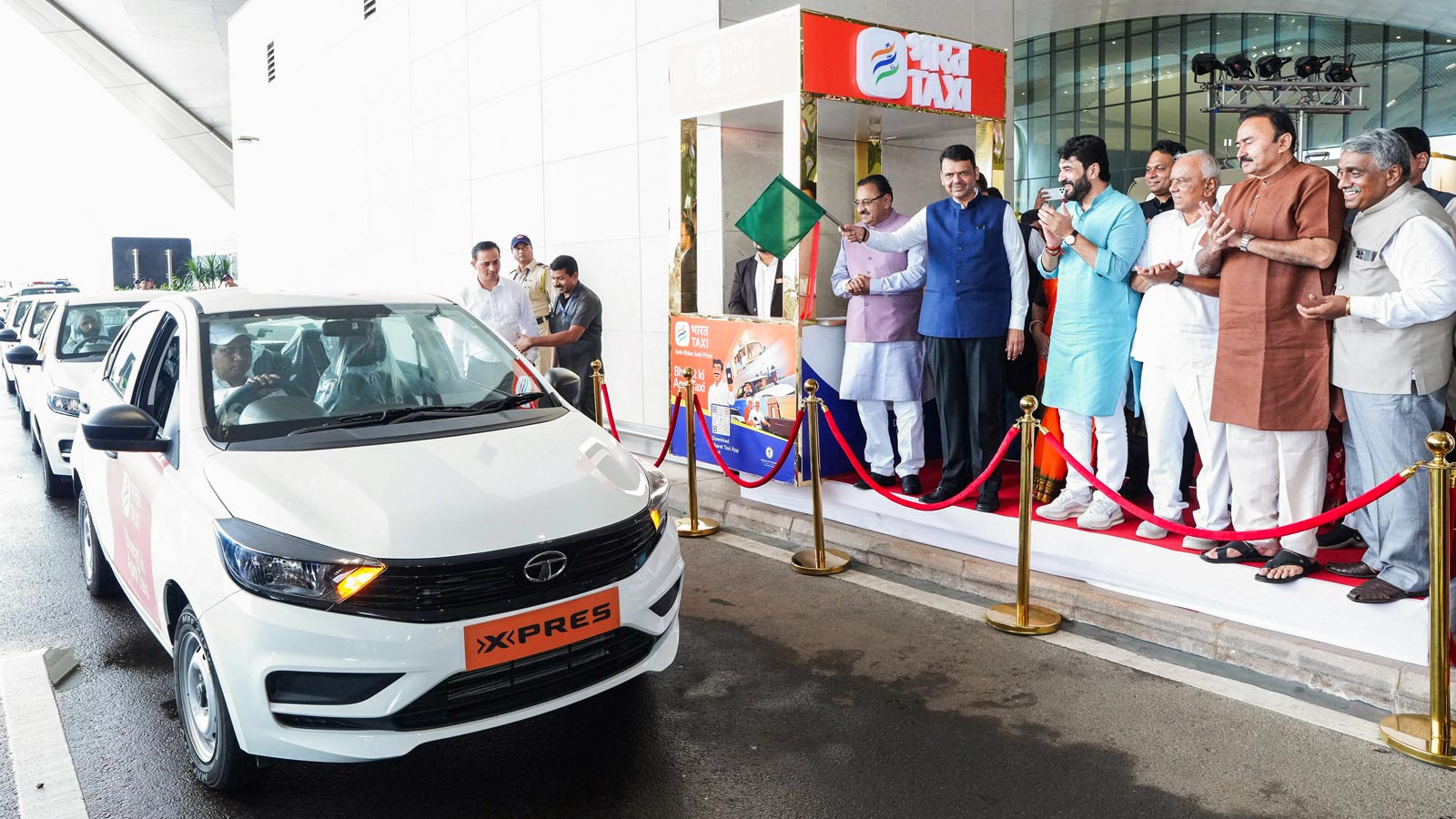
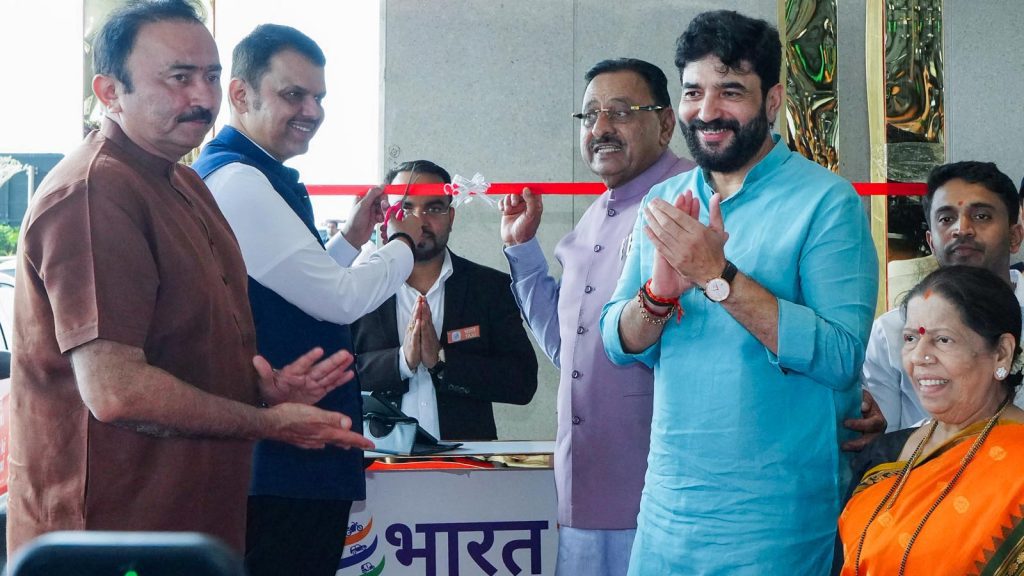
Chief Minister Devendra Fadnavis on Thursday launched the ‘Bharat Taxi’ service in Maharashtra, marking the expansion of the cooperative-based ride-hailing platform to the state after its rollout in Delhi and Gujarat. The initiative was launched at Navi Mumbai International Airport in the presence of Union Minister of State for Cooperation Murlidhar Mohol, representatives of the cooperative sector, transport organisations and taxi drivers associated with the platform.
The service has been introduced under the Ministry of Cooperation as part of the Centre’s vision of ‘Sahakar Se Samriddhi’, with the aim of promoting a cooperative model in the transportation sector. Unlike conventional app-based taxi aggregators, Bharat Taxi is designed to make drivers, referred to as ‘Sarathis’, members, shareholders and owners of the cooperative institution rather than merely service providers.
Addressing the gathering, CM Fadnavis said the launch reflects the growing impact of reforms initiated under the Ministry of Cooperation and extends the cooperative movement into Maharashtra’s transport sector. He said Bharat Taxi would offer an alternative to existing app-based taxi services by eliminating surge pricing, hidden charges and high aggregator commissions, while operating on a fixed service-fee model.
CM Fadnavis said the initiative aims to provide passengers with safe, reliable and transparent transportation services while ensuring better financial returns for drivers through profit-sharing. He added that the platform would prioritise women’s safety, transparent fares and an accountable service delivery system.
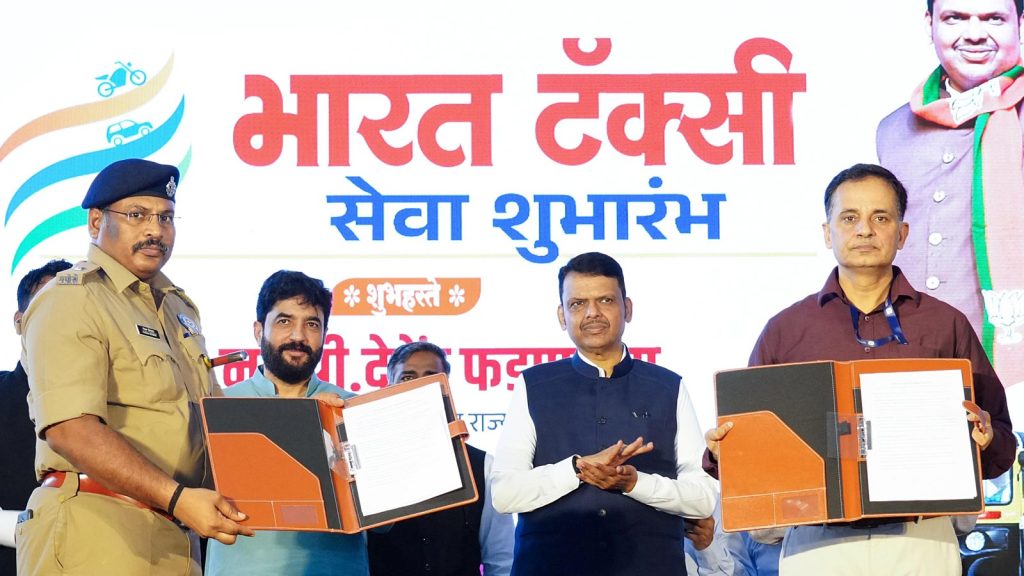
The Chief Minister also highlighted an agreement with the late D. B. Patil Cooperative Transport Association, under which around 3,000 to 4,000 local youth living around Navi Mumbai International Airport are expected to receive credit support for purchasing taxis and joining the Bharat Taxi platform. He said the move would create new employment and entrepreneurship opportunities for local residents.
Speaking at the event, Mohol described the launch as the beginning of a new chapter in Maharashtra’s cooperative movement. He noted that Maharashtra has one of the country’s strongest cooperative networks, with nearly 2.5 lakh cooperative societies out of more than 8.6 lakh operating nationwide.
Mohol said the Ministry of Cooperation, established in 2021, has undertaken around 152 major initiatives to strengthen the cooperative sector. These include a new National Cooperation Policy, a target of setting up two lakh new multipurpose cooperative societies and measures to strengthen Primary Agricultural Credit Societies (PACS). He added that nearly 40,000 new cooperative societies have already been established across the country.
He said PACS are being computerised with an investment of about ₹3,000 crore and have been permitted to undertake more than 25 business activities. Around 39,000 cooperative societies are operating Pradhan Mantri Kisan Samriddhi Kendras, while nearly 54,000 PACS are functioning as Common Service Centres. Cooperative institutions are also running petrol pumps, Jan Aushadhi Kendras, grain storage facilities and other rural service centres.
Mohol further said three national cooperative organisations—Bharatiya Beej Sahakari Samiti Limited (BBSSL), National Cooperative Organics Limited (NCOL) and National Cooperative Exports Limited (NCEL)—have been established to provide quality seeds, promote organic farming and facilitate agricultural exports. Nearly 70,000 cooperative institutions have joined these organisations.
Highlighting Maharashtra’s cooperative initiatives, the minister said the National Cooperative Development Corporation has extended financial assistance of nearly ₹10,000 crore to cooperative sugar mills in the state. He added that cooperative-led ethanol and compressed biogas projects, cooperative housing reforms and tissue culture initiatives are also being promoted.
Calling upon young people and women to join Bharat Taxi, Mohol said the platform would generate new employment and self-employment opportunities while making drivers partners in the institution’s profits. He urged them to become “Sarathis of Cooperation” and contribute to a prosperous Maharashtra.
During the event, share certificates and service kits were distributed to drivers associated with Bharat Taxi. The cooperative platform aims to replace the intermediary-centric model of ride-hailing services with a driver-owned framework, ensuring stable incomes, transparent pricing and profit-sharing.
The Bharat Taxi service will be expanded across Maharashtra in phases by onboarding more taxi drivers, women, youth and local communities through partnerships with cooperative institutions, transport organisations and local bodies.


