







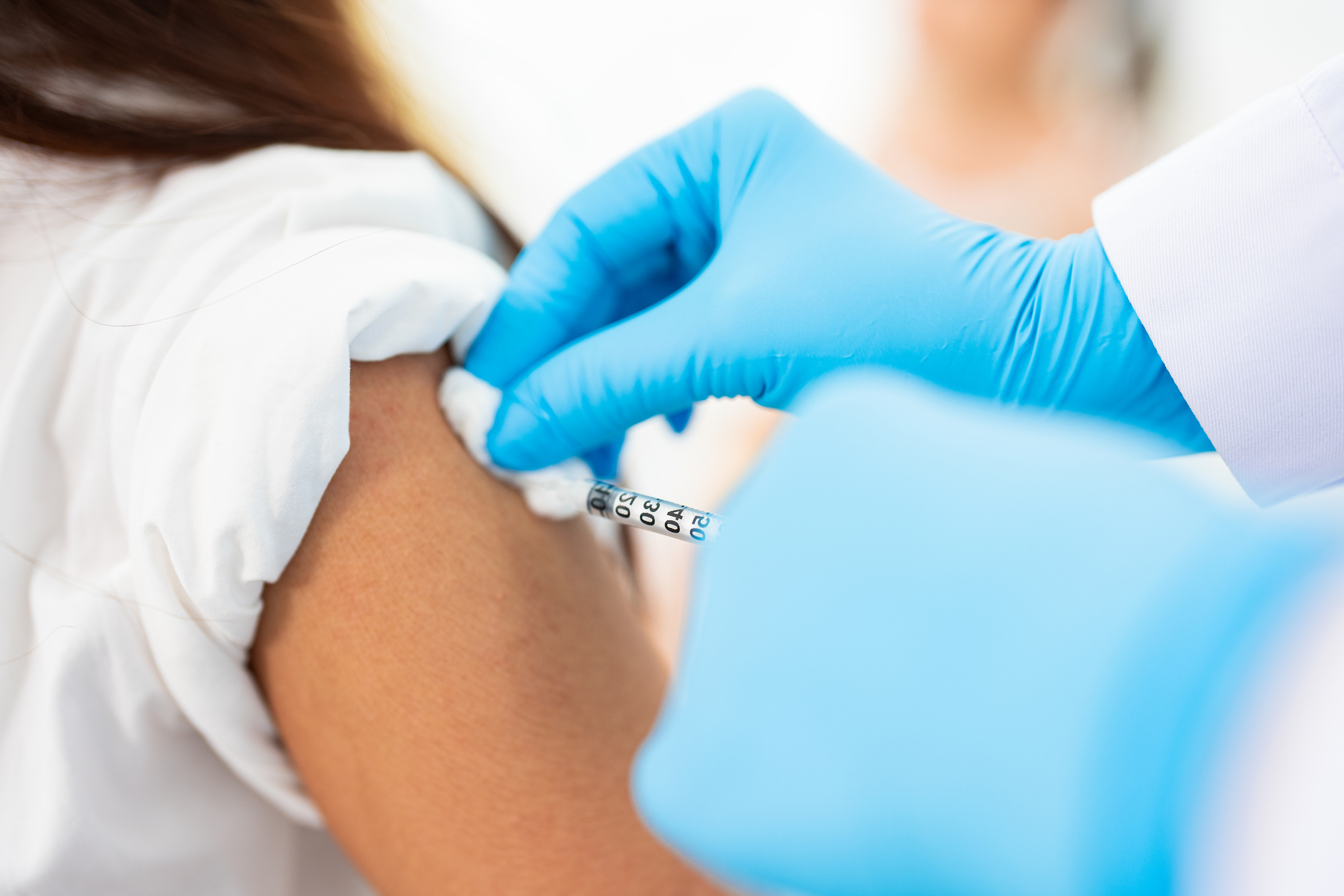
India has maintained a national full immunisation coverage of more than 93 per cent over the last four years while expanding measures to strengthen pandemic preparedness, including disease surveillance, laboratory infrastructure and healthcare workforce training, the Centre informed the Rajya Sabha on Tuesday.
According to the Ministry of Health and Family Welfare, the Universal Immunisation Programme (UIP) has consistently achieved high coverage in line with the National Health Policy 2017 goals. National Full Immunisation Coverage stood at 94.7 per cent in 2022-23, 93.7 per cent in 2023-24, 98.3 per cent in 2024-25 and 97.9 per cent in 2025-26.
To prevent cervical cancer, the government launched a nationwide Human Papillomavirus (HPV) vaccination campaign on February 28, 2026, targeting approximately 1.2 crore girls aged 14 years across all 36 States and Union Territories. The vaccine is being provided free of cost through designated government health facilities, including Ayushman Arogya Mandirs, Primary Health Centres, Community Health Centres, Sub-District and District Hospitals, and Government Medical Colleges.
The ministry said awareness campaigns using radio jingles, posters, banners, myth-busting digital content and social media are being conducted to encourage vaccine uptake, particularly among girls in rural, tribal and urban slum areas.
To strengthen preparedness for future pandemics and public health emergencies, the government has expanded healthcare infrastructure and disease surveillance systems under the Pradhan Mantri-Ayushman Bharat Health Infrastructure Mission (PM-ABHIM). The mission aims to improve public health infrastructure at the primary and secondary levels while enhancing capacities for disease surveillance, diagnostics and research on emerging and re-emerging diseases.
The Integrated Disease Surveillance Programme (IDSP) has also been strengthened to support decentralised disease surveillance through trained multidisciplinary Rapid Response Teams (RRTs).
The ministry said the Indian Council of Medical Research (ICMR) has established a nationwide network of more than 160 Virus Research and Diagnostic Laboratories (VRDLs) to strengthen laboratory-based diagnosis of pathogens across the country.
In April 2026, the Ministry of Health and Family Welfare launched an Integrated Training Module for primary healthcare teams working at Ayushman Arogya Mandirs. The competency-based training framework covers Medical Officers, Staff Nurses, Community Health Officers, Auxiliary Nurse Midwives, ASHAs and ASHA Facilitators, with the aim of improving the quality and consistency of primary healthcare services.
The Centre also highlighted measures taken to strengthen medical oxygen infrastructure following the COVID-19 pandemic. These include the supply of oxygen cylinders, oxygen concentrators and liquid medical oxygen tanks to States and Union Territories, along with the establishment of Pressure Swing Adsorption (PSA) oxygen plants and Medical Gas Pipeline Systems.
To improve real-time disease monitoring, the government is operating digital health platforms including the Integrated Health Information Platform (IHIP), Integrated Disease Surveillance Programme (IDSP), Health Management Information System (HMIS), Ayushman Arogya Mandir Portal and the National Programme for Non-Communicable Diseases (NP-NCD) Portal. These platforms facilitate real-time data collection, analysis, visualisation and dissemination of epidemiological information to support the early detection of disease outbreaks.
The information was shared by Minister of State for Health and Family Welfare Anupriya Patel in a written reply in the Rajya Sabha on Tuesday.


