







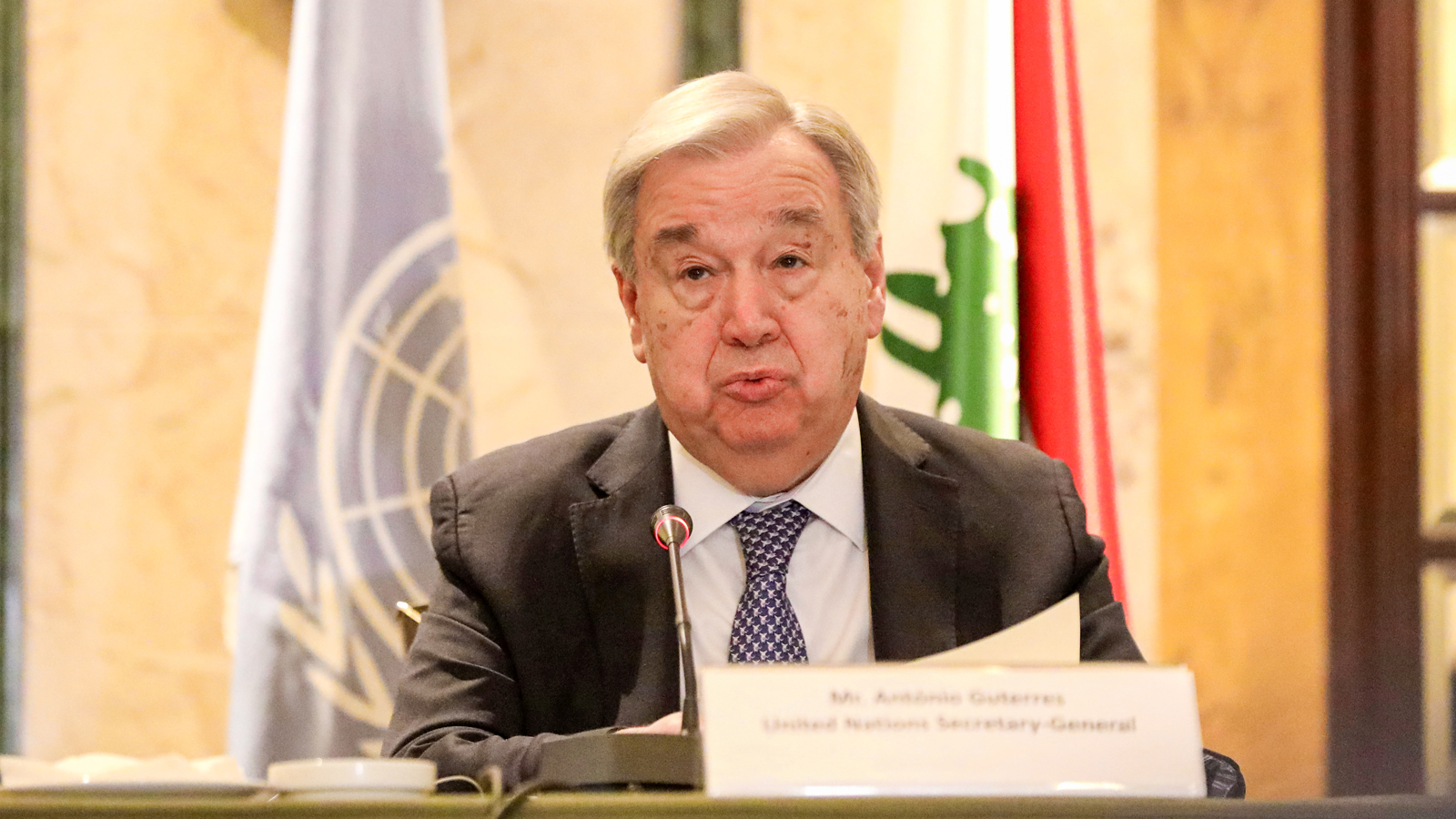
Amid escalating global conflicts and rising geopolitical tensions, United Nations Secretary-General Antonio Guterres on Thursday stressed that while diplomacy may not have succeeded in preventing many of the world’s ongoing crises, it remains the only viable path to ending them.
Addressing the UN Security Council’s Open Debate on “Strengthening the Mechanisms for Peaceful Settlement of Disputes” in New York, Guterres warned that conflicts are becoming more frequent, prolonged and complex, while respect for international law continues to erode.
“Today, conflicts are increasing in number, complexity, length and scope. We see an alarming disregard for international law. Impunity is spreading. Violations are going unanswered. Each unanswered violation becomes a precedent for the next. Trust is eroding, and negotiated settlements are becoming harder to reach and sustain,” he said.
The UN chief cautioned that the growing preference for military action over dialogue was exacting a devastating humanitarian cost, with civilians continuing to bear the brunt of armed conflicts.
Referring to the deteriorating situation in the Middle East, including the military confrontation involving the United States and Iran and the ongoing conflict surrounding Israel’s military operations, Guterres said the region was being drawn into an increasingly dangerous cycle of escalation.
“When parties prioritise military solutions over negotiated settlements, civilians pay the heaviest price. We see this on full display in the Middle East, with devastating consequences for the region and the world. The situation is getting out of control. It is teetering on the edge of the unimaginable,” he said.
Warning that “one crisis feeds another” and “one escalation triggers the next,” Guterres called for an immediate halt to hostilities and condemned attacks on civilian infrastructure.
He also urged the restoration of international navigational rights and freedoms in and around the Strait of Hormuz in the Persian Gulf and the Bab al-Mandab Strait in the Red Sea, both of which have witnessed disruptions to commercial shipping amid escalating regional tensions.
“There is no military solution to the conflict. Fighting must stop across the region. International navigational rights and freedoms in and around the Strait of Hormuz and Bab al-Mandab must be fully restored. Diplomacy is the only way forward. That has been my clear and consistent message in my ongoing outreach to leaders,” he said.
Highlighting the humanitarian crisis in Gaza, Guterres said civilians continue to suffer despite the ceasefire brokered by the United States in October 2025.
Reiterating the central role of diplomacy in conflict resolution, Guterres said, “Diplomacy may not have succeeded in preventing these conflicts. But it still holds the power to stop them.”
Referring to the implementation of UN Security Council Resolution 2788 (2025), the Secretary-General outlined six priority areas for strengthening peaceful dispute resolution. These include reinforcing the UN Secretariat’s mediation and good offices, expanding the role of regional offices and special envoys, encouraging earlier action by the Security Council under Chapter VI of the UN Charter, strengthening fact-finding mechanisms to build consensus, ensuring the meaningful participation of women, youth and civil society in peace processes, and urging all UN member states to actively support diplomacy and dialogue.
Describing the UN Charter as “humanity’s best hope for peace,” Guterres urged Security Council members to overcome geopolitical divisions and work together to resolve disputes through dialogue and compromise.
“I urge all members of this Council to summon the spirit of compromise that is essential to peace, keep the channels of dialogue open, and spare no effort in pursuing the peaceful settlement of disputes – a founding principle of this organisation,” he said.
(With ANI inputs)


