







India is witnessing a fundamental transformation of its transportation landscape as electric mobility moves rapidly from a niche segment to a mainstream component of the automobile industry. The country’s electric vehicle (EV) ecosystem has expanded dramatically over the past decade, driven by policy support, rising consumer acceptance, technological progress, domestic manufacturing and growing charging infrastructure. The transformation is increasingly positioning India not only as a major EV market but also as a potential global manufacturing and export hub.
India’s journey towards electric mobility began in earnest in 2015 with the National Electric Mobility Mission Plan (NEMMP) and the Faster Adoption and Manufacturing of Hybrid and Electric Vehicles (FAME) scheme. The objective was two-fold- reducing dependence on imported fossil fuels and addressing air pollution and greenhouse gas emissions from the transport sector, which accounts for around 9 percent of India’s total emissions. FAME provided incentives for consumers, supported charging infrastructure and encouraged domestic manufacturing.
The results are increasingly visible. EV adoption has risen from just 0.08 percent in FY 2015-16 to 8.26 percent in FY 2025-26. From approximately 50,000 EVs sold in 2016, annual sales reached 2.3 million units in 2025- a remarkable 46-fold increase. During the same period, global EV sales increased around 20 times, from 918,000 units in 2016 to 18.78 million in 2024. India’s EV registrations have also recorded a compound annual growth rate of more than 62 percent over the past decade.
The growth is being powered particularly by electric two-wheelers and three-wheelers. In 2025, around 12.8 lakh electric two-wheelers and 8 lakh electric three-wheelers were sold. Uttar Pradesh emerged as the country’s largest EV market, recording more than 4 lakh units, equivalent to 18 percent of national sales. Maharashtra followed with 2.66 lakh units, or 12 percent, while Karnataka recorded around 2 lakh units, accounting for 9 percent.
The expansion is no longer confined to domestic consumption. Indian EV exports increased sharply from USD 1.2 million in 2020 to USD 84 million in 2024, with Nepal, Indonesia and Japan among the major destinations. This growing international presence reflects the increasing competitiveness of India’s EV manufacturing ecosystem and its potential integration into global supply chains.
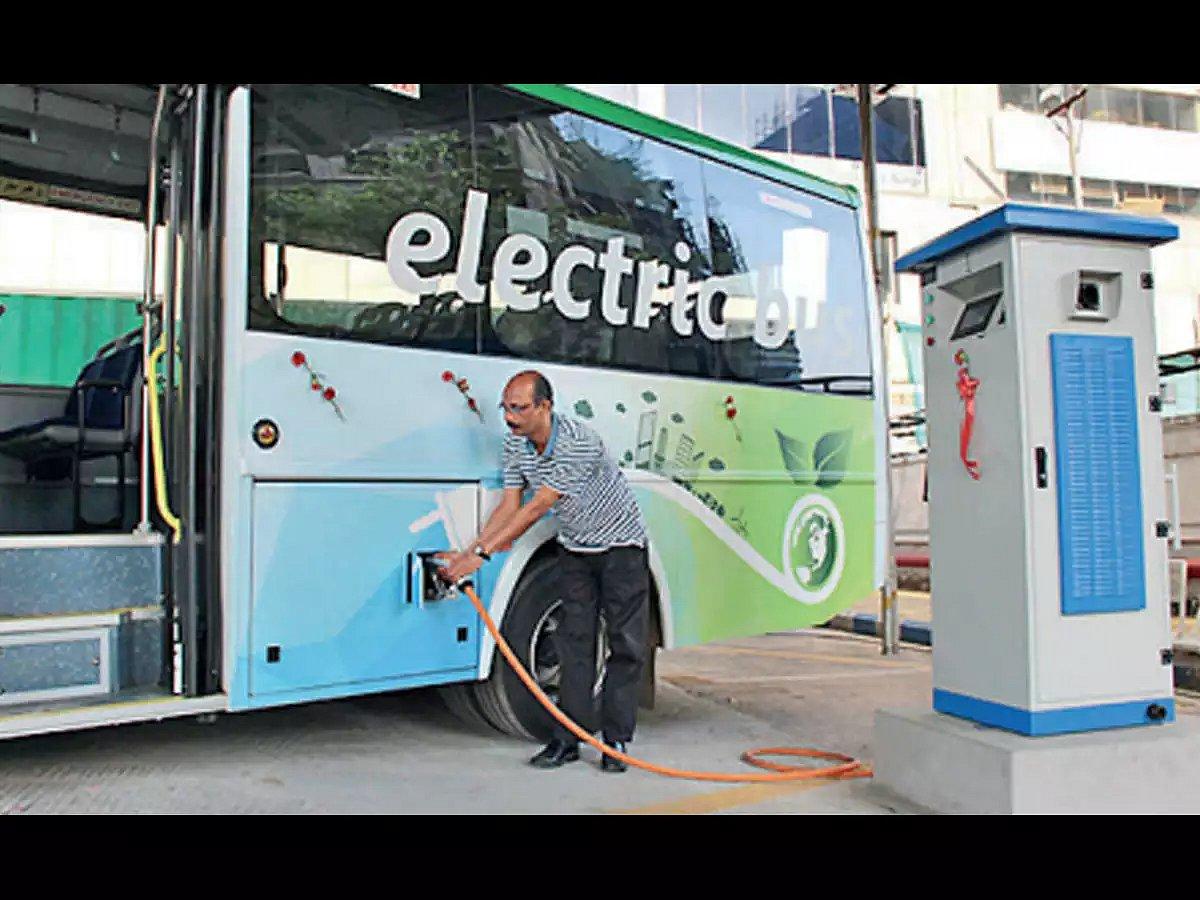
Infrastructure development is another critical pillar of this transition. As of July 2026, India had 52,718 public EV charging stations, of which 16,561 offered fast-charging facilities. The expansion of charging networks is helping address one of the major barriers to EV adoption-range anxiety, and making electric mobility more practical for consumers and commercial users.
The government’s policy architecture has simultaneously evolved from supporting vehicle adoption to building a complete manufacturing ecosystem. The National Mission on Manufacturing identifies EVs as a key seed sector for innovation-led growth. Its broader objective is to increase manufacturing’s contribution to GDP from 12.9 percent in 2023 to 25 percent by 2035, create 143 million jobs and raise merchandise exports to USD 1.2 trillion.
The PM Electric Drive Revolution in Innovative Vehicle Enhancement (PM E-DRIVE) Scheme is another major intervention in this regard. With an outlay of ₹10,900 crore, it supports electric two-wheelers, three-wheelers, e-trucks, e-buses and e-ambulances, while promoting domestic manufacturing and charging infrastructure. The scheme aims to support more than 28 lakh EVs, 22.12 lakh had already been sold by January 2026. It also allocates ₹4,391 crore for 14,028 electric buses, while ₹2,000 crore has been earmarked for public EV charging stations.
The PM e-Bus Sewa-Payment Security Mechanism Scheme is further strengthening clean public transport. It envisages deployment of 10,000 electric buses through the public-private partnership model with payment security coverage for each bus for up to 12 years.
At the manufacturing end, India is gradually moving beyond vehicle assembly towards a more integrated EV ecosystem covering battery packs, motors, drivetrains, power electronics, wiring and charging equipment. Major Indian automobile companies are expanding EV capacity and investing in research, dedicated platforms and advanced manufacturing. At the same time, global companies are exploring large-scale manufacturing opportunities in India. Around 400 EV startups are also contributing to innovation in batteries, charging, low-cost manufacturing and data-driven mobility solutions.
Investment momentum reinforces this transformation. India’s EV ecosystem attracted more than USD 1.4 billion in FY 2025, around 27 percent higher than the previous year. EV manufacturers accounted for approximately USD 1.2 billion of this funding, with Delhi emerging as the leading city for EV investments.
The scale of the opportunity ahead is substantial. India’s EV market, valued at USD 3.71 billion in 2025, is projected to reach USD 191.04 billion by 2034. The EV battery market is expected to grow from USD 2.71 billion in 2025 to USD 15.90 billion by 2034. India has also set an ambition of achieving 30 percent electric vehicle sales by 2030, supported by a planned expansion of charging infrastructure.
The EV transition therefore represents much more than a shift in the type of vehicles on Indian roads. It is simultaneously an energy security strategy, an industrial policy opportunity, a climate response and a pathway towards technological self-reliance. With sustained policy support, stronger domestic supply chains, rising investments and expanding infrastructure, India is moving steadily towards an electric mobility ecosystem that can serve both its vast domestic market and global demand. The transformation of India’s roads could consequently become an important pillar of the country’s broader journey towards a cleaner, more competitive and self-reliant economy.


