







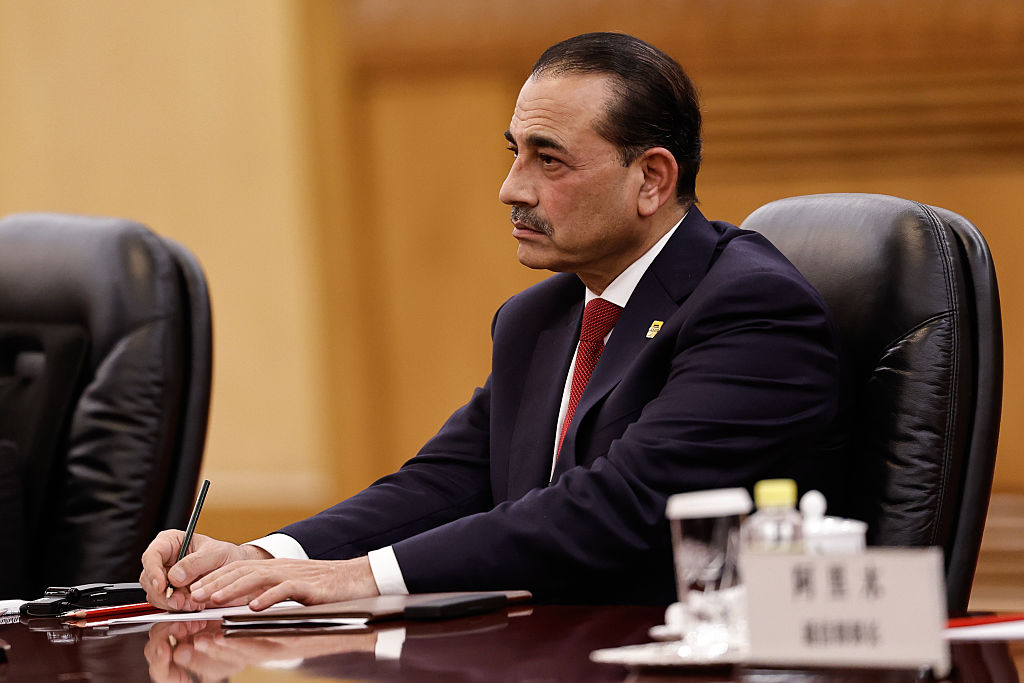
Pakistan’s parliament has legally codified an unprecedented concentration of military power, placing Field Marshal Asim Munir at the apex of the country’s armed forces and nuclear arsenal. On 20th August, both Houses of Parliament rapidly passes two pieces of legislation — the Defence Forces of Pakistan Act 2026 and amendments to the National Command Authority Act 2010. As if on cue, President Asif Ali Zardari promptly signs the two Bills into law. These laws were bulldozed through Parliament with astonishing haste. There was no public debate, no legislative scrutiny.
This lightning-fast legislative blitz effectively institutionalises a historic military power-grab, giving statutory force to last year’s contentious 27th Constitutional Amendment. It gives Munir absolute control over all military promotions, discharges and strategic assets, completing what some international analysts are calling a legal or soft coup — one that fundamentally alters civil-military dynamics in South Asia. With this legal rewrite, the thin veneer of democracy in Pakistan has been completely stripped away.
At the absolute centre of this dramatic consolidation stands one man — Army Chief and newly empowered supreme Chief of Defence Forces — Field Marshal Syed Asim Munir. For the first time in Pakistan’s history, the Army, Navy and Air Force answer operationally to a single commander. Under Munir, the new Defence Forces Headquarters is charged with multi-domain integration and joint operations. He is designated the Prime Minister’s Principal Adviser on defence and security.
Critically, the law grants him sweeping authority over personnel across the three services. He can hire, fire and retire any military personnel at will except, of course, the three service chiefs. Furthermore, the amendments to the National Command Authority Act formally bring the country’s strategic nuclear assets into this exact same centralised hierarchy.
So, who is Asim Munir? And why does this consolidation alarm observers and analysts in the region and beyond?
Munir is a uniquely polarising figure. He is the only General in Pakistani history to have previously commanded both Military Intelligence and the Inter-Services Intelligence. A Hafiz of the Quran who once served as a military attaché in Saudi Arabia, he rose through intelligence and field commands before becoming Army chief in 2022. (A Hafiz is someone who has completely memorised the entire Quran, the holy book of Islam.) Promoted to Field Marshal after India conducted Operation Sindoor in 2025, he now holds the three concurrent titles of Chief of Army Staff, Chief of Defence Forces, and Principal Adviser to the Prime Minister on all matters related to national security. That gives him practical supremacy over the armed forces, rendering the civilian leadership, including Prime Minister Shehbaz Sharif, little more than an administrative mask, or worse, a figurehead or puppet.
Recent diplomacy has only amplified his profile. In August, he accompanied Prime Minister Sharif to Mecca for the signing of a landmark joint defence pact with Saudi Arabia and Turkiye — an agreement that treats an attack on one as an attack on all, knitting together Pakistan’s nuclear capability, Saudi Arabia’s energy wealth and Turkiye’s army — the second-largest in NATO. He’s also involved in negotiations between Iran and the U.S.
To understand the gravity of this moment, one has to look back. Military rule is woven directly into the fabric of Pakistan’s history. And civil-military imbalance is not new. For nearly half of its existence since independence in 1947, the country has been governed by direct military dictatorships. Field Marshal Ayub Khan seized power in 1958. Gen. Yahya Khan succeeded him amid widespread civil unrest in 1969, presiding over the dissolution of East Pakistan and the creation of modern-day Bangladesh. Gen. Zia-ul-Haq followed with a brutal crackdown in 1977. And Gen. Pervez Musharraf seized power via a televised coup in 1999.
However, what Pakistan is witnessing right now under Asim Munir isn’t a traditional hard coup. There are no tanks rolling down the streets of Islamabad. No soldiers storming the State Television station. Instead, human rights organisations and legal analysts are calling it a soft military coup or legal coup. The military establishment didn’t overthrow the Constitution. They forced a compliant civilian government to rewrite it. The 27th Amendment even grants lifetime immunity from criminal prosecution to any five-star officer — protecting Munir from future legal accountability.
So, what is Asim Munir angling for? Is he positioning himself to be a ruler for life? The legislative breadcrumbs speak for themselves. While a late 2024 parliamentary amendment initially extended military tenures to lock Munir in until 2027, subsequent overhauls under the 27th Constitution Amendment created the supreme post of Chief of Defence Forces — effectively resetting his tenure and cementing his rule until November 2030. On the face of it, he does not need to declare himself President or formalise an overt dictatorship like his predecessors. By controlling the judiciary through newly designed Federal Security Courts and holding absolute authority over the nuclear button, Munir wields more practical power than any Pakistani dictator before him. He has institutionalised a permanent hybrid regime where the military commands the strategic heights while politicians provide the Constitutional facade.
With an opposition crippled, former Prime Minister Imran Khan behind bars and the legal framework completely ironclad, Field Marshal Asim Munir has achieved absolute systemic continuity. Pakistan has fundamentally transitioned into a military-led State under a legal, civilian seal. And Munir now sits at the centre of it all — more secure, and more powerful, than any of his predecessors.


