







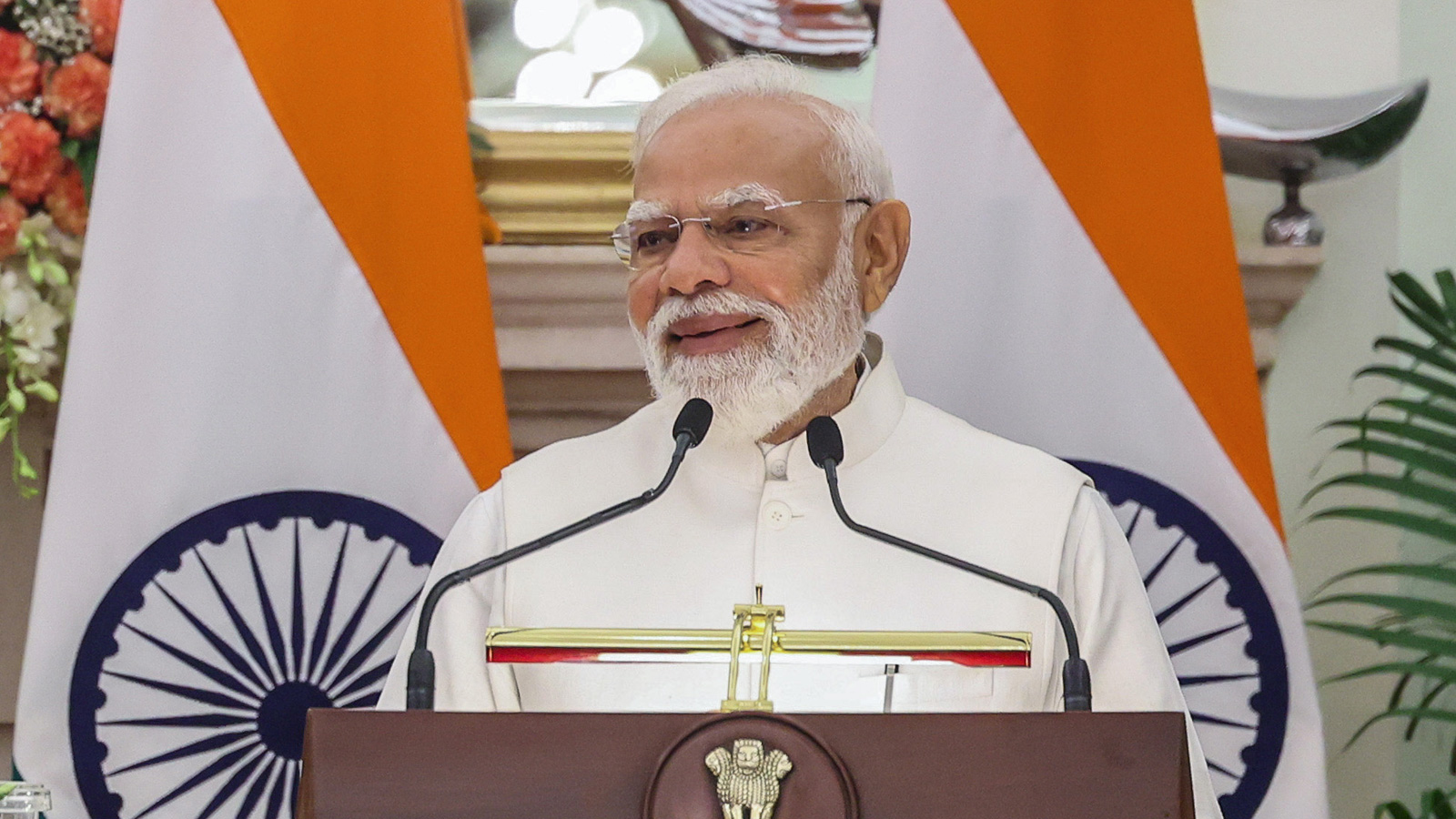
Prime Minister Narendra Modi will embark on a two-day visit to West Bengal on June 20 and 21, during which he will participate in Paschimbanga Divas celebrations, launch and inaugurate key development projects, release the 23rd installment of the PM-KISAN scheme, lead the International Day of Yoga celebrations in Kolkata, and commission three indigenously built naval ships.
According to the Prime Minister’s Office (PMO), PM Modi will begin his visit on June 20 at around 3:45 PM by attending the Paschimbanga Divas (West Bengal Day) celebrations at Tarakeswar in Hooghly district. The event, themed “West Bengal: Heritage, Harmony and Development,” will showcase the state’s cultural legacy and developmental aspirations.
During the programme, the Prime Minister will launch, dedicate and lay the foundation stones for projects spanning railways, agriculture, rural development, fisheries and animal husbandry. The initiatives are aimed at strengthening infrastructure, improving livelihoods and accelerating socio-economic development across the state.
A major highlight of the visit will be the release of the 23rd installment of the Pradhan Mantri Kisan Samman Nidhi (PM-KISAN) scheme. Under the latest installment, more than ₹18,880 crore will be transferred directly to the bank accounts of over 9.44 crore farmers nationwide. In West Bengal alone, over ₹900 crore will be credited to more than 45 lakh beneficiaries, taking the cumulative disbursement in the state to over ₹15,000 crore since the scheme’s launch in 2019.
The Prime Minister will also roll out several flagship agricultural initiatives in West Bengal, including the Pradhan Mantri Fasal Bima Yojana (PMFBY), AgriStack under the Digital Agriculture Mission, the National Mission on Natural Farming, and the Pradhan Mantri Dhan-Dhaanya Krishi Yojana (PMDDKY).
Under PMFBY, nearly 50 lakh farmers in West Bengal are expected to receive crop insurance coverage during 2026-27, covering around 14 lakh hectares of agricultural land with an estimated insured value of ₹28,140 crore. AgriStack will create a unified digital platform for agriculture-related services such as fertiliser distribution, Kisan Credit Cards, direct benefit transfers and MSP procurement.
The National Mission on Natural Farming will establish 346 natural farming clusters across 17,300 hectares in the state, while PMDDKY will focus on improving agricultural productivity and rural development in Purulia, Darjeeling, Alipurduar and Jhargram districts.
In the fisheries sector, PM Modi will inaugurate the modernised Fishing Harbour at Fraserganj in South 24 Parganas and a new fish market at Sainthia in Birbhum district. He will also inaugurate Eastern India’s first Regional Semen Production Laboratory and Semen Bank for Goats at Haringhata in Nadia district under the National Livestock Mission.
The Prime Minister will dedicate and lay the foundation stones for railway projects worth around ₹590 crore. These include the inauguration of the Sankrail–Santragachi Link Line Project in Howrah district, foundation laying for a 300-bed divisional railway hospital in Howrah, and a road overbridge between Haur and Radhamohanpur in Purba Medinipur district.
Additionally, 49 rural road projects developed under the Pradhan Mantri Gram Sadak Yojana (PMGSY-III), covering more than 315 kilometres across various districts, will be inaugurated to improve connectivity and access to essential services.
On June 21, at around 6:30 AM, PM Modi will lead the national celebrations of the 12th International Day of Yoga at Kolkata’s iconic Red Road. This year’s theme, “Yoga for Healthy Ageing,” highlights yoga’s role in promoting physical health, mental well-being and active ageing. Thousands of participants are expected to join the Common Yoga Protocol session, while millions will participate virtually across the globe.
Yoga Day celebrations are being organised at nearly 2,500 locations worldwide with participation from more than 210 Indian missions and posts, reflecting the growing global appeal of yoga.
Later, at around 9:15 AM, the Prime Minister will commission three indigenously designed and built naval vessels – INS Dunagiri, an advanced stealth frigate; INS Sanshodhak, a large survey vessel; and INS Agray, an anti-submarine warfare shallow water craft – at the Syama Prasad Mookerjee Port in Kolkata.
Designed by the Indian Navy’s Warship Design Bureau and built by Garden Reach Shipbuilders & Engineers in Kolkata, the vessels feature over 75 per cent indigenous content and involved the participation of more than 200 MSMEs in the manufacturing process.


