







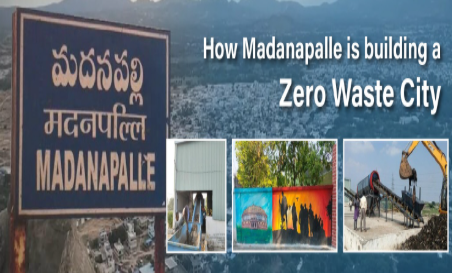
Andhra Pradesh’s Madanapalle Municipality is transforming its urban sanitation system through scientific waste management, recycling and resource recovery, steadily progressing towards becoming a Zero Waste City under the Swachh Bharat Mission-Urban (SBM-U) 2.0.
Faced with rapid urbanisation and rising waste generation, the municipality has adopted an integrated waste management model centred on source segregation, scientific processing and sustainable resource recovery.
Madanapalle generates around 62 tonnes of municipal solid waste every day, comprising 25.5 tonnes of dry waste, 36 tonnes of wet waste and 0.5 tonnes of domestic hazardous waste. To improve waste handling, the municipality has implemented source-level segregation, classifying waste into biodegradable, non-biodegradable and upcycling categories.
Scientific Processing of Wet Waste
The municipality has prioritised decentralised management of biodegradable waste by encouraging Bulk Waste Generators to install on-site composting systems, while promoting home composting and terrace gardening among residents.
Nearly 15.5 tonnes of wet waste is processed daily through windrow composting, producing around 4.65 tonnes of compost used in parks, plantations and public gardens. Another 3 tonnes of wet waste is treated through vermi composting, yielding approximately 1.2 tonnes of nutrient-rich compost, significantly reducing landfill dependency.
Recycling and Resource Recovery
Dry waste is segregated at the doorstep into recyclable and non-recyclable categories. Recyclable materials are processed at the Material Recovery Facility (MRF) before being sent to authorised recycling units.
Non-recyclable waste is supplied to cement plants for co-processing, improving waste utilisation while generating additional revenue for the municipality. Effective segregation has also enhanced the quality of recyclable material and reduced the volume of mixed waste reaching disposal sites.
Promoting Reuse Through RRR Centres
Through door-to-door collection drives and the Reduce, Reuse and Recycle (RRR) Centre, the municipality collects e-waste, old clothes, books, toys and footwear.
These items are repaired, reused or redistributed to slum communities, homeless individuals and old-age homes, extending the life cycle of usable products while reducing waste.
Waste-to-Art and Greener Public Spaces
As part of its sustainability initiatives, Madanapalle has developed Waste-to-Art installations using discarded tyres and other waste materials to beautify parks and public spaces while spreading awareness about environmental conservation.
The Waste-to-Art Park at NVR Layout has emerged as a symbol of innovation, demonstrating how discarded materials can be creatively repurposed into functional public installations.
Legacy Waste Reclaimed
The municipality has successfully remediated nearly 36,512 metric tonnes of legacy waste through bio-mining and bio-remediation, reclaiming around 9.4 acres of land.
Of the reclaimed land, nearly five acres have been converted into green spaces through plantation drives. Materials recovered during the process, including Refuse Derived Fuel (RDF), are supplied to cement plants for co-processing, while recovered soil and inert materials are used to fill low-lying areas.
Community Participation at the Core
Public awareness campaigns, including wall paintings and murals promoting cleanliness, waste segregation and hygiene, have been integrated into the city’s sanitation strategy to encourage citizen participation.


