







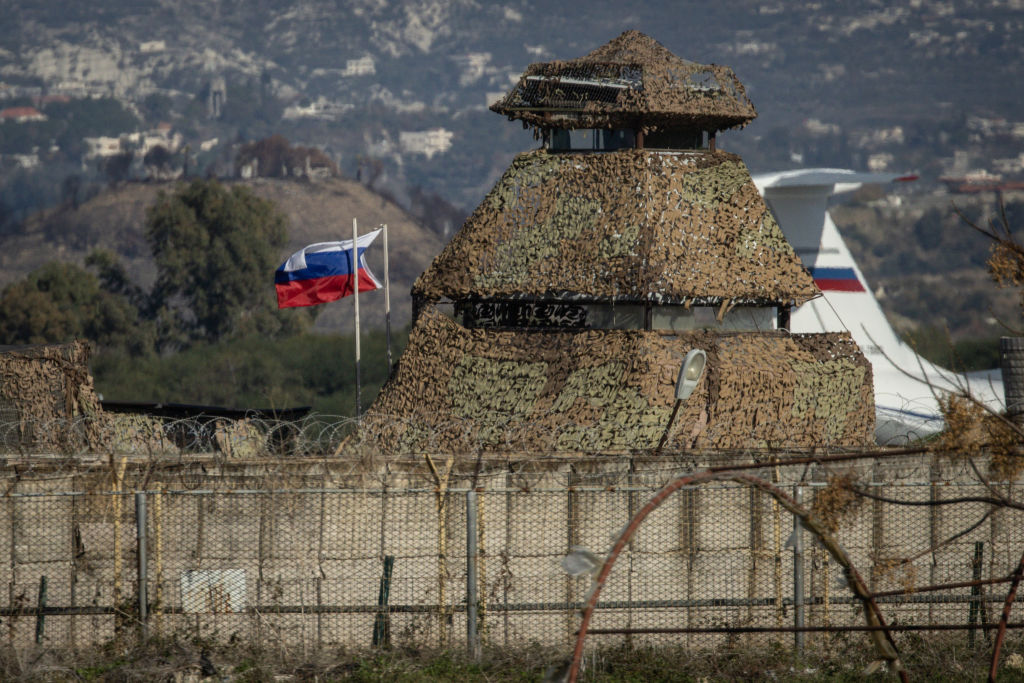
Russia is officially giving up independent, sovereign control of its two strategic crown jewels on the Mediterranean coast — the Hmeimim air base and the Tartus Naval facility. This marks the end of Russia’s era as an absolute military arbiter in the eastern Mediterranean. Signed after the spectacular collapse of the Bashar al-Assad regime in December 2024, this Memorandum of Understanding strips Russia of its exclusive, extraterritorial outposts.
According to the agreement:
— Syria takes full administrative and operational control over both the Tartus Naval facility and Hmeimim air base;
— Syria assumes exclusive management of all civilian and commercial facilities such as the main runways at Latakia’s international airport and the coveted, fourth commercial berth at Tartus port;
— the strategic facilities are stripped of their “exclusive Russian military base” status and rebranded as joint Syria-Russia training and qualification centres;
— a strict 90-day transition period is established to relocate forces and hand over keys; and
— Russia must significantly reduce its heavy military hardware and personnel, keeping only a minimal footprint.
To understand why losing these bases is such a psychological and strategic blow to Moscow, one has to look back because these footprints were not built overnight.
Tartus has served Moscow since 1971, born out of a Cold War pact with Hafez al-Assad, ousted Syrian President Bashar al-Assad’s late father. It served the Soviet 5th Operational Squadron in the Mediterranean as a counterweight to the U.S. Sixth Fleet. It remained Russia’s only significant Naval foothold outside the former Soviet Union and became Russia’s only repair and replenishment hub outside the Black Sea.
The Hmeimim air base was established in 2015. It is located near the Latakia international airport. A treaty signed in Damascus in August 2015 granted Russia unlimited, rent-free use, and it served as a massive launchpad for Russian fighter jets during the height of the Syrian Civil War. These two bases gave Russia its only permanent, warm-water Naval access in the Mediterranean and a forward air base from which to project power across the region and into Africa.
That said, Russia still maintains significant bases elsewhere. The 102nd military base in Armenia, the 201st in Tajikistan, facilities in Belarus, Kazakhstan and Kyrgyzstan, and growing footprints in Libya, the Central African Republic, Mali, Niger and Burkina Faso. However, Tartus and Hmeimim in Syria were the only true, fully operational Russian foreign bases capable of threatening NATO’s southern flank. The Syrian bases were unique in their Mediterranean location and represented Russia’s premier forward operating, power-projection asset.
For nearly a decade, these bases were weaponised to crush anti-Assad rebels and Islamic State terrorists. They were the primary reason why Bashar al-Assad survived for over a decade after the Arab Spring. When the United States and Western allies attempted to isolate Damascus and encourage mass military defections within the Syrian Army, Russia’s iron-clad military umbrella prevented those desertions from collapsing the State. The Hmeimim air base became the hub for the intensive Russian air campaign that began on 30th September 2015. That intervention proved decisive. Russian airstrikes, special forces, and later Wagner Group contractors working alongside Iranian-backed militias reversed the tide of the civil war. They helped Assad retake key cities, including the recapture of eastern Aleppo. Without Russian air power and diplomatic cover at the U.N., the regime would almost certainly have collapsed years earlier. Russian air power from Hmeimim systematically flattened opposition strongholds, ensuring the regime’s longevity. Until its sudden collapse in 2024.
So why did Russia agree to sign this agreement? Because it had no choice! The new Syrian Government led by President Ahmed al-Sharaa demanded total national sovereignty as a non-negotiable term to reset bilateral ties. Of course, Damascus lacked the military capacity for a forced eviction. This deal, however, allows both sides to save face: Syria reasserts control, and Russia retains a residual, legitimised presence.
Ahmed al-Sharaa has visited Vladimir Putin twice to redefine bilateral ties while simultaneously demanding Bashar al-Assad’s extradition. Assad and his family have been granted asylum in Russia. On 11th August, a court in Syria sentenced Assad to death after a trial in absentia, convicting him of crimes including killings, torture and arbitrary arrests during the country’s nearly 14-year war.
Al-Sharaa is also aggressively bolstering Syria’s relations with the West. The U.S. has lifted most of its crippling sanctions. Syria has signalled to the U.S. its readiness to reduce imports of Russian oil. This step helps Syria get removed from the U.S. state sponsors of terrorism list. France will restore ambassadors with Syria for the first time in 14 years.
Now, with Russia stepping back, the Naval balance of power in the Mediterranean shifts dramatically. Who is left standing? The U.S. dominates via its Sixth Fleet out of Italy, Spain, and Greece. The U.K. retains its massive Sovereign Base Areas in Cyprus, and France operates heavily out of Toulon, its largest and most important base. So, Russia’s withdrawal leaves a massive Western-dominated vacuum in these waters — no other external power currently holds equivalent, permanent Naval and air bases on the Syrian coast. An exit this massive always creates ripple effects.
So who are the winners and losers after the Russia-Syria agreement? There are three clear winners — Syria, the U.S. and Turkiye. Syria’s new Government achieves a massive diplomatic victory, restoring its territorial sovereignty and wiping away the image of being a Russian client-state. The U.S. and NATO can breathe easier because the primary launchpad used by Russia to track NATO maritime movements and fly military contractors into Africa is severely restricted. And Turkiye stands to gain influence through its support for the new Damascus authorities.
And the losers? Well, Russia, obviously. It loses its unchecked, leased 49-year grip on the eastern Mediterranean. While Russia will retain a lower-cost logistics framework to support its African operations, its absolute geopolitical clout in the region has fractured. Iran loses a key superpower partner that acted as a diplomatic shield on the ground in western Syria.
What about Israel? Does Israel stand to gain or lose? Israel fears that if Russia completely leaves, Turkiye or Ankara-backed Islamist groups will take over the vacuum along Israel’s northern border. In fact, Israel has declared the deployment of Turkish anti-aircraft systems or permanent Turkish bases in southern Syria a strict red line. That said, Israel stands to gain, too. A weakened Russian presence means fewer complications for Israeli security operations regarding regional airspace coordination. Without Russian anti-aircraft batteries such as the S400 that were active in Syria, the Israeli Air Force faces zero superpower friction when conducting airstrikes against remaining Iranian or hostile targets.
Syria’s Foreign Minister Asaad al-Shaibani visited the sites on 9th August to inspect the facilities and installations included in the historic Memorandum of Understanding, according to Syria’s official SANA news agency. Two days later, on the 11th, Syria received its first shipments of wheat and cement materials at the Tartus port. Both vessels had come from Turkish ports, but it was not immediately clear where they had originated.
Ultimately, this agreement represents a masterclass in modern, pragmatic diplomacy. The new Syrian leadership isn’t entirely severing ties with Moscow. It still relies heavily on Russian-manufactured hardware and parts. In fact, Russian state media TASS notes that Moscow is even reopening its cultural centre in Damascus this week. However, make no mistake: The master-servant dynamic is dead. Syria is transitioning these outposts into national assets — sending a clear message to the world that Damascus is open for business with the West, Turkiye, and beyond. For the international community, the Mediterranean just became a very different arena.
This is not a clean exit, but it is the clearest signal yet that the era of Russian military dominance in Syria is over.
(Ramesh Ramachandran is a senior consulting editor with D.D. India)


